'%3E%3Cg%20id='d'%3E%3Cg%20id='c'%3E%3Cg%20id='b'%3E%3Cpath%20id='a'%20stroke-width='1.3'%20d='m1%202%2034%2074%202%201v-2L9-2M8%2027c0%2011%207%2018%206%2028s5%2016%206%2020v7c1%201%204-3%203-8-1-6-5-7-4-20%201-12-5-15-4-26'/%3E%3Cuse%20href='%23a'%20transform='rotate(23)'/%3E%3C/g%3E%3Cuse%20href='%23b'%20transform='rotate(45)'/%3E%3C/g%3E%3Cuse%20href='%23c'%20transform='rotate(90)'/%3E%3C/g%3E%3Cuse%20href='%23d'%20transform='rotate(180)'/%3E%3Ccircle%20r='34'%20stroke-width='2'/%3E%3C/g%3E%3C/svg%3E)


Theoptia: Horeb | The Genius In The Service Of Death Metal
(2017 – Unblack)
We’ve had the chance to listen to a lot of weird and strange stuff, and in fact, whenever we can, we’re happy to do so. Sometimes it’s good, sometimes just okay, or in cases like this one, I’d say it’s almost brilliant. Theoptia is a remarkable case. Thanks to the folks at Nordic Mission, we learned of their existence, and it’s through them that we’re able to access this excellent material. And we could say that Theoptia falls into the category of strange, brilliant—but also insane, one might add—and “Horeb,” their first full-length album, proves us right.
Theoptia is also one of those projects that falls into the “one-man band” category, and indeed, everything that comes out of the speakers when you press play on “Horeb” is the product of the mind of Emanuel Strebel, a multi-instrumentalist and one-man band from Switzerland, who plays and produces everything in Theoptia. Guitars, bass, drums, vocals, and everything else you hear on this album comes from his own hands.
The project apparently originated back in 2014, and its name comes from a theological term that basically means “to see God” or “vision of God.” This debut album, titled “Horeb,” was first released digitally in 2017, followed by the physical version we’re discussing here in 2018.
The musical vision Strebel has developed with Theoptia is steeped in experimentation, both in composition and production, combining the foundations of technical and progressive Death Metal—with influences from Meshuggah, Gojira, and Lamb of God, among others—with Eastern and ambient music, resulting in this album that is as strange as it is wild.
Indeed, “Horeb” is an album that could very well be a concept album, telling the story of the prophet Elijah on Mount Horeb track by track, with compositions that truly highlight not only the music but also the lyrics.
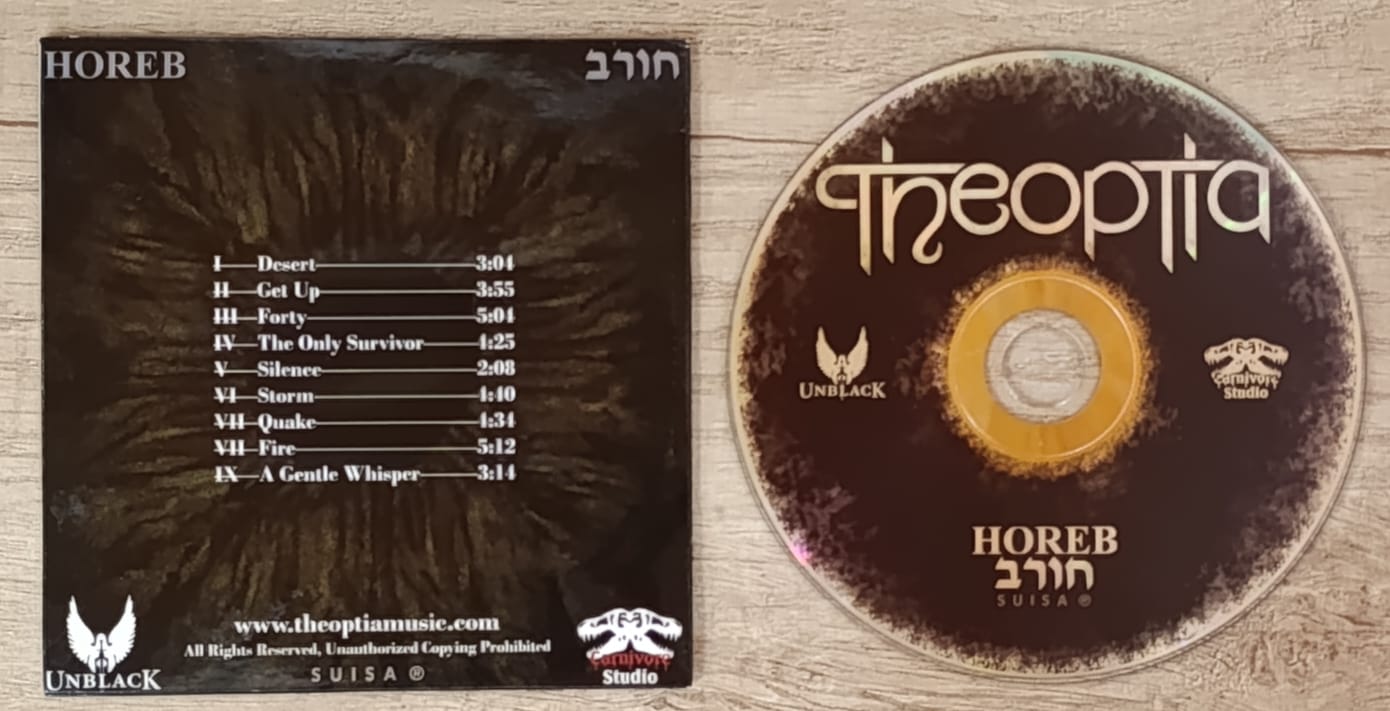
“Desert” is the track that opens the door to this incredible album. “Eastern”-style guitar riffs accompany a tremendous outburst of heavy death metal, with orchestration serving as accompaniment; in the same vein, we can note “Get Up,” which uses the sitar to immerse us in a special atmosphere, but which conceals tasteful shifts in rhythm—in what we might call a form of Death Metal that straddles the line between progressive and technical.
But there’s also a Doom-like vibe, without reaching the tempos typically used in that genre. Theoptia’s dark, melancholic, and atmospheric vibe has drawn elements from there, and we can hear this in tracks like “Forty,” where the shifting tempo—almost symphonic at times—takes us through experimental territory that’s a pleasure to the ear. Meanwhile, “The Only Survivor” takes us down a path much closer to the more modern aspects of the death metal genre, while still retaining atmospheric and intriguing passages that, combined with the unsettling riffs, could make it one of the album’s standout moments.
One intriguing aspect is that, with the exception of the last track, all the songs on “Horeb” have single-word titles, thus presenting different concepts in each of the included tracks. This is the case with “Silence,” an intriguing instrumental track featuring a distinctive guitar chord that’s entirely atmospheric and climactic, and just as the calm of silence is followed by the storm, it’s not far-fetched to think that it’s no coincidence that “Storm” follows—literally a storm of riffs and chords rooted in the darkest depths of death metal, with a somewhat pretentious and introspective approach from a musical and experimental standpoint.
“Quake” is a sort of heavy, relentless track with a certain lean toward the more modern side of extreme metal, yet featuring beautiful guitar arrangements that set it apart from that genre. With mid-tempo rhythms and intricate chords, it results in the kind of experimentation and versatility that Theoptia typically brings to every song on the album.
But that’s not all: “Fire” oscillates between a more classic take on death metal and the guitar riffs that, in Theoptia’s style, form a transitional thread linking each song together. Closing out “Horeb,” we have the final track, aptly titled “A Gentle Whisper,” a kind of emotional acoustic ballad that is entirely instrumental. Its atmosphere has that contemplative, spiritually charged quality that takes us deep into the biblical narrative, and as a way to close out the album, it’s practically magnificent.
This debut album by Theoptia is practically an invitation to something different. It’s true, it has its influences, but Emanuel Strebel’s foundation is experimentation—with different sounds, styles, and musical genres—successfully combining a sort of conceptual narrative, based on the prophet Elijah’s experience on Mount Horeb, with a style and compositional mastery that truly deserves a tip of the hat.
Is there a place for Theoptia within the extreme metal scene? Surely there is, but since Theoptia is an experimental, studio-based project—and in some ways too pretentious and far removed from mainstream trends—it will likely be seen simply as a curiosity. The unconventional often fails to find its place, and yet Strebel and Theoptia deserve at least a chance.
The sound production is worth noting. Working alone, Strebel has had the opportunity to combine different instruments and sounds while still sounding like a strong, unbreakable wall. That’s the sensation behind what “Horeb” conveys in terms of its achieved sound. The mixing and mastering have successfully brought the parts together, unifying everything along the same line without any drop-offs.
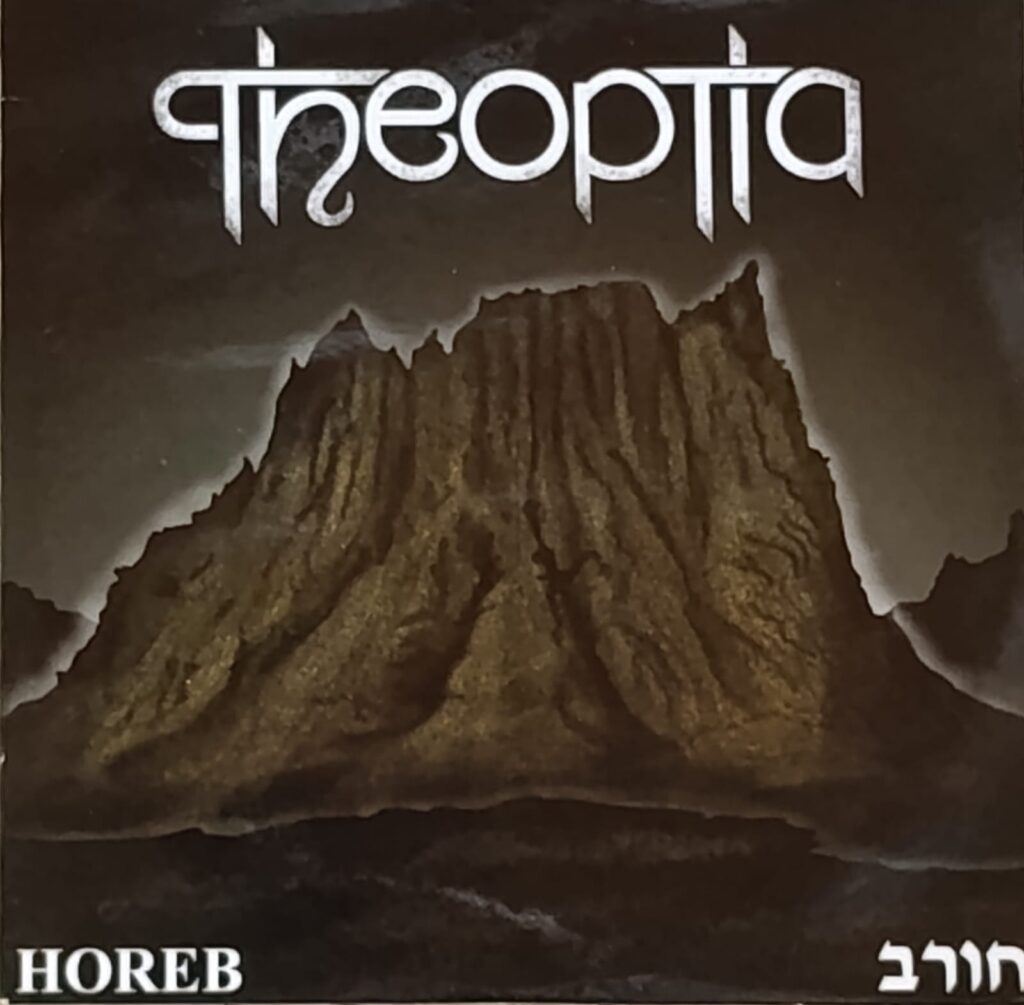
As for the artwork, it’s perhaps not the standout feature. As expected, the cover features an illustration of the famous Mount Horeb, depicted in a rather dark and melancholic image. Our physical copy is simply a cardboard sleeve with minimal information and no booklet—though, of course, we must keep in mind that this is a completely independent release.
“Horeb” isn’t Theoptia’s only release, but there will be time later to listen to and discuss what comes next. In the meantime, this debut full-length album serves as an introduction to something different, experimental, and deeply emotional and spiritual—all delivered through the devastating sound of death metal, which straddles the line between classic and modern, yet remains the guiding thread through which Theoptia unfolds the story of “Horeb.”
And to give you a taste of what Theoptia is all about, here’s a video for the track “Desert” from this album, where you can see Emanuel Strebel playing all the instruments. A true gem. Also, as is our custom, here are Theoptia’s social media links so you can follow them and stay up to date on their latest news…
https://www.facebook.com/theoptiamusic
https://www.instagram.com/theoptiamusic