Horde: Hellig Usvart | Inverting Black Metal

(1994 Nuclear Blast – Rowe Productions / 2019 Soundmass)
Black Metal with Christian lyrics isn’t anything new. It’s been around for quite some time, and it practically emerged shortly after the genre’s explosion in cold Norway in the early ’90s—and we owe it all to this album, which is already legendary by now. We’re not going to recount the well-known story of how Black Metal emerged and all the baggage that comes with it—its ideology and anti-Christian stance—but it is worth noting, if only to set the exact context in which Horde released this masterpiece titled “Hellig Usvart.”
Black Metal, since its inception, has carried that anti-Christian connotation, with stances that are literally satanic or a return to the pagan practices of the early days of the Nordic peoples. It depends on each band’s ideology, but if there’s one thing they all agree on, it’s anti-Christianity. Names like Mayhem, Burzum, Immortal, Darkthrone, Emperor, etc., are part of this movement born in Northern Europe, characterized by radicalization in lyrics, music, and ideology.
It is within this context that, out of nowhere, a mysterious album titled “Hellig Usvart” emerges from a project called Horde, in which a mysterious multi-instrumentalist handles everything: drums, guitars, bass, and vocals, in a wild and furious display of uncompromising Black Metal—but with the distinct difference that its lyrics and ideology are the exact opposite of early Black Metal. Yes, Horde has Christian lyrics—something unthinkable within such an extreme and radicalized genre.
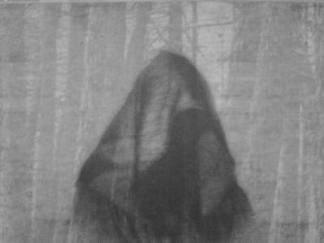
Imagine the scandal that ensued. The label Nuclear Blast, which released this album, was subjected to serious threats demanding they reveal the hidden identity of the creator of this “blasphemy” in the eyes of anti-Christian Black Metal devotees. The project itself was the target of threats from the Black Metal scene, and to make matters worse, “Hellig Usvart” appears to have been recorded and produced in Norway, given the raw and simple nature of Horde’s music.
Later, it was the Australian label Rowe Productions that released the album and dedicated itself to promoting it, and that is where we can find the key to the mystery of who is behind Horde. Anonymous is the one who presents himself as the multi-instrumentalist behind the production and recording of “Hellig Usvart,” but years later, the identity of “Anonymous” was officially revealed. Indeed, Jayson Sherlock, drummer for Mortification and Paramaecium, is the one who recorded and produced this album solo in the early ’90s, using the aforementioned pseudonym—perhaps to avoid revealing his identity, knowing what that entailed, or who knows the real reason behind that decision. The fact is that Horde caused quite a stir and drew the hatred of the most staunch defenders of the anti-Christian purity of original Black Metal, but ultimately, Horde paved the way for the subgenre that would come to be known as (UN)Black Metal—that is, Black Metal with Christian lyrics. Later, names like Antestor, Crimson Moonlight, and Slechtvalk—and many more—would emerge, forming an interesting movement within the “Christian” orbit of Black Metal.

But Horde’s “Hellig Usvart” is not just a beginning. The album itself is a collection of furious tracks, with the raw, uncompromising simplicity of old-school Black Metal, biting with rage in every riff, in every blast beat. And if there’s one thing Horde excels at, it’s the virulence of their lyrics, directed precisely against Satan, against all that is anti-Christian, highlighting the apocalyptic atmosphere and spiritual warfare that form the foundation upon which Horde’s music is built. A declaration of spiritual war against the dark and satanic, from the very darkness turned into music. That is what “Hellig Usvart” is all about—a title that initially misled everyone regarding the project’s country of origin, as it is in Norwegian and literally means “Holy Not Black.”
With a collection of 12 tracks, “Hellig Usvart” is a hidden gem of Black Metal, and it would be unfair to overlook this album simply because its lyrics have a Christian theme. What this album delivers is incredible. More than 30 years have passed, and it still surprises us. We have an edition released by Soundmass in 2019, marking the 25th anniversary of the album’s release, and it is that version we are working on.
“A Church Bell Tolls Amidst The Frozen Nordic Winds” is the first track. A sort of introduction with bells ringing over a dark atmosphere, followed by an onslaught of blast beats and furious riffs that barely lasts 0:47 minutes; “Blasphemous Abomination Of The Satanic Pentagram” seems to suggest a title longer than its actual duration.
The real kick-off comes with “Behold, The Rising Of The Scarlet Moon”—is there a nod to Mayhem’s classic “Freezing Moon”? Maybe, or maybe not; who knows, but the comparison seems inevitable. A tremendous catharsis of basic, crushing riffs and a voice as sinister as it is chilling pours out of the speakers, punctuated by mid-tempo interludes. And things get even better with “Thine Hour Hast Come,” a track that feels much more polished with that bass accompanying every beat of one of the album’s best songs. Its bass lines pair much better with the low tones the song offers. Truly spine-chilling.
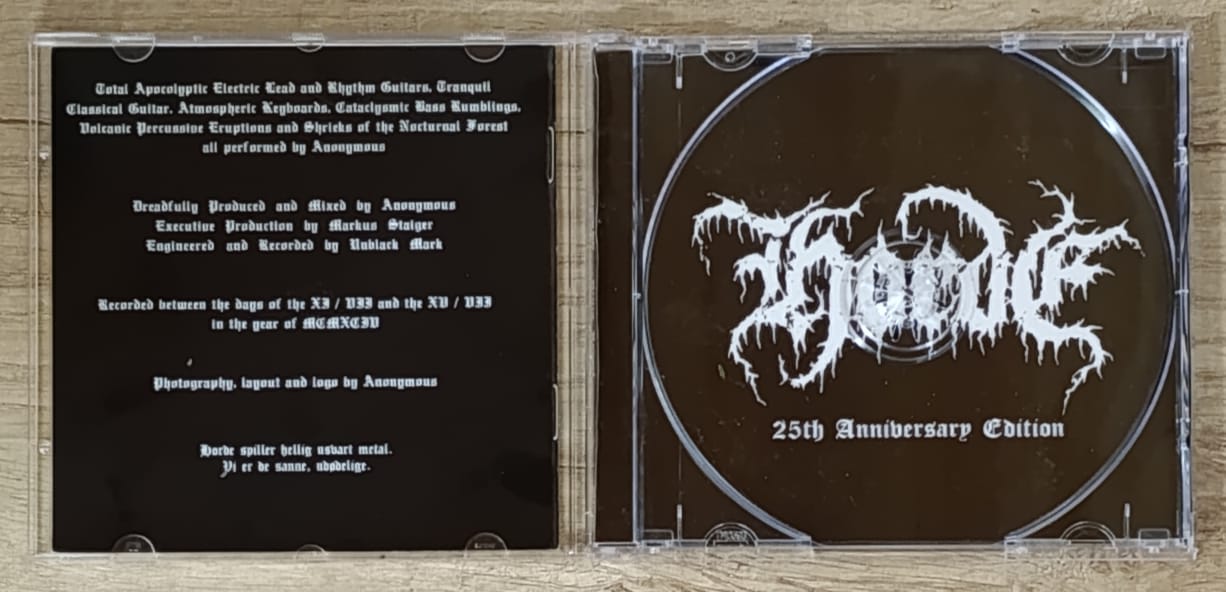
“Release And Clothe The Virgin Sacrifice” launches into a direct, in-your-face attack, pure rage, yet it knows how to save its moments for a much slower, climactic tempo, while “Drink From The Chalice Of Blood” has an unmistakable punk undertone in its structure; basic riffs, a fiery rhythm, and the feeling of being in the presence of a work that is sufficiently varied and interesting in its development.
A fast and tremendous start is the intro to “Silence The Blasphemous Chanting,” a track framed by an intense semi-march with classic blast beats thrown in, featuring the voice of ‘Anonymous’ sounding somewhat deeper—a sign of the variety one can find on this album. And if you don’t believe me, give the classic of classics, “Hellig Usvart,” a listen. Of course, we’re talking about “Invert The Inverted Cross,” a track that largely defines Horde’s sound and everything that would follow from the invention and genius of “Anonymous.” Riffs that really shine alongside the best beats on the album, without a doubt.
The ever-present epic and warlike atmosphere is found in “An Abandoned Grave Bathes Softly In The Falling Moonlight,” a track whose arrangement and composition become much more complex, and a sort of light orchestration serving as a backdrop carries us through terrain that won’t sound strange to those accustomed to navigating the cold, dark waters of Nordic black metal, and meanwhile, “Crush The Bloodied Horns Of The Goat” follows a distinctly “Viking” style, with an intense, steady, and relentless march.
Now, the album’s finale comes with some interesting nuances. One is “Weak, Feeble, Dying, Antichrist,” an intricate mix of twisted riffs and mid-tempo passages, which adds more musical and compositional variety where it generally doesn’t abound, and of course, things couldn’t end any other way than as “The Day Of Total Armageddon Holocaust” proposes, in a sort of all-consuming chaos, in a tremendous display of fury, speed, and precision. A true finale that certifies, with honors, that we are witnessing one of the finest expressions of this subgenre—we might say—within the realm of Black Metal.
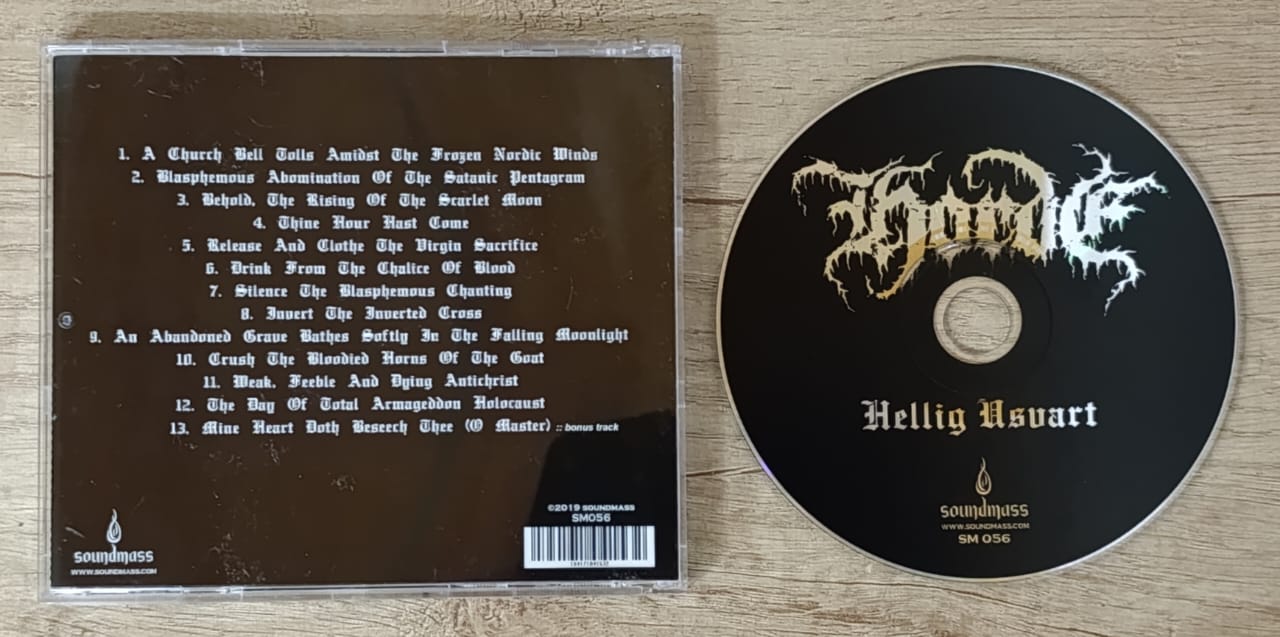
And since this edition we have in our archive is a reissue for the 25th anniversary of “Hellig Usvart,” we have a bonus track here, which is none other than the song “Mine Heart Doth Beseech Thee (Oh Master),” originally included on the 1994 compilation titled “Godspeed – Australian Metal Compilation,” produced by Rowe Productions. The curious thing is that on that compilation, the track isn’t performed by Horde but by Beheadoth, the former name of Jayson Sherlock’s project before it definitively became Horde. It’s evident that, in terms of sound and style, this track belongs to the same recording sessions as “Hellig Usvart,” though for some reason, it was left off the original album’s tracklist and now appears on subsequent reissues.
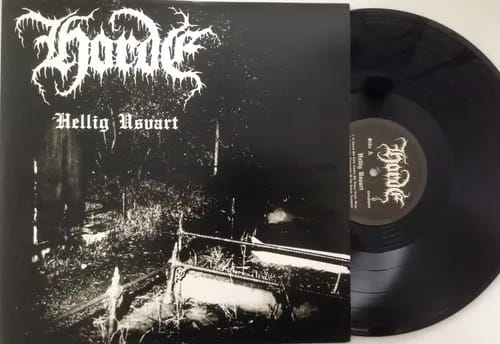
The artwork isn’t the most original, and in a way, its design is reminiscent of those albums forged in the Nordic cold. Comparisons are inevitable, but everything points to that, precisely. The cover features a dark, retouched photograph of what appears to be a closed cemetery. Jayson Sherlock himself was responsible for the entire “artistic” aspect of the album (in addition to being a drummer, he is a graphic designer), and his alignment with and affinity for the Black Metal movement of those years is evident.
Don’t expect much in terms of sound. It’s already clear that “Hellig Usvart” isn’t about sonic or musical delicacy, resulting in an album with those rough, underground details characteristic of early Norwegian Black Metal recordings. What is worth noting, however, is the naturalness of the sparse instrumentation: limited but overdriven guitars and drums hitting hard and deep, alongside the bass sound that also holds its own. Consider that this was recorded in an era when there wasn’t much technology or AI assistance, and yet the mix is very good, with everything sounding exactly as it should: raw, loud, deep, etc.
Perhaps the only thing we might notice are a few minor details, such as slight variations in sound levels from track to track and changes in the equalization, etc., but that doesn’t detract from the fact that “Hellig Usvart” is a truly enjoyable album from start to finish.
It’s primitive, rough around the edges in many ways, aggressive, fast-paced, rebellious in its own way, and all the qualities we can ascribe to it. “Hellig Usvart” is a classic by any measure, and it paved the way for others to embrace Black Metal with lyrical content that differed from what had come before. Horde took the first hits, not only from the anti-Christian camp; stones came flying from the Christian side as well, and sometimes they were worse and bigger, but the truth is that Horde opened the door and left a classic album etched in history—one that stands out as one of the best albums in the Christian metal scene, or at least has everything it takes to be considered among the top ten.
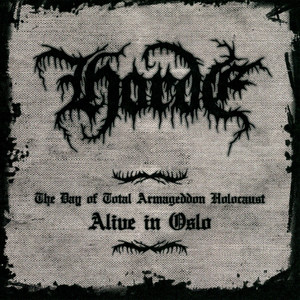
Horde was never a band per se. It was merely a side project of Jayson Sherlock, during his years with Mortification first, and later with Paramaecium, with no signs of turning it into a proper band, and thus, everything pointed to it being just a studio project, but, contrary to all expectations, Jayson Sherlock finally performed under the name Horde, playing drums and singing, with the support of the musicians from Drottnar at the “Nordic Fest” in 2006; this performance was recorded on DVD and released as “The Day Of Total Armageddon Holocaust – Alive In Oslo.” There were a few more performances, but they were very sporadic.
Since then, we haven’t heard from Horde again. It’s possible that Sherlock prefers the legend of Horde to remain tied to this single, historic, and legendary album, and sometimes it’s better not to ruin the magic of what it was back then. Listening to “Hellig Usvart” is a return to that sound, which is a product of its time and moment. A true light in the most extreme and dark music….