'%3E%3Cg%20id='d'%3E%3Cg%20id='c'%3E%3Cg%20id='b'%3E%3Cpath%20id='a'%20stroke-width='1.3'%20d='m1%202%2034%2074%202%201v-2L9-2M8%2027c0%2011%207%2018%206%2028s5%2016%206%2020v7c1%201%204-3%203-8-1-6-5-7-4-20%201-12-5-15-4-26'/%3E%3Cuse%20href='%23a'%20transform='rotate(23)'/%3E%3C/g%3E%3Cuse%20href='%23b'%20transform='rotate(45)'/%3E%3C/g%3E%3Cuse%20href='%23c'%20transform='rotate(90)'/%3E%3C/g%3E%3Cuse%20href='%23d'%20transform='rotate(180)'/%3E%3Ccircle%20r='34'%20stroke-width='2'/%3E%3C/g%3E%3C/svg%3E)


Bloodgood: Detonation | Heavy Metal To Blow Your Ears…And Your Soul Away
(1987 – Alarma Records/Frontline Records)
White Metal—or Christian Metal, as some call it—is generally associated with Stryper’s rise to fame in the 1980s, leaving behind acts like the one we have here. Bloodgood isn’t just a cult band; it’s a band whose music is worth delving into. It hasn’t become particularly well-known or appreciated in the scene, and in our view, “Detonation” is one of Bloodgood’s gems. A cult album that, in the long run, would become one of their finest works and a faithful representation of the 80s metal sound.
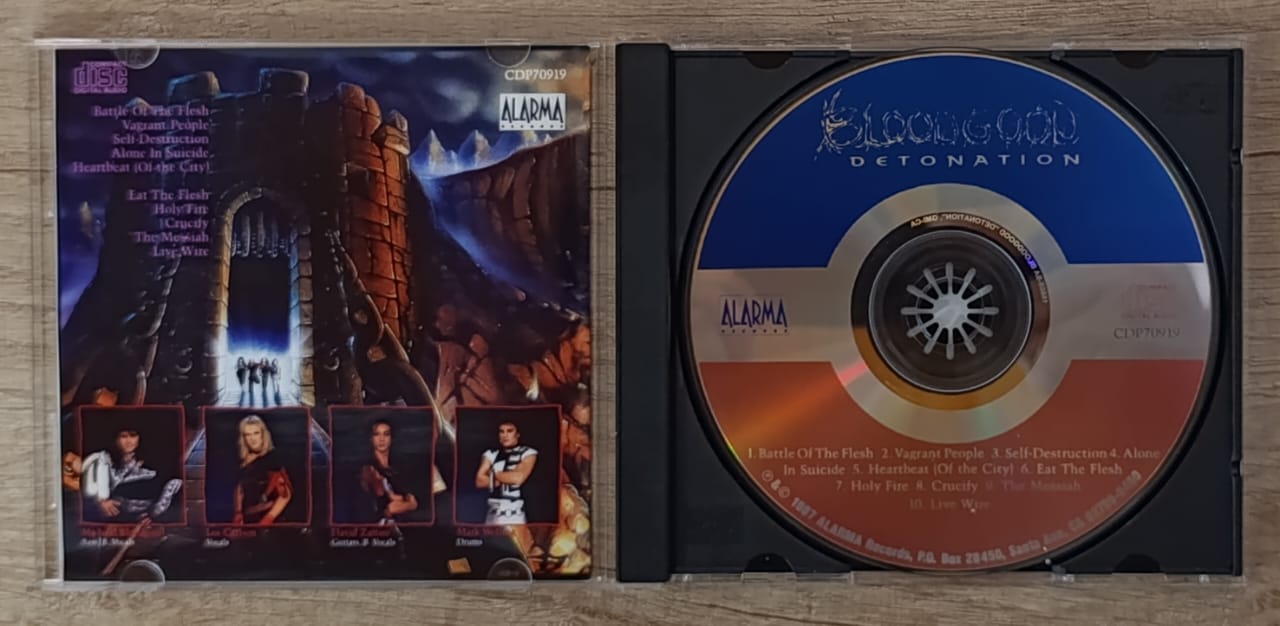
“Detonation” is the second studio album by Bloodgood, a Seattle-based band that took its first steps back in 1985 with a demo and released its debut album in 1986. The band was formed as a classic quartet with Les Carlsen on vocals, David Zaffiro on guitar, Michael Bloodgood on bass, and Mark Welling on drums. Their sound centers on hard rock, very much in the 80s and Californian style, with some hints of traditional heavy metal, but with very distinct characteristics that set them apart from other bands of the era.
Bloodgood offers a kind of theatrical rock, based on their lyrics (Christian, of course) and Les Carlsen’s unique vocal delivery—a vocalist with a voice as distinctive as it is hard to define, leaving no room for compromise; you either love it or hate it. Added to this is the lack of sonic sophistication, with a simple foundation and without as much pomp as one might expect from a band that makes image and theatricality one of its trademarks.
Simplicity is one of the defining factors of Bloodgood’s sound, at least on their debut album and particularly on Detonation, an album that achieves a rather unique naturalness and where the included songs stand out on their own; each one has a different impact, but they all manage to move the listener without a doubt.
The fast-paced and effective “Battle Of The Flesh” kicks off “Detonation” with a Judas Priest-esque touch that makes it interesting, ultimately being the heaviest track on the album; it is followed by “Vagrant People” with a light riff and pounding rhythm, continuing in the same vein. With a whiff of ’70s hard rock, “Self Destruction” turns out to be one of the most appealing tracks.
By the time we get to “Alone in Suicide,” the tempo slows down with a powerful track that’s very characteristic of ’80s rock, a potential radio hit. Experimentation takes center stage in “Heartbeat (Of The City),” and here the lull is more pronounced—perhaps the low point of the album—though it’s worth paying attention to its rhythms. However, on such a brilliant album, it fails to shine on its own.
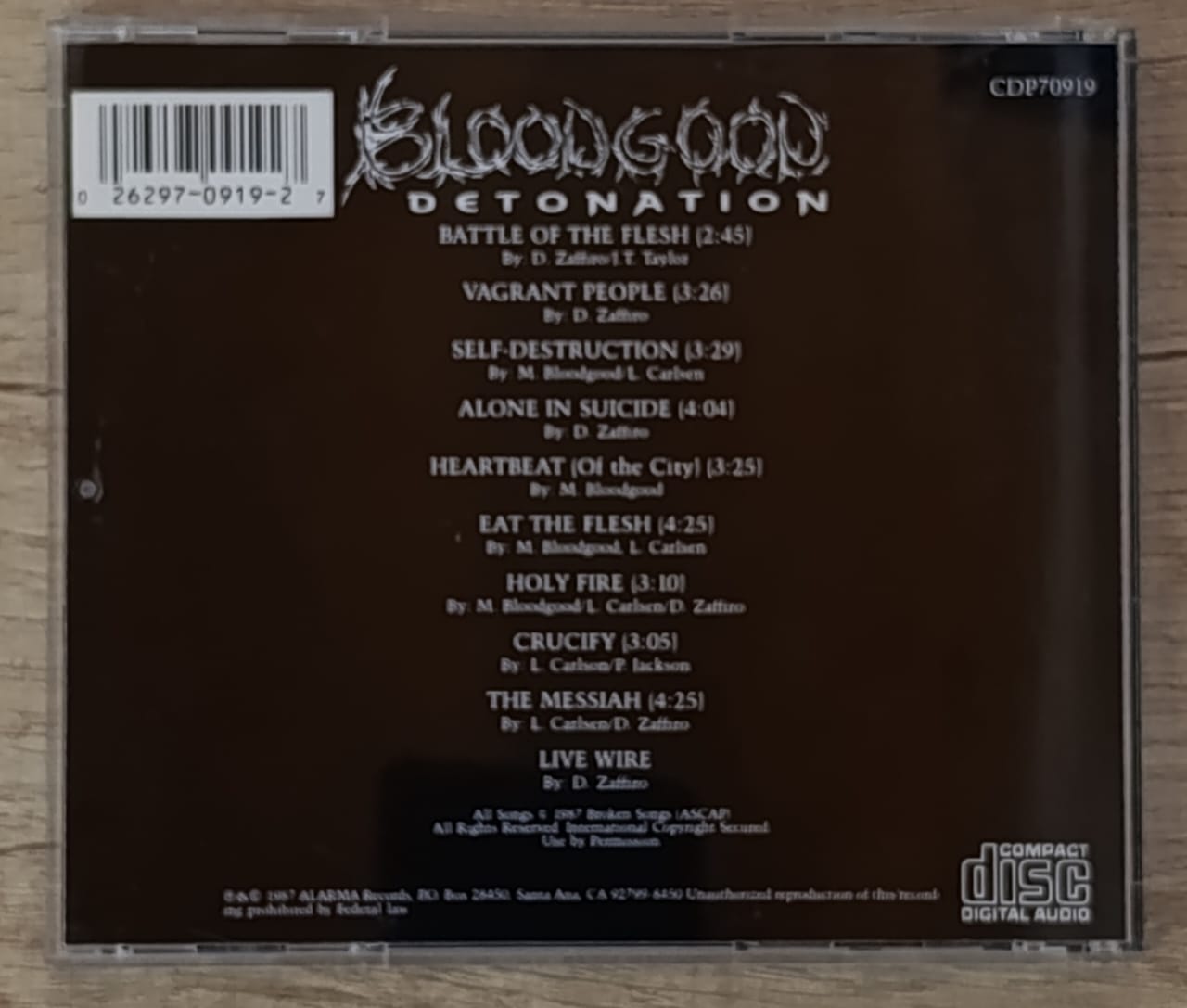
Although we’re discussing a CD, the truth is that at the time of its original release, this work came out on vinyl and, of course, had two distinct sides. Following that logic, at this point “Eat The Flesh” would open what would be the B-side and, consequently, the most interesting part of the album. The theme of this second part revolves around the death and resurrection of Christ, in a brilliant blend of metal and distinctly theatrical scenes. “Eat The Flesh” is a galloping track with choruses worthy of a theatrical piece. It seems to be linked to “Holy Fire”; although the beginning is a bit weak, it would have been better to connect the two songs more seamlessly.
The duo “Crucify” and “The Messiah” hit hard right from the start. In the first, the conversation between Pilate, the Roman guard, Satan, and the crowd is not to be missed, however bizarre it may seem. All of this unfolds in a frenetic track, one of the fastest on the album. It was released as a single on a 7-inch vinyl alongside “Self Destruction,” the only known promotional cut from this album. Almost immediately following (though not in the best way) comes one of Bloodgood’s most famous songs (yes, of course, within the narrow world of White Metal).
“The Messiah” is pure history, and one of the best tracks not only by Bloodgood, but in the history of Christian metal. This track alone is reason enough not to pass up “Detonation.” Mid-tempo, with a rhythm marked by a slow, precise riff and Les Carlsen showcasing the best of his vocal range. Zaffiro’s viola solo, though not particularly technical, is moving and rises to the occasion. An absolute must-listen.
Finally, “Live Wire” closes the album, heavily influenced by the NWOBHM and a fitting finale for the best work Bloodgood has ever produced.
Their debut album, simply titled “Bloodgood,” was produced by Darrel Mansfield; here, both Carlsen and Zaffiro took the initiative to co-produce the album themselves, with mixing handled by the relatively unknown Doug Doyle. The result is a raw, basic sound, without much studio technicality, giving the impression of a live recording of the band playing in the studio. For example, the bass stands out prominently over basic guitars with minimal use of effects or overdubs; the sound isn’t overloaded, coming across as natural, visceral, and yet moving.
On the other hand, it’s worth noting that at times it seems as though some tracks were recorded in different studios, and that the final mix lacks sonic cohesion—a fact that’s particularly noticeable on “The Messiah,” to cite one example. The low budget or perhaps the rush may have compromised the final product, which isn’t necessarily a drawback in itself, since ultimately what we have here is a good album after all; far from a Stryper-style super-production (which was perhaps at its peak at the time), Bloodgood offers us a simple, down-to-earth album with plenty of interesting elements to discover behind its apparent simplicity.
It’s a shame that “Detonation” has some technical flaws in recording, mixing, and final sound. Ultimately, the songs are there, and the band had what it took, even though the limited instrumentation also detracts from the experience. Perhaps a reissue with proper remastering could improve the result somewhat.
Above all, I’ve always considered Bloodgood—and this album in particular—as the flip side of Stryper: heavier, rawer, and not as pompous as the Californians. Musically, Bloodgood sticks closer to the foundations of heavy metal than to the well-known Californian hard rock, though there are the occasional 80s pop influences here and there (without keyboards or synthesizers, of course). Later works would head in a perhaps more commercial direction with better sound, though they might not reach the level of a classic, cult-status album like “Detonation.”
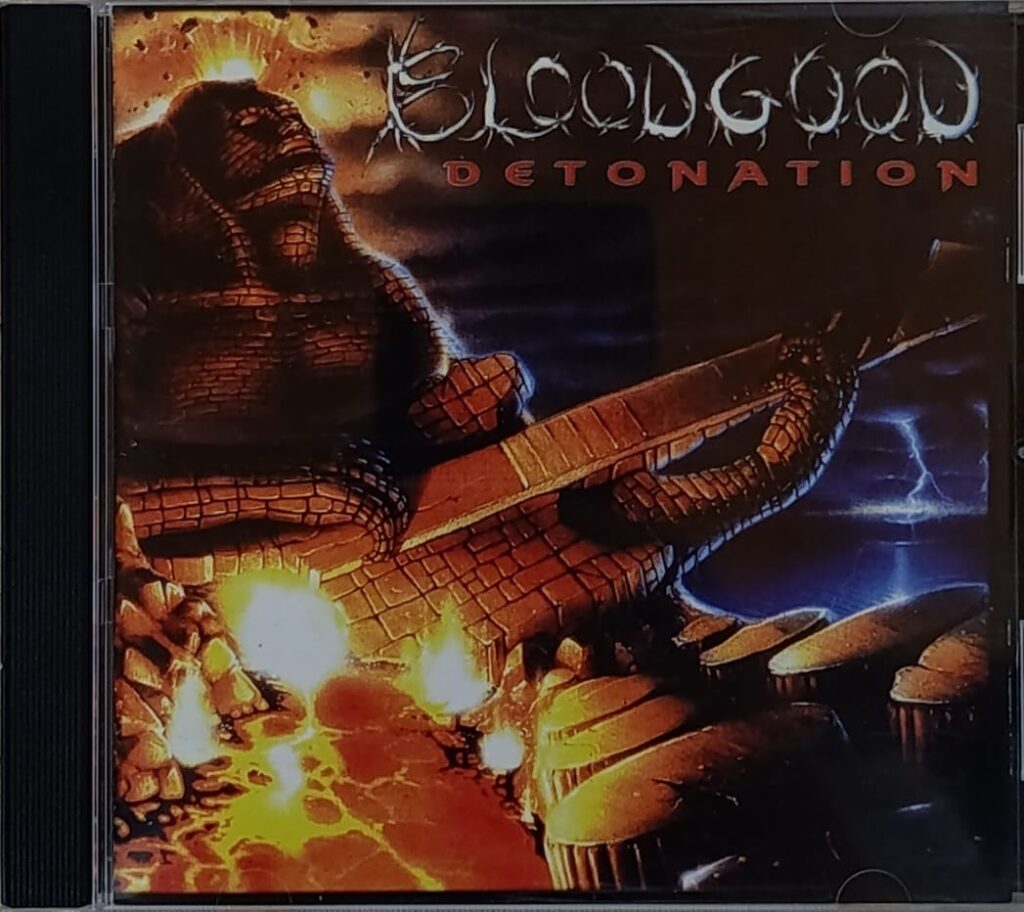
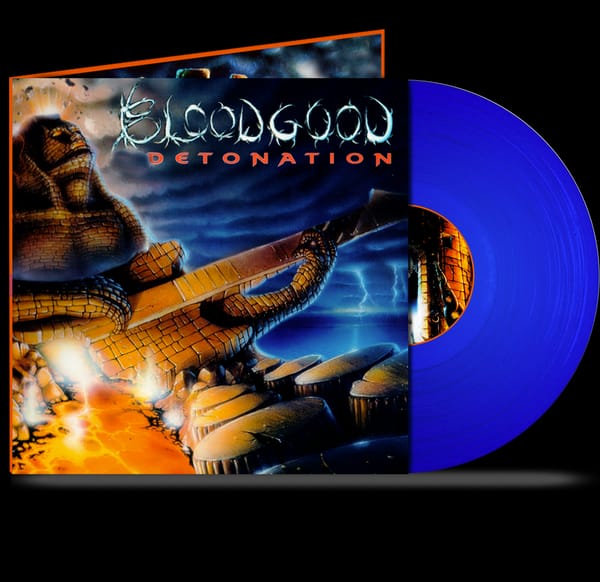
The cover art is worthy of a comic book; at least the castle featured in the illustrations, from which the musicians’ figures emerge, reminded me a bit of the famous Castle of Greyskull (those of us from the ’80s will know what I mean), though I, for one, don’t quite get the point of the monster that appears as the dominant figure. The CD edition is simple, typical of compact disc releases from those years. There is also a vinyl and cassette edition.
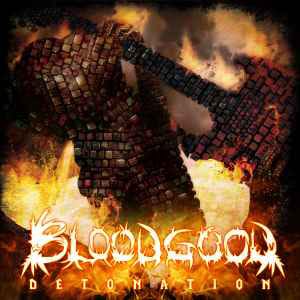
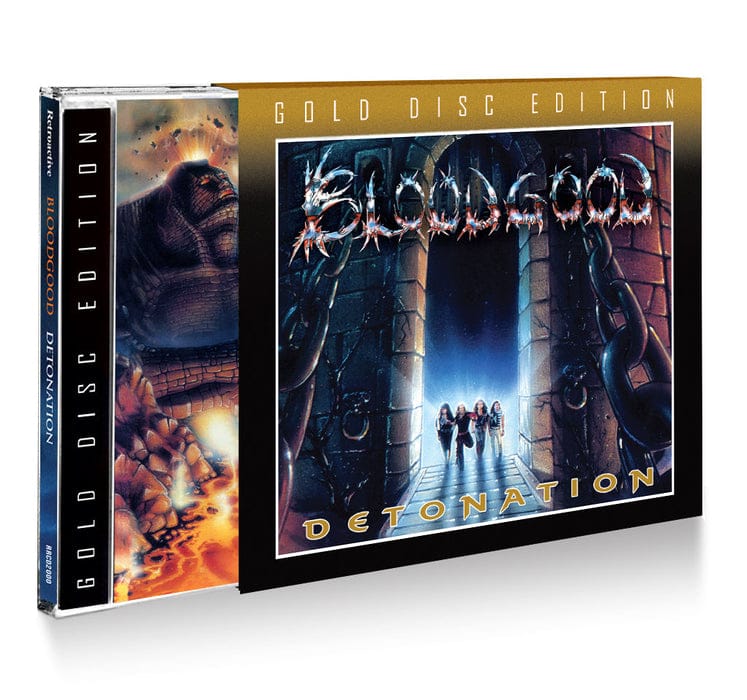
As for reissues, there are several. Both on CD and vinyl, “Detonation” has been reissued several times in recent years, with some editions featuring changes to the cover art and even a few including live bonus tracks, so this album is currently available in its reissued versions—but available nonetheless, and that’s a very important detail.
“Detonation” made a splash, and even today it continues to make waves and amaze those of us who love an era that would become legendary. Bloodgood is part of that history, and even more so Michael Bloodgood (R.I.P.), the band’s bassist and key figure, who a few years ago became an eternal legend. Les Carlsen, that prolific vocalist, continues with his solo project.
But Bloodgood is an unmissable encounter with the history of metal, and “Detonation” in particular is essential for understanding and getting closer to what heavy metal with a Christian message was—and is—and is also crafted with majesty, good taste, and power….