'%3E%3Cg%20id='d'%3E%3Cg%20id='c'%3E%3Cg%20id='b'%3E%3Cpath%20id='a'%20stroke-width='1.3'%20d='m1%202%2034%2074%202%201v-2L9-2M8%2027c0%2011%207%2018%206%2028s5%2016%206%2020v7c1%201%204-3%203-8-1-6-5-7-4-20%201-12-5-15-4-26'/%3E%3Cuse%20href='%23a'%20transform='rotate(23)'/%3E%3C/g%3E%3Cuse%20href='%23b'%20transform='rotate(45)'/%3E%3C/g%3E%3Cuse%20href='%23c'%20transform='rotate(90)'/%3E%3C/g%3E%3Cuse%20href='%23d'%20transform='rotate(180)'/%3E%3Ccircle%20r='34'%20stroke-width='2'/%3E%3C/g%3E%3C/svg%3E)


Himmelschor: Himmelschor | The Art Of Reviving Hymns
(2025 – Soundmass)
Gregorian chants, ecclesiastical and monastic aesthetics, old Christian hymns, all set to a foundation of melodic and gothic metal. That’s what Himmelschor is all about—a band currently releasing its self-titled debut album, with a Christian concept in every aspect, both lyrically and musically.
In principle, this would be the group’s debut album. However, it’s not their first release, as they had previously released an EP titled “Glory To God” in 2024. Beyond that, we have no further information other than the first names of Himmelschor’s members, who apparently hail from Minnesota, United States, and not much else.
The band’s name, and that of this album as well, means “Heavenly Choir” in German, and that is where the answer to what the band offers lies.
Himmelschor’s formula is tinged with a gothic sensibility over metal-centered foundations, musically speaking, but in the form of hymns, choruses, and a timid voice that peeks out from amidst such majestic pretension. Indeed, one of the main characteristics of this work is a pattern that repeats tirelessly throughout the entire album and across every song. From start to finish, Himmelschor sticks to its guns, leaving no room for anything different or versatile.
The offering is a collection of well-known Christian hymns, in the style of Himmelschor, with a foundation that essentially respects the original compositions while lending them a style that is at once gothic, pretentious, and majestic.
The concept seems to be inspired by Saviour Machine, but blended with a much more intense foundation, featuring an atmosphere that lies somewhere between epic and medieval church music, with a tendency toward both metal and electronic elements as well, one might say. At first glance, the idea seems promising.
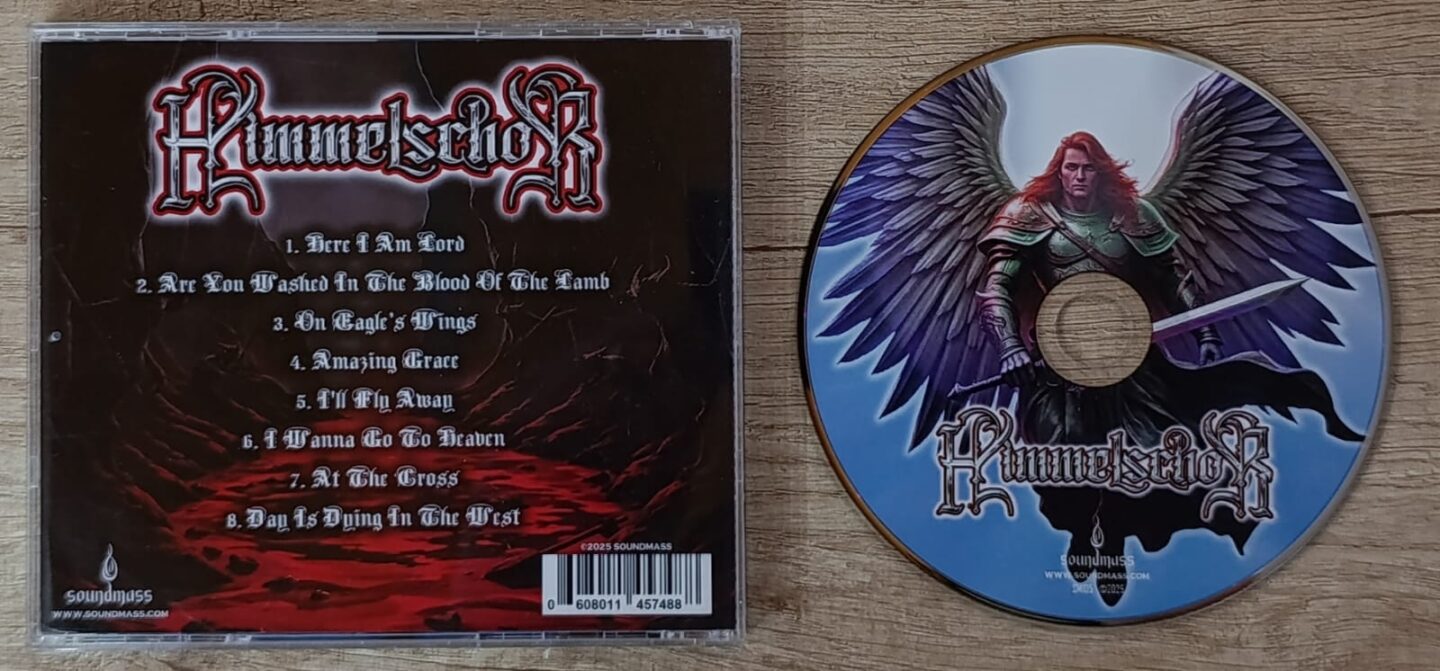
“Here I Am Lord” is the first track. Epic, majestic, and rooted in classic metal, with those Gregorian chants that will be a constant throughout almost the entire album. Next up is “Are You Washed In The Blood Of The Lamb,” with a much slower tempo and a short guitar solo that serves as orchestral accompaniment.
In “On Eagles Wings,” the riffs make their presence felt, and with an intricate foundation, Himmelschor takes us through a gothic atmosphere, unlike “Amazing Grace,” which, with a heavier start and much heavier riffs, leads us down a path more centered on classic metal and, in a certain way, more operatic than gothic, one might say.
“I’ll Fly Away” offers a much more contemplative and sacred atmosphere, with a beautiful guitar strumming accompaniment; the lead vocals, entirely guttural, are surprisingly interwoven with Gregorian chants. The combination is truly spine-tingling, and perhaps among the best to be found on this self-titled album by Himmelschor.
With a riff and rhythm much closer to metal, Himmelschor picks up the pace with “I Wanna Go To Heaven,” maintaining that church hymn vibe that characterizes the band’s sound. Featuring clean vocals in this case, with fewer backing vocals and an interesting rhythm section, it’s another highlight of the album. Next up is “At The Cross,” with a much more gothic feel and even a hint of classical music, in an intricate, slow-tempo composition that takes us through an atmosphere that’s somewhere between melancholic and contemplative, you might say.
To wrap things up, we have “Day Is Dying In The West”; an intro featuring pure orchestral guitar riffs and a stilted march, epic and without too many twists on what we’ve been hearing. Cleverly placed as the final track, it serves as a sort of epilogue to a rather special album, as we’ve been noting.
The fact is, Himmelschor has created an album that conceptually maintains a sense of unity throughout, without major deviations from what we’ve already mentioned. The result is interesting, but at times it can become a bit tedious for those unaccustomed to this type of material. At times, the structures feel overly repetitive; though the term “AI” briefly crossed my mind, let’s assume it’s not going in that direction. The blend of Gothic Metal, Gregorian chants, and other elements is, in principle, a good move, but better production could lead to better results.
In that sense, the sound production isn’t exactly one of the album’s strong points. There are tracks where the mix leaves something to be desired, and others where the intro or outro begin and end in a very peculiar way. By improving these issues and a few others, Himmelschor has the potential to become more than just a simple Christian band that brings church hymns in more or less monastic tones to metal. The rhythm they bring to each of their compositions is catchy; they have a certain appeal. In other words, the songs are there, but the album leaves you wanting more.
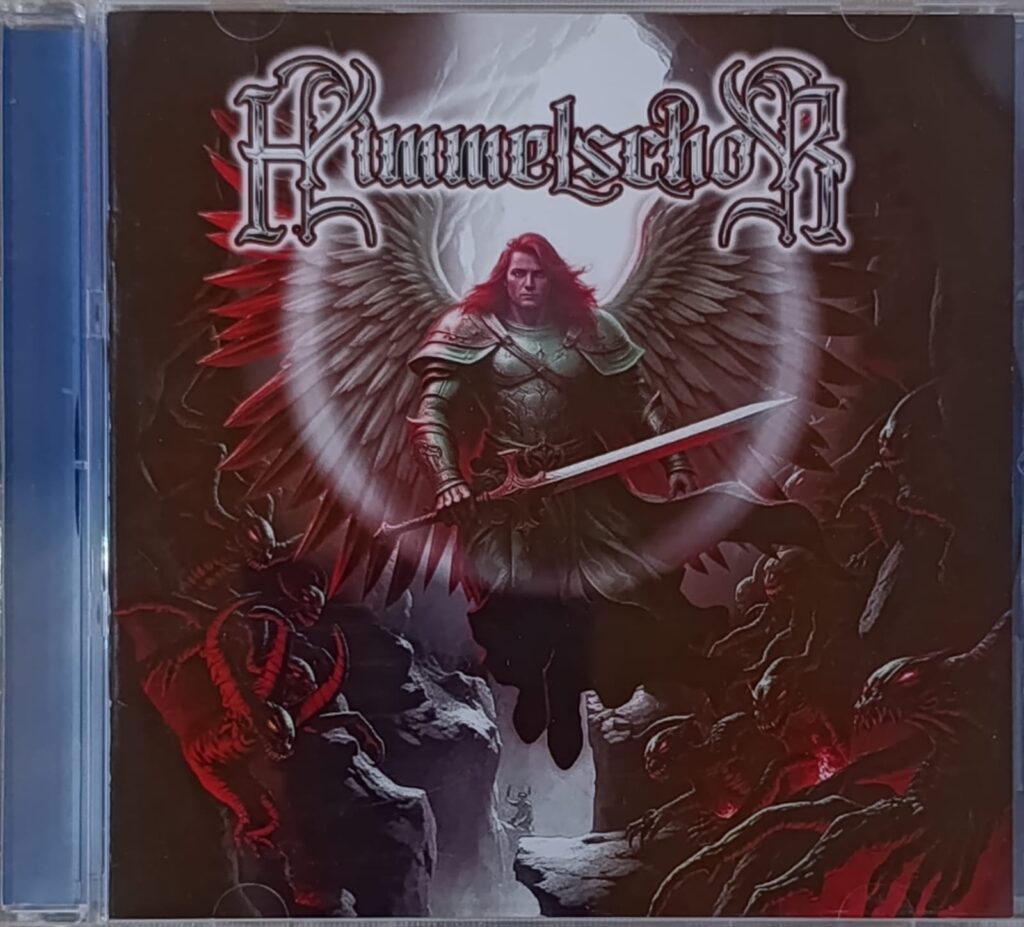
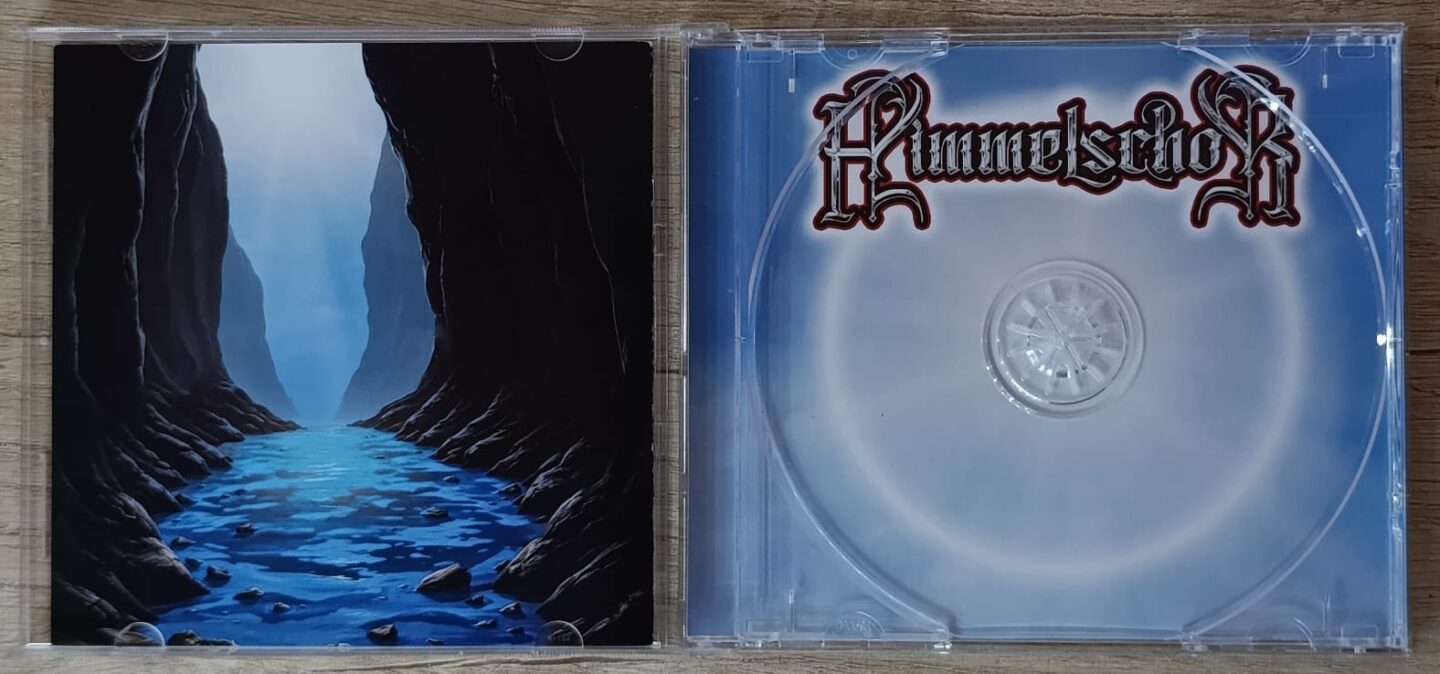
The album cover is eye-catching, to say the least, though not particularly original; still, it aligns with the album’s concept and the epic, spiritual aura that surrounds Himmelschor. As for the booklet, it includes the lyrics for each track; curiously, it only lists the first names of the band members (John, Aaron, Greg, and Anthony), and there aren’t even any photos. Nothing more than that. Clearly, Himmelschor focuses more on the musical side than the aesthetic one, which isn’t bad and even sparks some curiosity and intrigue, leading one to suspect the use of AI in the process.
While covering Christian hymns in another musical genre—in this case, a blend of Gothic and Melodic Metal—is neither new nor original, Himmelschor’s strength lies in doing so in their own style, with a concept distinct from anything heard before. The reinterpretation of these old hymns with an epic and gothic aesthetic breathes new life into these beloved, time-honored compositions. That is Himmelschor’s greatest strength.
To give you an idea of what this work is all about, below we’ve included Himmelschor’s version of “Amazing Grace,” and as is our custom, the links to find these people on social media…
https://www.facebook.com/himmelschor
https://www.instagram.com/himmelschor