'%3E%3Cg%20id='d'%3E%3Cg%20id='c'%3E%3Cg%20id='b'%3E%3Cpath%20id='a'%20stroke-width='1.3'%20d='m1%202%2034%2074%202%201v-2L9-2M8%2027c0%2011%207%2018%206%2028s5%2016%206%2020v7c1%201%204-3%203-8-1-6-5-7-4-20%201-12-5-15-4-26'/%3E%3Cuse%20href='%23a'%20transform='rotate(23)'/%3E%3C/g%3E%3Cuse%20href='%23b'%20transform='rotate(45)'/%3E%3C/g%3E%3Cuse%20href='%23c'%20transform='rotate(90)'/%3E%3C/g%3E%3Cuse%20href='%23d'%20transform='rotate(180)'/%3E%3Ccircle%20r='34'%20stroke-width='2'/%3E%3C/g%3E%3C/svg%3E)


Paramaecium: Exhumed Of The Earth | An Eternal Exhumation
(1993/94 – R.E.X. Music/Witchhunt Records)
An operatic, almost siren-like chant accompanied by a primitive riff and rattling toms. This is the introduction to the world of Paramaecium, a band that made Doom Death Metal more than just a simple offshoot of extreme music. With a personality and originality unusual in the genre, they created a whole new story within it, and despite their almost non-existent distribution, today they have become something of a cult band, and particularly their first album, “Exhumed Of The Earth,” is an important part of this whole story.
Este álbum is the beginning of a long story, which Paramaecium managed to capture, album after album, throughout the years they were active, at least discographically, because it is worth remembering that they were never a band that went on tour and played live (they only did so very rarely). More than anything else, Paramaecium’s work was built in the studio.
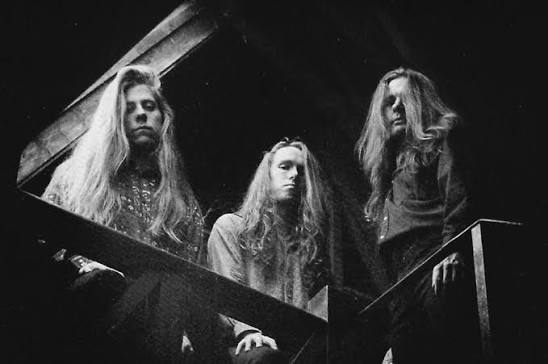
But this story began in Australia in 1990, at the behest of Andrew Tompkins, quite a character since, in addition to being a musician, Sir Tompkins is a writer, and as a way to merge his writing with his music, Paramaecium became the perfect excuse to combine both characteristics. It should be noted that prior to the album in question, the band released a demo entitled “Silent Carnage” in 1991, with a lineup that included Tompkins himself, Steve Palmer on drums, and Colin “Mosh” Maynard on guitar.
Later, the group was joined by Jayson Sherlock, drummer from the early days of Mortification, and guitarist Jayson De Ron. With this lineup, Paramaecium entered the studio to record the album in question. Interestingly, despite the curiosity surrounding the band’s name, it has no specific meaning. In fact, Paramaecium is simply an oval-shaped, single-celled ciliated microorganism that lives in fresh water and is frequently studied in biology. It has nothing to do with the band’s message and concept.
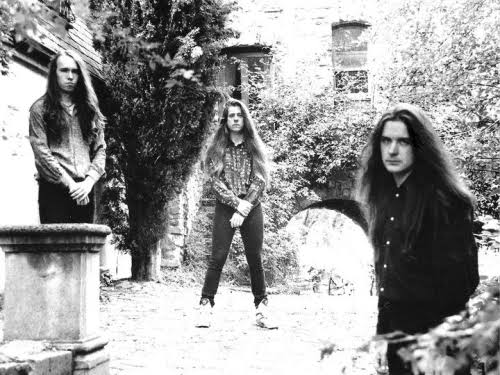
With varied influences, ranging from Cathedral to the early days of My Dying Bride, Paramaecium defined their sound as a kind of Death Metal leaning towards Doom, with a certain gothic and epic tendency, with a conceptual idea in each of their albums. In particular, “Exhumed Of The Earth,” in addition to being their first album, revolves around the Gospels, in terms of the birth, death, and resurrection of Christ, despite how illogical it may seem to mix that message with the musical genre that Paramaecium adhered to. Naturally, the message, the lyrics, and the work done on this album give it an atmosphere appropriate to the story of Christ, incredible as it may seem. It is a true work of art.
The album could not begin any other way than with the immeasurable work that is “The Innatural Conception In Two Parts: The Birth And The Massacre Of The Innocents.” The song in question lasts around 17 minutes, no more and no less. A very long intro takes us through a piece that, as is customary in doom metal, has a slow and heavy rhythm with typical Death Metal vocals, accelerating only at key moments in the story that Paramaecium tells us. In what we could call the middle part, the story changes with cellos, flutes, and quasi-operatic vocals by Rosemary Sutton. The orchestration and chords chill the blood, until we are taken back to those Death Metal bursts that Paramaecium resorts to, with a firm and fierce base. This first foray is one of the key pieces of “Exhumed Of The Earth,” but luckily for us, it is not the only thing we will find on this album.
“Injudicial” is Paramaecium’s most Death Metal side, you could say, and the closest to the sound of those times. With almost orchestral riffs and harmonies, and a mid-tempo base, it could be the most classic part of the Death genre that the band offers.
On the other hand, “The Killing,” with its extended tempo, focuses us on the essence of Paramaecium’s proposal. Far from the typical speed of extreme music, Doom can be heard in all its aspects, with some melodic flute passages in between and heavy, low riffs from Jayson De Ron’s guitars.
With an endless intro of riffs and an almost continuous double bass drum roll, “Entombed” kicks off, with its main charge at an intermittent speed and Andrew Tompkins’ impressive vocals that chill the blood. Impressive is an understatement; possibly one of the best things “Exhumed Of The Earth” has to offer, but almost as a continuation, “The Voyage Of The Severed” appears, another cascade of impossible riffs, harmonies, and melodies built from melancholy that, at first, seems like an instrumental but in reality, Tompkins’ vocals appear only 4 minutes into the song. Clearly, Paramaecium was not bound by any particular musical mandate. Without caring too much about what people would say, their approach always focused on the exquisiteness of their compositions and lyrics, which were Christian but sophisticated enough to avoid the typical clichés of Christian bands.
In “Haemorrhage Of Hatred,” low, heavy tones dominate the scene, kicking off another display of blast beats adapted to the tempo at which Paramaecium operates. The vocal exchanges between Andrew Tompkins’ guttural and quasi-monastic vocals are a hallmark of Paramaecium, and yes, they provide the appropriate framework (as in most of the album) for the themes the band develops on the record.
It seems that on all great albums, the best is saved for last. However, that doesn’t mean that the rest is bad, but rather that the icing on the cake is served at the end of the work. Thus, “Removed Of The Grave” becomes a key piece of “Exhumed Of The Earth” and its most complex and beautiful composition on the entire album.
An almost endless strumming of classical guitars, with dialogues and sounds that tell the story, as if it were a movie, is the beginning of the last track on “Exhumed Of The Earth.” The accompanying flute melodies add an extra layer of interest to the piece. “Removed Of The Grave” moves within the slow, heavy, and serious parameters on which Paramaecium bases its style, but with a musical exquisiteness that amazes fans and strangers alike. A movie ending, in almost every sense of the word. An excellent way to close an album that would become, over time, not only a Paramaecium classic, but also a paradigm and a difficult figure in the Doom/Death Metal genre.
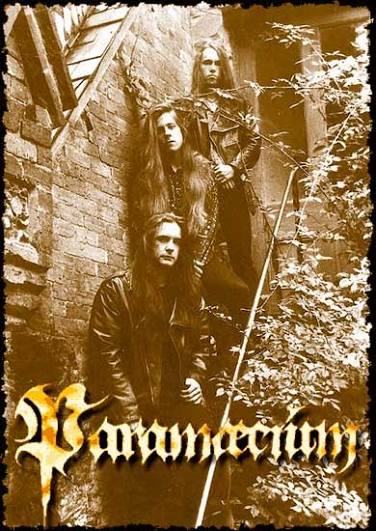
Of course, “Exhumed Of The Earth” was Paramaecium’s first step. Later, other albums would follow, each with a different story and even some differences in the line-ups, but without a doubt, this is where the band’s history is captured, and it also marked a path to follow.
I could even say that this album is possibly Paramaecium’s most virulent, harsh, and basic. There is no finesse in its sound, but it has that “je ne sais quoi” that makes it a classic for the band. While it is true that the complexity of the compositions, their intricate arrangements, and the different harmonies and riffs are the paradigm on which Paramaecium bases its style, which it will deepen in future albums, roughness is what reigns here.
Paramaecium has achieved an album that takes the death metal genre down a much more intricate path, from a musical point of view, with a greater sense of harmony and melody. It’s true, there are no guitar solos here, but the strumming, riffs, and viola orchestrations are a common feature throughout most of the album. The dark, pale, yet epic and majestic atmosphere is a success for Paramaecium, who manages to combine these factors to give birth to a work that is worth its weight in gold.
The sound, basic and without many additions, is the result of the album being recorded at Toybox Studios in Northcote, Melbourne, Australia. It was recorded between April and May 1993, produced by the band itself, and obviously on a low budget. This did not prevent Paramaecium from achieving an almost perfect album.
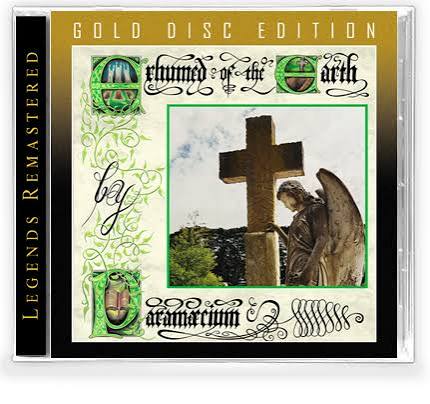
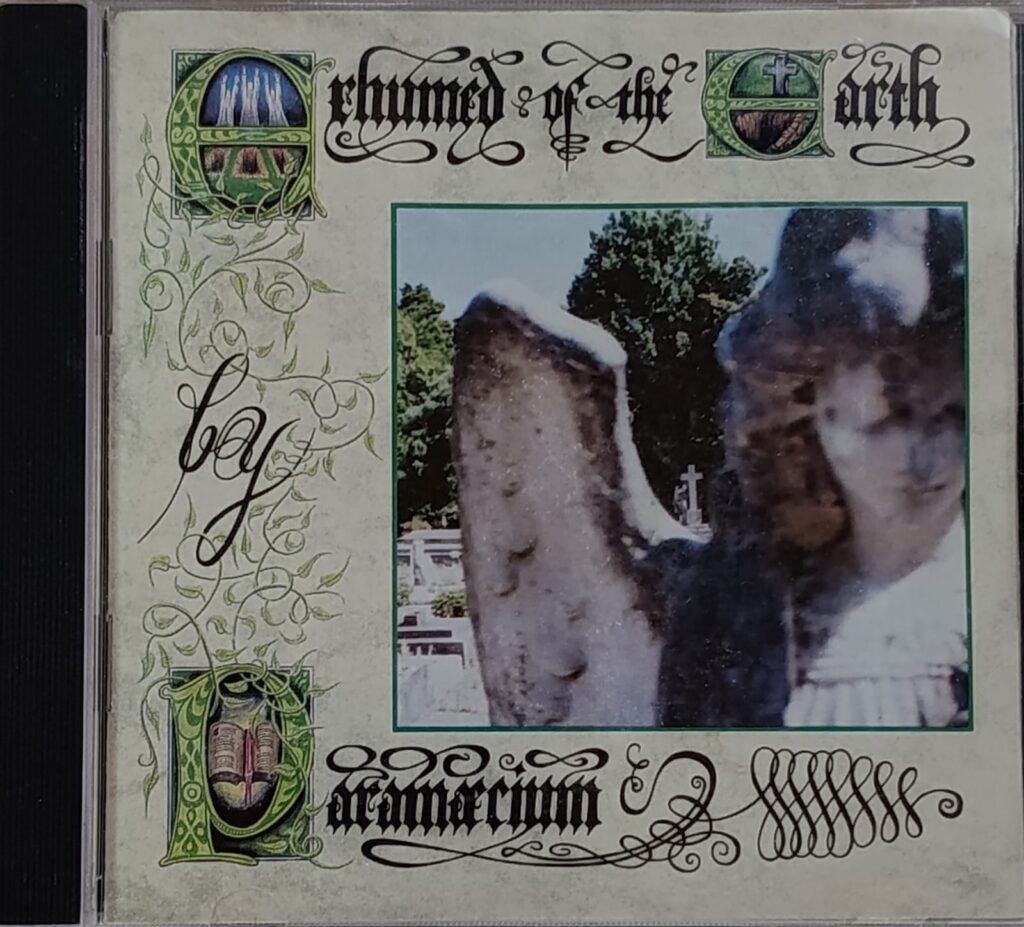
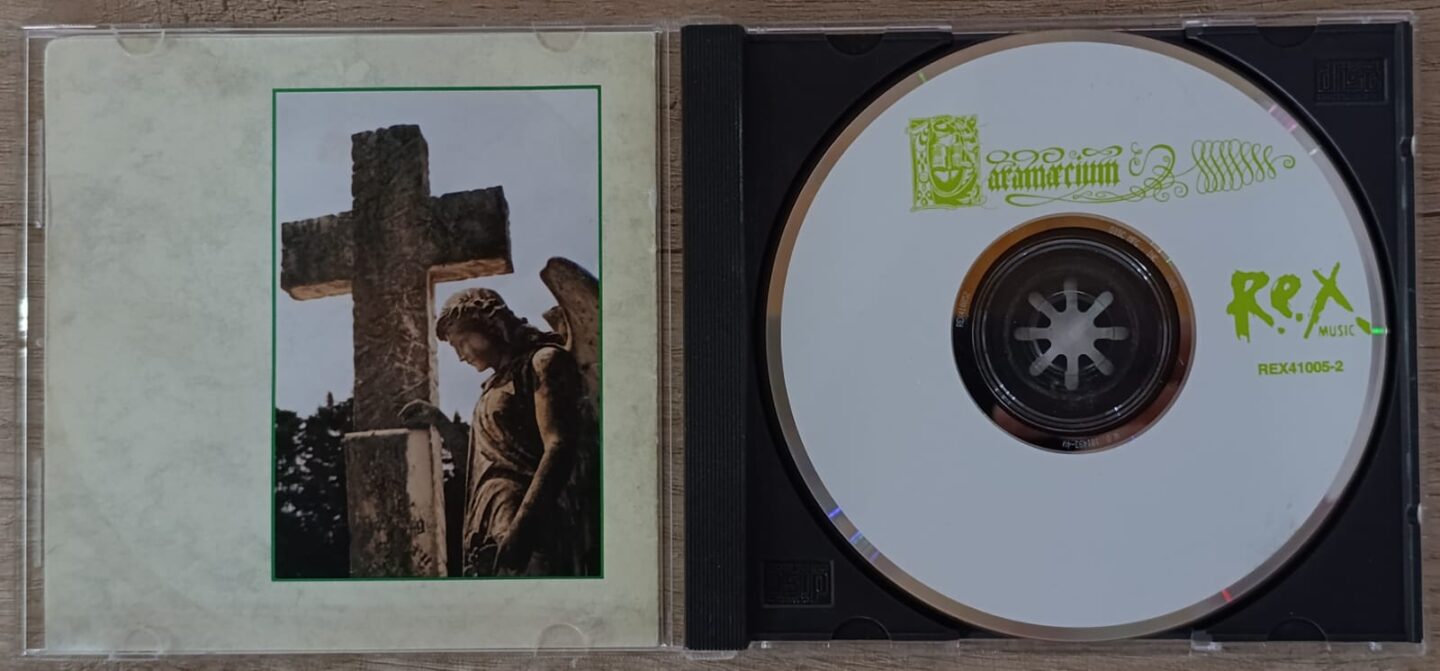
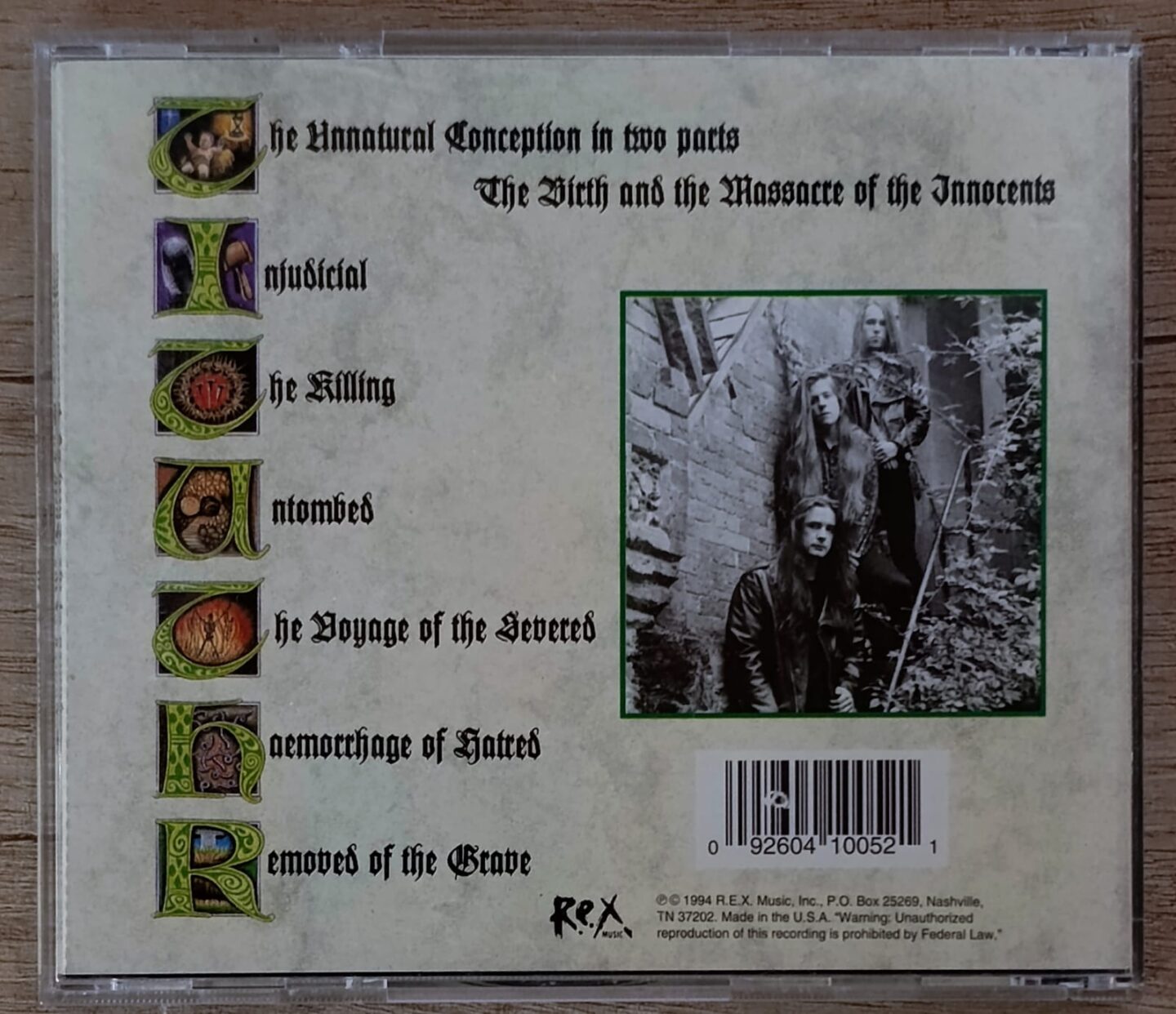
The cover of “Exhumed Of The Earth” is almost hypnotic. With a photograph clearly taken in a cemetery and a design that is a mixture of Gothic and medieval, it is undoubtedly another reason to consider this album a classic. The only photograph of the trio is on the back cover; the booklet includes the lyrics, with their biblical references (very typical of those years) and the technical details of the recording. Not much else.
The album had several different editions. Specifically, the one we have is the 1994 edition released by R.E.X. Music in the United States, but the CD also had editions in Europe released by the Swiss label Witchhunt Records and self-released by the band itself in Australia.
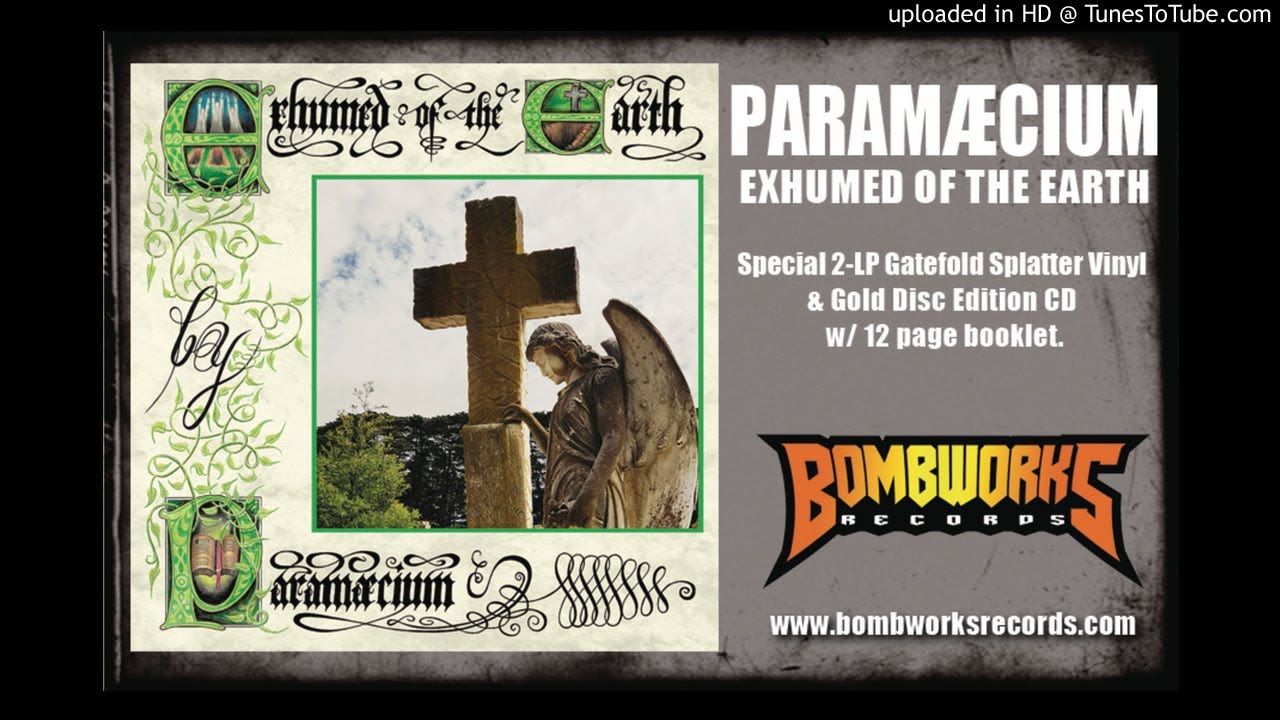
Logically, being an underground band, it was only natural that over time, this album would disappear from physical stores, becoming a difficult piece to acquire. That is why the Bombworks Records label reissued this album in 2020, remastered, with a new booklet, etc., as part of the “Legends Remastered” series; it was also released on double vinyl, which is no small feat. It should be noted that no bonus tracks were included in any edition.
“Exhumed Of The Earth” is the jewel in the crown of Paramaecium’s history, the album that justifies their history as a band and the beginning of a different path from what Christian metal had been up to that point. A classic that never dies….