'%3E%3Cg%20id='d'%3E%3Cg%20id='c'%3E%3Cg%20id='b'%3E%3Cpath%20id='a'%20stroke-width='1.3'%20d='m1%202%2034%2074%202%201v-2L9-2M8%2027c0%2011%207%2018%206%2028s5%2016%206%2020v7c1%201%204-3%203-8-1-6-5-7-4-20%201-12-5-15-4-26'/%3E%3Cuse%20href='%23a'%20transform='rotate(23)'/%3E%3C/g%3E%3Cuse%20href='%23b'%20transform='rotate(45)'/%3E%3C/g%3E%3Cuse%20href='%23c'%20transform='rotate(90)'/%3E%3C/g%3E%3Cuse%20href='%23d'%20transform='rotate(180)'/%3E%3Ccircle%20r='34'%20stroke-width='2'/%3E%3C/g%3E%3C/svg%3E)


Dalit: Moksha | A Journey In Black And White
(2021/2023 – Nordic Mission)
Looking at black-and-white images often evokes different feelings, but what about music that takes us on a journey with similar sensations? Perhaps part of the answer can be found in “Moksha,” the latest album to date by Dalit, a band based in Stavanger, Norway, which, at least on paper, presents itself as a Doom/Death Metal band, with a certain influence from bands like Katatonia or My Dying Bride, one might say.
Interestingly, the term “Moksha,” which serves as the title of this work, is a word derived from Sanskrit meaning liberation or emancipation, and it also holds spiritual significance within the Hindu religion. Even more intriguing is that Dalit (which, incidentally, is also a Hindu word) is a band that centers its lyrical message on Christian concepts, not Hindu ones.
Dalit is no newcomer to the scene. They’ve been making their mark since 2006, and in addition to several demos, they already have two albums under their belt and appearances on various compilations, making “Moksha” their third album to date—perhaps with a simple production but a defined concept and an idea that works in all its glory.
Originally released independently in 2021, it finally saw a physical release through the Nordic Mission label, which has brought this work to us—for which we are deeply grateful.
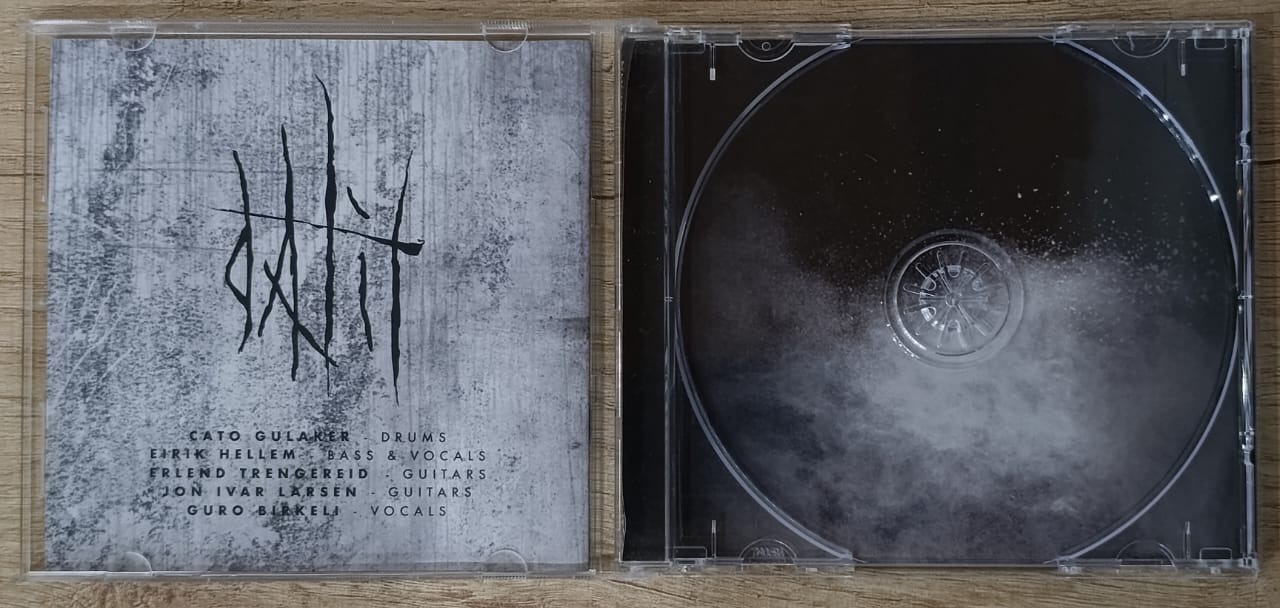
Musically, Dalit presents us with a dark landscape, tinged with grayish, melancholic hues. It features textures that blend progressive, melodic, and extreme elements—a blurred line between Death Metal and Black Metal. Yes, it’s Doom, tinged with a certain gothic flair, calm and symphonic at times, yet fast and furious when the situation calls for it. Dalit knows how to handle the pacing each song demands.
“Sons Of Adam Daughters Of Eve” kicks off the album. Doom foundations with riffs and thrashing typical of Death/Black Metal, but tempered with pleasant melodies that border on the progressive at times. In the same vein, with deep, bass-heavy tones, comes “The Best Of All Possible Words,” which, with a layered guitar arrangement and a variety of different moods, takes us on an interesting journey.
The sound is impactful, the riffs pound away relentlessly, and the melodies do their part to deliver “Starlight,” another standout track on the album. In contrast, “Anthem,” with its fiery march, takes us through a landscape filled with guitar riffs and a certain gothic tendency, while in “Hallways Of Sadness,” Dalit maintains that tendency toward heavy foundations interwoven with melodies, orchestration, and guitar riffs, with an unrelenting and cutting march in its riffs.
Finally, we come to a track divided into two parts: “Red Pt. I” and “Red Pt. II.” In its first section, almost like a cinematic introduction with a faintly epic tone, vocalist Guro Birkeli takes us through what could be described as an almost apocalyptic atmosphere, giving way to a second part where Dalit, with a tight tempo and heavy riffs, delivers one of the album’s highlights.
For the finale, Dalit leaves us with a track in Norwegian titled “Fra Jord Til Støv,” a truly gothic/epic and symphonic piece featuring a violin and Guro Birkeli’s vocals that set the appropriate mood, and a more than interesting epilogue to an album that showcases the band’s solid work.
Perhaps Dalit doesn’t surprise too much with their approach, but what’s interesting lies in the compositions that stray quite far from the genre’s clichés. The combination of gothic elements with Doom/Death Metal, guttural vocals reminiscent of Death/Black Metal, and a certain progressive tendency make “Moksha” an album worth a listen.
What stands out about “Moksha” is the conceptual thread that runs throughout the entire album. This could be counterproductive, but in a way, it clearly signals a guiding thread that leads you to explore the whole album, knowing exactly where Dalit is heading. Musically, it’s flawless; their compositions are complex and offer us different landscapes, sometimes even within a single song.
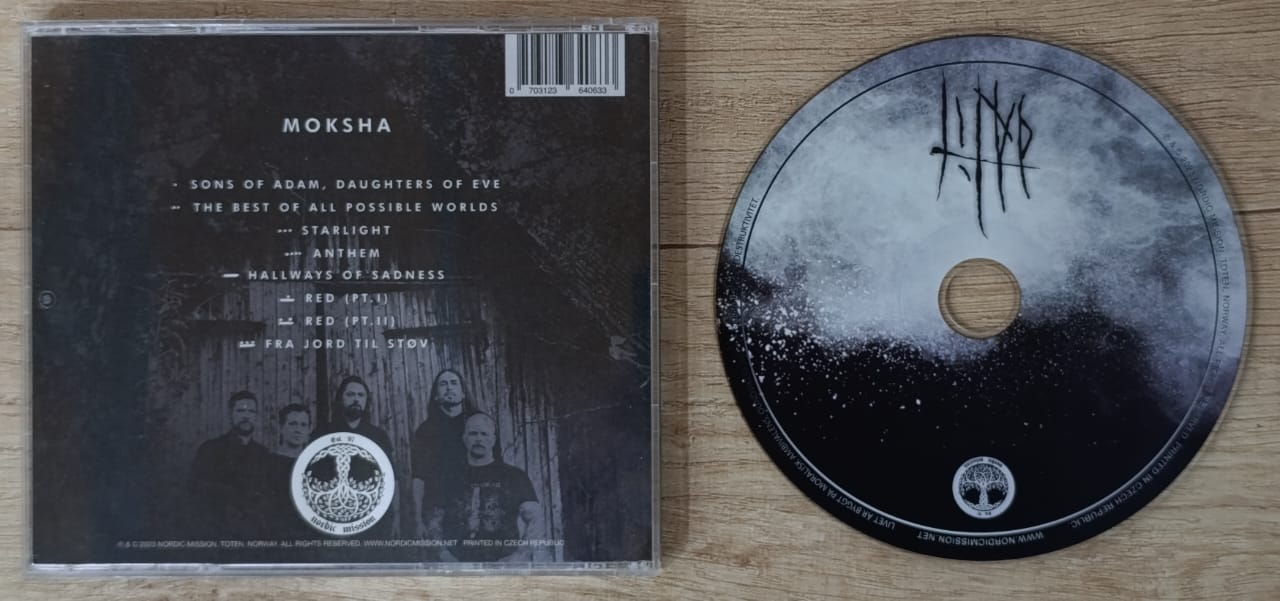
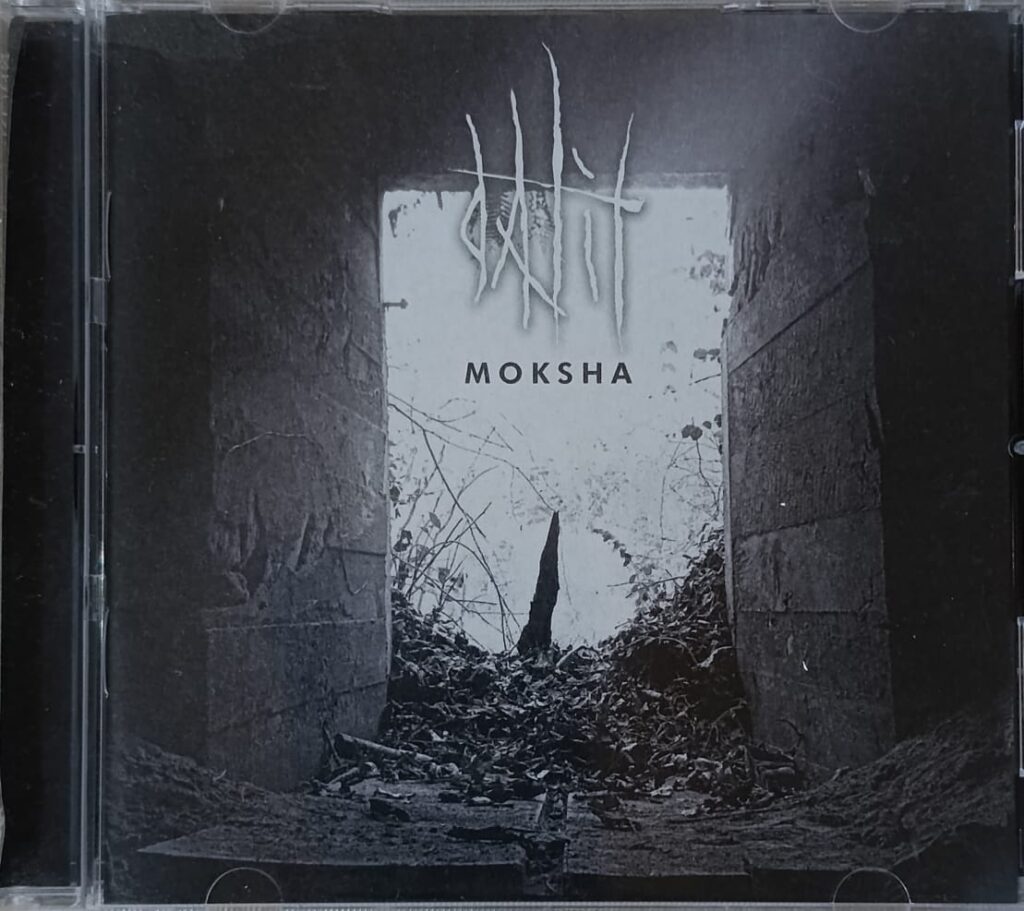
And just as the music follows a more or less elaborate concept, the visual design follows the same line, complementing what our ears hear, serving as another part of the message Dalit wants to convey with “Moksha.” As one might expect, the cover, the entire album design, and the inner sleeve have all been crafted in shades of gray. Specifically in black and white. An idea that’s already conveyed through the music, of course. Even the cover of “Moksha” strikes me as one of the simplest I’ve seen lately, yet also intriguing and among the best—both for the intrigue it sparks and for the seamless integration it achieves between music, lyrics, message, and visual art.
We mustn’t overlook the sound of “Moksha,” which perfectly captures that melancholic atmosphere, painted in black and white just like its cover. The foundations of riffs and low tones can be heard alongside the constant strumming and orchestrations that adorn each of the tracks on this album. The meeting of Eirik Hellem’s guttural vocals and Guro Birkeli’s clean, classic vocals lends that mystical and epic touch that suits this type of material so well.
“Moksha” has its strengths; it’s a flawless album by any measure. Perhaps it lacks that one standout track that would set this album apart and elevate it to classic status, but the fact is that Dalit seems to have poured everything they have into every single song on the album. That seems to be its only flaw, but to truly enjoy “Moksha,” yes, folks, you have to listen to it in its entirety. That’s what it’s all about, as is obviously the case with everything, but here it becomes essential. Dalit has crafted an album with a common thread that tempts us to listen to the whole thing in one sitting, drawing us into a sound that blends the calm and melancholy of doom with the fury of Extreme Metal, softened by intriguing melodies.
One notable detail is that “Moksha” is not only available on CD (as in our case) but also on vinyl, which makes the experience much more interesting.
It’s available through the Nordic Mission label, and of course, we’re leaving you the social media links—not just for this record label but also for the band—so you can follow them and stay updated on their latest news. And to set the stage properly, as is our custom, here’s a track for you to listen to: “Starlight,” one of the songs from this interesting album….
https://www.facebook.com/nordicmission
https://www.facebook.com/dalitband
https://www.instagram.com/dalitband