'%3E%3Cg%20id='d'%3E%3Cg%20id='c'%3E%3Cg%20id='b'%3E%3Cpath%20id='a'%20stroke-width='1.3'%20d='m1%202%2034%2074%202%201v-2L9-2M8%2027c0%2011%207%2018%206%2028s5%2016%206%2020v7c1%201%204-3%203-8-1-6-5-7-4-20%201-12-5-15-4-26'/%3E%3Cuse%20href='%23a'%20transform='rotate(23)'/%3E%3C/g%3E%3Cuse%20href='%23b'%20transform='rotate(45)'/%3E%3C/g%3E%3Cuse%20href='%23c'%20transform='rotate(90)'/%3E%3C/g%3E%3Cuse%20href='%23d'%20transform='rotate(180)'/%3E%3Ccircle%20r='34'%20stroke-width='2'/%3E%3C/g%3E%3C/svg%3E)


BRIDE: LIVE TO DIE (1988) | Heroes Of The ´80s

There are albums that mark not only the bands, but also the simple listener who has ever come across them, by chance or not. They are those classic, cult albums, that no matter if they sold millions, if they were successful or not, etc, but for some reason, we still listen to them and remember them. From this section we are going to try an approach to albums that have marked an era, considered cult and that it does not hurt to remember and rescue from oblivion. A review after all but different, including also the look of the protagonists of the matter. “Live To Die” by Bride, released in 1988, is one of those albums, and with it, we inaugurate this section pompously called “The Unarchiving”, since this is a way to bring out of the dust of oblivion, those albums that deserve a more prominent place than the one they have. To do a bit of Justice and why not, to remember a thousand anecdotes that come to mind related to the album in question.
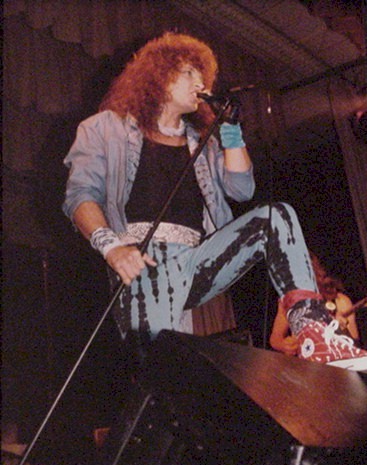
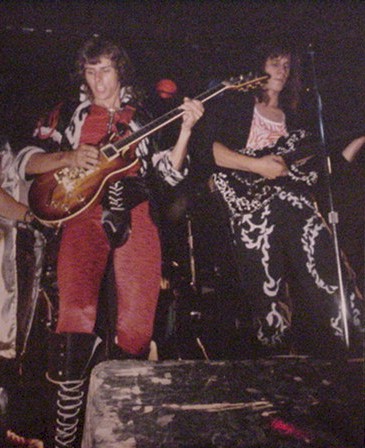
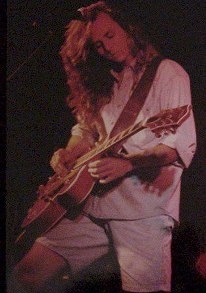
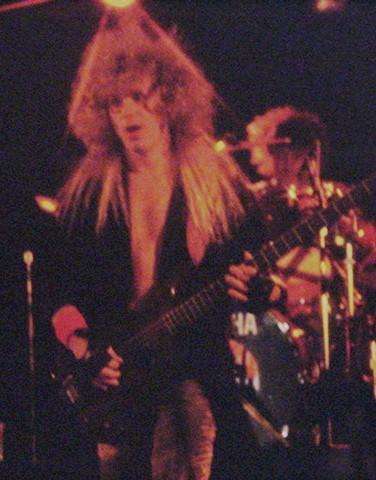
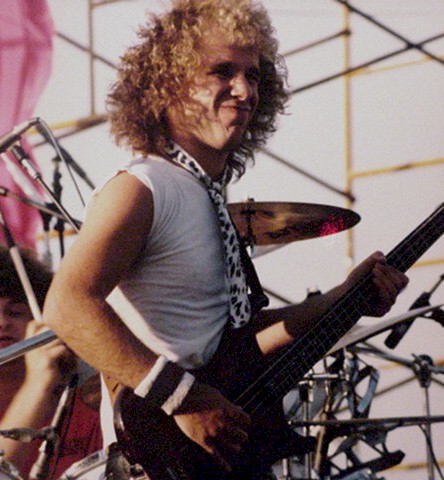
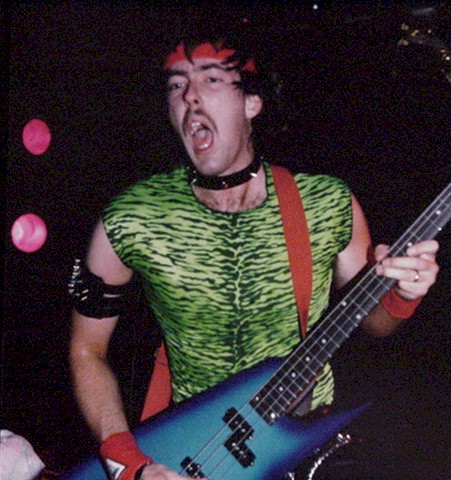
Bride is an American band that exists as such since the ’80s, and that through more than 30 years of career, has gone through various styles, from its original Heavy Metal, through its Hard Rock stage and even further back in time with the approach to more modern sounds. Beyond this issue, it is impossible to deny that those of us who have known Bride for a long time, if there is an album that has marked us, it is “Live To Die”, originally released in 1988 through the now defunct Pure Metal label. Summarizing a bit the history of Bride, the band started with the name “Matrix” back in 1983. Founded by brothers Dale and Troy Thompson, Bride would release a first album in 1986 curiously called “Show No Mercy” (any parallels with Slayer’s first recording career, is it pure coincidence?) So we come to 1988 and the release of “Live To Die”. In the words of Dale Thompson, vocalist of the band, there were some changes between that first album and the recording of the album in question. “Gone was Scott Hall who would soon begin the act as the booking agent and manager of the band and we brought in Frank Partipilo on bass to take Scott’s place and Steve Osbourne to add that metal flare on second guitar.”
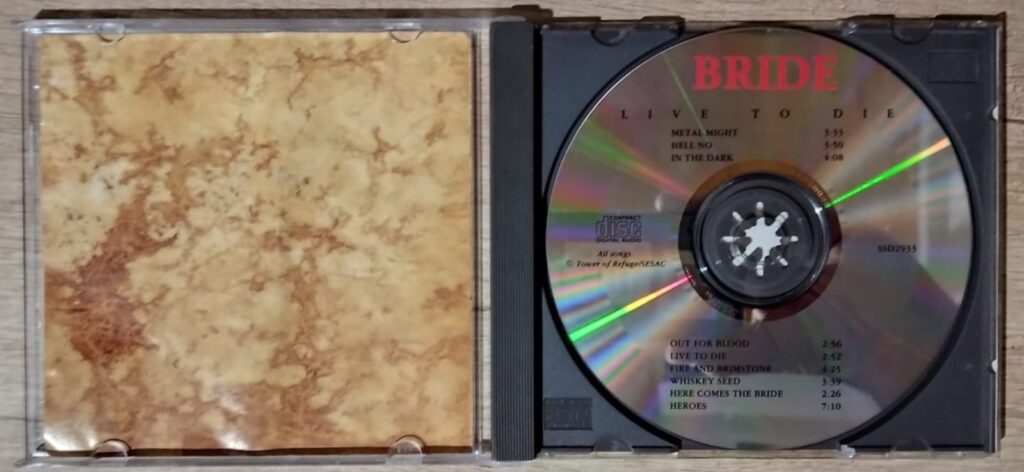
The consequence is that we have an album that features 9 tracks, showing a Bride more hard-hitting than ever, clinging to the purest Heavy Metal we have heard in their entire discography. In this regard, Dale Thompson commented that “At the time I was listening to Ronnie James Dio, Iron Maiden, Man O’ War bands that were more aggressive in nature and that personally influenced me to bring those styles into the song writing process”. In that frame and continuing in relation to the creation process of “Live To Die”, Dale remarks that “Troy and I have always been the primary songwriters for the band. He writes the music and I provide the lyrics and melodies for the vocals. That has always been an unbeatable formula and has not changed since our conception as Bride. We always have many more songs than we record for a project and those songs are sometimes recycled, rewritten and appear on later albums or they fall away into the “not good enough,” abyss..“
What we find in “Live To Die” is a powerful, aggressive album, that gives no respite in any of the 9 songs included in it. Of course, the production in general varies a lot with respect to their first album and that is noticeable from the beginning, with a greater emphasis on the sound and a greater compositional unity. “Show No Mercy was on a tight budget,” Dale relates, ”we recorded in the basement of Howie Gano a guy who would later on do a lot of good recordings but for us he was just setting up his sound board and trying to figure out how it operated. With Live to Die we went to New Jersey with Armand John Petri producing and recording with him engineering. It was our first time working with a producer. Unfortunately he made several mistakes in the recording that fans would not hear but we know that they are there. The recording studio was different, it was in West Orange, New Jersey and I remember we spent most of the time in that studio cold. Working with John made it fun enough. He had some good ideas but under-appreciated our talents. He was very hard on Stephen Rolland as a drummer needlessly. I was scrutinized pretty harshly as well, doing retakes of everything. Just like the labels who did not understand our potential John could have made a better album for us if he would have let us just be Bride.”
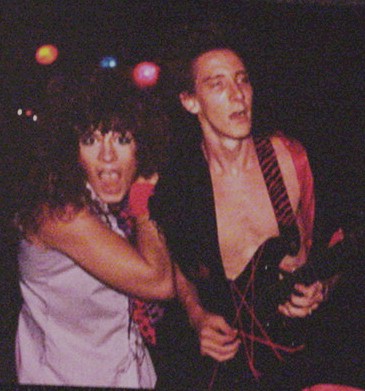
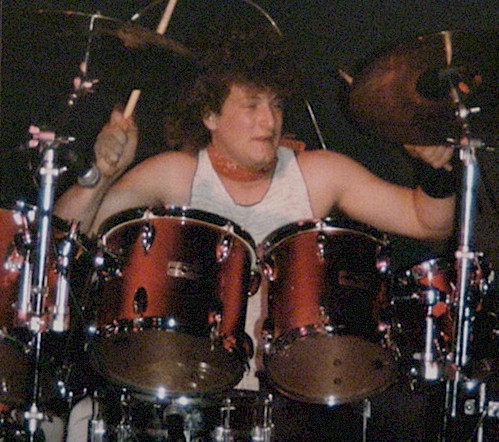
On top of it all, the band had to manage quite a bit to record this album. “We worked very hard in stressful conditions,” says Dale, ”There was a hole in the ceiling where the rain came through in one of the adjoining rooms. Steve Osbourne was actually sleeping in that room and threw a bar of soap up and out of the room onto the ceiling because he thought it must be a window but it was a gaping hole. Steve was terribly sick during the recording after those sleeping conditions and recorded the album under duress. Overall, it was good to have experienced the stress and the environment in general, it made us much wiser.”
“Metal Might” is the song that opens this incredible album. A piece aggressive enough to kick off a great album and one that rightly highlights the power of Metal. Scott Hall, former bassist of the band and later Bride’s manager, is the one who writes the lyrics of what is basically a song to the world about the power of Metal. In “Hell No”, you can appreciate a little bit of the Bride we all know, in a vein much closer to Hard Rock and with riffs closer to the Bride of later albums. According to Dale Thompson, this song “Has taken on new meaning for me now since becoming a Christian Universalist. But at the time it simply meant we shall not be defeated because of Christ Jesus in our lives. No weapon that is formed against us shall prosper.”
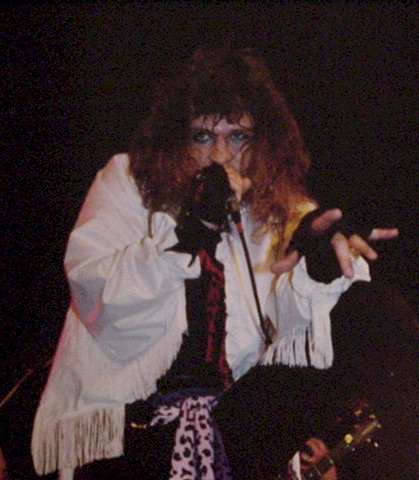
Is it okay to consider “In The Dark” as the “ballad” of the album? Rather it is a kind of hymn, although it is clearly the track that suggests the most calmness and in which, curiously in our appreciation, Dale Thompson’s trebles reach a very high level, as we would almost never hear again. According to him, the song refers to “…loneliness, a place where one feels abandoned. At the end of the song the story of this poor man comes back to salvation as he reaches out for God.”
With a very cross between Maiden and Dio style, “Out For Blood” is perhaps not the best of the album, reflecting in lyrics the famous Judas betrayal. Next, we have the tremendous riff of the title track, in one of the most aggressive songs Bride has ever created. In Thompson’s words, “Is a wake up call for everyone to say without Jesus you have nothing. To give your life to Christ you must lose your former self and know your identity in him.”
Perhaps, it may go unnoticed, but “Fire And Brimstone” is a piece that holds its own, with a clear Manowar influence, with a strong and sustained foundation. Possibly, it is one of the most direct and to the point songs that can be heard in this work. “It’s about the end days and the destruction to come,” Thompson comments, ”We are in the final age and the fires have been lit worldwide and the flames have been fanned. The children of destruction are running headlong into the pit. It is about when the world is on fire, who will you turn too?”
“Whiskey Seed” is about alcoholism, according to the band. A track that doesn’t add much on the album. Perhaps it could be filler and even possesses a style more similar to the Hard Rock for which we would later know Bride. Possibly the missing link between this first era and the later ’90s.

“Here Comes The Bride” is not only one of Bride’s best and most combative songs, but according to Dale Thompson, ”Is Bride’s anthem screaming out who we are to the world and that we mean business. Our business is to draw in people that they might be delivered from this present evil world by a transformation of their mind, to renew their minds and shake off the old dead ways of tinking to walk in the Light as Jesus is our Light.”
Finally we have “Heroes”, not only the last track of this album, but it is a classic, practically the best track of the album. With a movie intro, including a blistering guitar solo right out of the gate, “Heroes” offers the best that Bride has to offer musically. What they call an anthem, with a very solid guitar work. “This song is to encourage anyone going through hell, or through the valley of the shadow of death to know they have power against dark forces in the name of Jesus.”, in words of Dale Thompson; Anyway, it is a powerful enough song, with more guitars than lyrics itself, but it has a very characteristic riff, which makes it unbeatable as time goes by. For us, maybe the most classic song of the band.
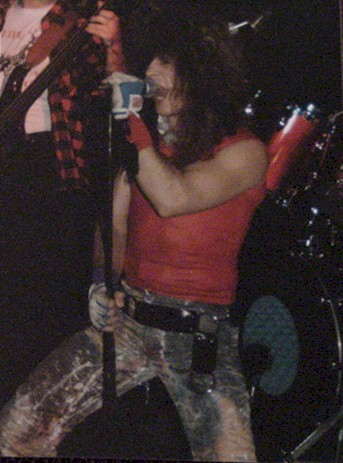

Let’s agree that “Live To Die” does not have a production in general that stands out in itself. In fact, its conception seems quite basic compared to the great albums that were released in those years, and even in later productions of the band. The great achievement is in the songs that integrate it, one more explosive than the other, denoting that it has resisted well the passage of time. There is a great work in the sound of the guitars and in the solos that can be appreciated. They really sound aggressive and even, and the secret is in the songs that make up the album, not so much in its great production. Continuing in Dale Thompson’s words, “I do not believe we had a concept. We wanted to record something very heavy because at the time we believed that was where hard rock and metal was trending to. Steve Osbourne complimented Troy’s writing and playing so well we really thought this would have been our future direction.”
“Live To Die” may not even be Bride’s ‘classic’ album nor is it the most appropriate self-referential album, considering what was to follow, but it is more than clear that for those of us who love Heavy Metal, this Bride work cannot go unnoticed. Even with the modesty imprinted on this production, Dale Thompson thinks that beyond Bride’s later career, the album has brought its benefits to the band. “This album was pivotal for us as a band because it truly cemented us into the Christian Metal community and the fact that we never recorded another album like it appeals to my creative side. I thought the album was perfect, a 10/10 so why attempt to repeat it. I think that is one of the reasons we began changing styles after we toured with it.” He also assures that “Live To Die is on par with any creative Metal/Thrash album ever released. It’s a powerful piece of work that Troy worked very hard to achieve. Likewise, everyone contributed a lot to make it work. Unfortunately it’s an album of only 9 songs, and for me the biggest mistake was not recording a 10th track (we thought the same thing!). That was John Petri’s idea, the producer, to omit certain songs. We would work with him again on Silence Is Madness anyway, but the working conditions there were different.”
One of the problems generated with its release has to do with its availability. Let’s think that it was released in 1988 by an unknown label and that is one of the reasons for the impossibility of getting it. For this reason, someone came up with the brilliant idea of re-releasing it, both in vinyl and CD format, through the Retroactive Records label, which includes some bonus tracks, an edition of which, however, Dale claims not to have been involved and even claims not to have heard. We will have to believe him.
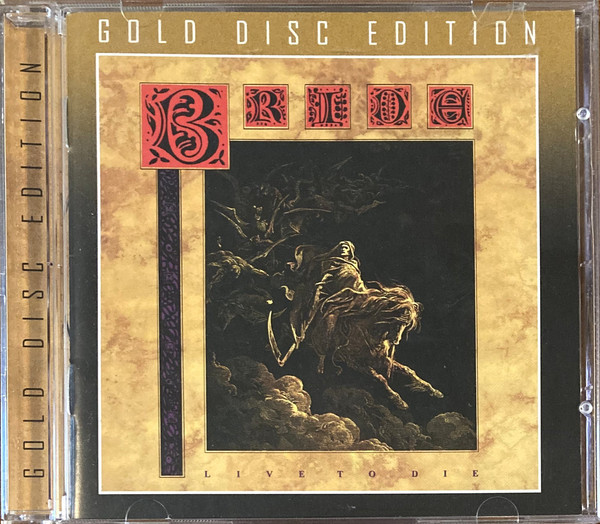

“Live To Die” is a masterpiece, a bit lost in time and a forgotten gem that never hurts to rediscover. Not only is it a genius from those good old days of so-called Christian Metal, but even today, it has a vitality worthy of enjoying again and that, beyond the clear influences that the band had, it has an originality and personality that you see very occasionally in these times. Although it is difficult to get hold of a copy in its original release version, either on vinyl, cassette or CD, the truth is that the re-released versions are going around, so it is not so difficult to get the physical format of this great album. There are simply no excuses to get into “Live To Die” again, perhaps the most important and fundamental brick in Bride’s history as a band.
There are simply no excuses not to dive back into “Live To Die”, perhaps the most important and fundamental brick in Bride’s history as a band. And of course, this is our little tribute to a cult album that should not go unrecognized in the history of Metal.