'%3E%3Cg%20id='d'%3E%3Cg%20id='c'%3E%3Cg%20id='b'%3E%3Cpath%20id='a'%20stroke-width='1.3'%20d='m1%202%2034%2074%202%201v-2L9-2M8%2027c0%2011%207%2018%206%2028s5%2016%206%2020v7c1%201%204-3%203-8-1-6-5-7-4-20%201-12-5-15-4-26'/%3E%3Cuse%20href='%23a'%20transform='rotate(23)'/%3E%3C/g%3E%3Cuse%20href='%23b'%20transform='rotate(45)'/%3E%3C/g%3E%3Cuse%20href='%23c'%20transform='rotate(90)'/%3E%3C/g%3E%3Cuse%20href='%23d'%20transform='rotate(180)'/%3E%3Ccircle%20r='34'%20stroke-width='2'/%3E%3C/g%3E%3C/svg%3E)


Interview With Juan Granado | “I Never Felt Like A Weirdo”
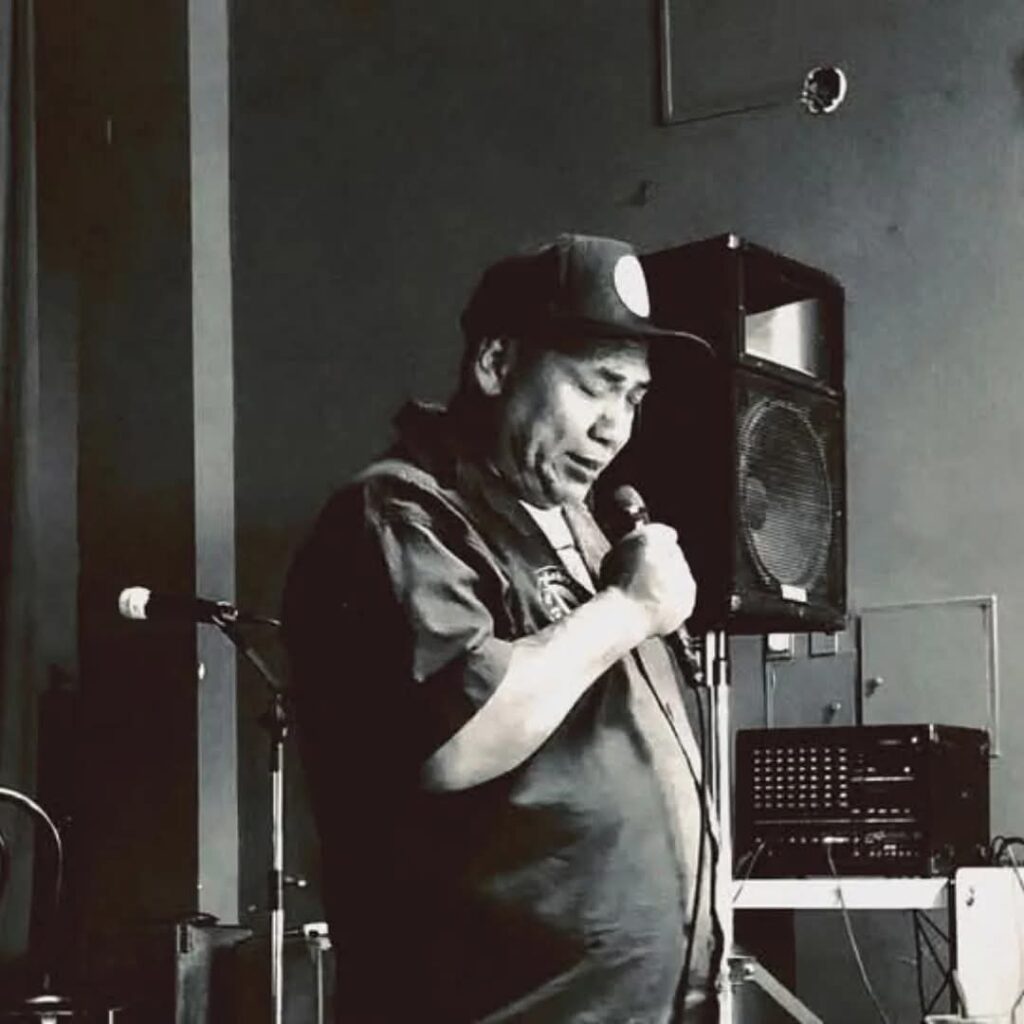
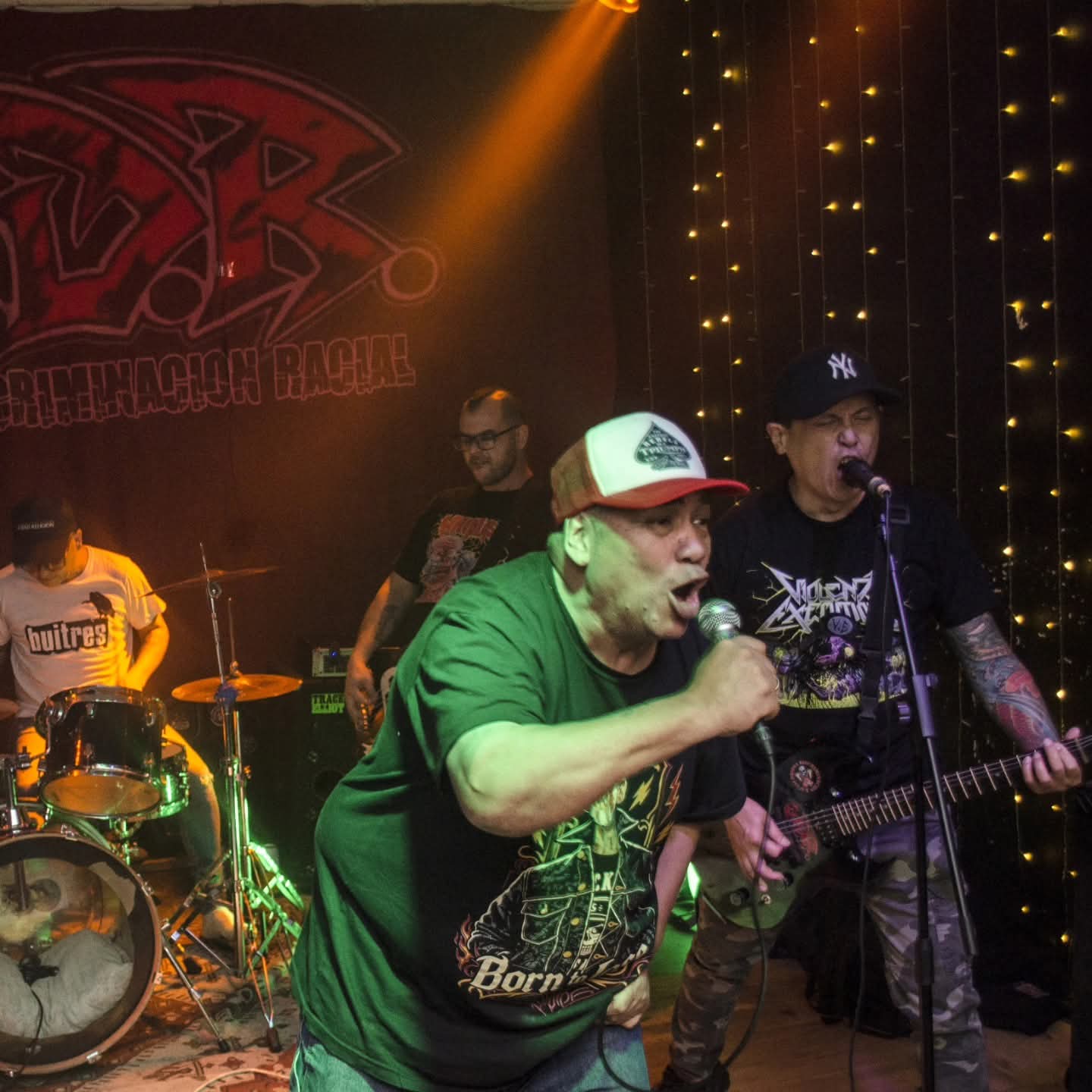
There are people you can talk to for hours on end, and who leave a lasting impression on you. One of those people is Juan Granado, a guy who, in addition to being a punk and fronting the hardcore band O.D.R., is also a pastor at a Christian church. He has a way with words that makes any topic interesting, and he never shies away from any question—which is why we thought it would be great to have a conversation with Juan, to hear him talk about what this scene is like, how he balances both aspects of his life, and so on.
The church he leads is called “Iglesia Punk” (Punk Church), and given that unique name alone, we thought it would be a good idea to chat with him. The conversation covered a variety of topics as well, and here’s what came out of our talk with him…
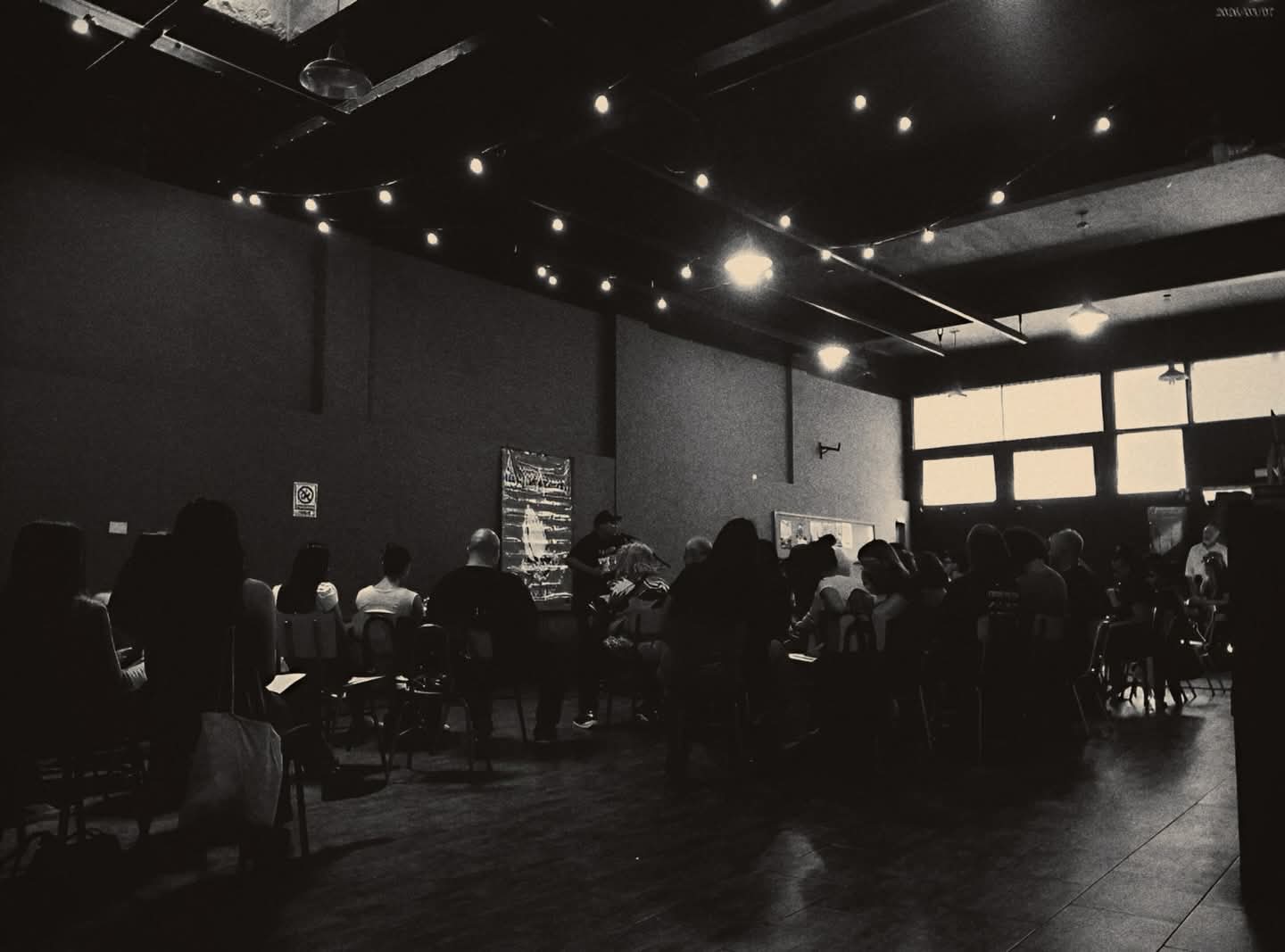
Although it might seem strange to some, Juan, I understand that you’re the pastor of a Christian and “Punk” church. Tell us how this whole “Punk Church” thing came about…
“And I come from there—from that style of music. I’m 60 years old now, so I saw and experienced the entire emergence and growth of the punk scene here in Argentina. When I converted to Christianity, the reality at that time was that I completely distanced myself from music. I got rid of my clothes, my records—everything—and never wanted to return to the world of music. It wasn’t compatible with my life—not because it was forced on me, but because I didn’t want it. I know the world of rock perfectly well, and it was no longer a place for me. Simply for that reason. At that time, I devoted myself to studying theology at the seminary. I was born into the “Assemblies of God,” a Pentecostal Christian church. I earned my teaching degree because my dream had always been to teach in churches. The idea of becoming a pastor never crossed my mind or touched my heart because I felt it wasn’t for me. Being a pastor requires absolute dedication, and your life is no longer your own; it’s all about others all the time. Teaching in churches meant teaching and then leaving, having a quiet life, spending time with my congregation, and that was it. Over time, I reconnected with musician friends who started calling me again… because I’d kind of disappeared. One of them is “Corvata” (Marcelo Corvalán, formerly of A.N.I.M.A.L. and Carajo, currently with Arde La Sangre), and he asked me to come meet his daughter, who was one year old at the time. I told him what had happened to me—that I was going to church, that I was a Protestant—and he told me they’d been searching for Buddha or something like that, but couldn’t find anything. And since I’d known “Corvata,” Nancy, and many other musicians from back in the day, I said to him, “Look, the truth is Christ… it’s not in Buddha or anything,” and right then a door opened at Marcelo’s house. They had a band, aside from Carajo, that played reggae, and I started going on Thursdays, and Marcelo asked me to say something—amidst all everything—so I started talking to them about Christ, facing incredible resistance because there were so many different schools of thought: from Rastafarianism to atheism, and everything you can imagine. The truth is, I didn’t really feel like going, but I kept going back every Thursday, and eventually most of them began converting to Christianity. That Thursday gathering, started filling up with Bibles and became a place to talk about Christ. When I got married and earned my teaching degree, I left them and asked them to find a church; I wanted to move on with my life, but shortly after, I began to feel what they call a “calling,” and for those who believe, I began to receive that calling to start a church for this kind of person—and I was completely opposed to it because, honestly, I didn’t want this. I had already settled into my life; I was happy with it—I was married, had my job, and so on. One night, God spoke to me in such a way that I woke up at 3 a.m., and I said to my wife, “Well… let’s start a church.” I didn’t know how to go about it—I’m not a pastor—but anyway, I got my church’s endorsement as a minister so I could do it, and I started welcoming all kinds of hurting people, from rockers who’d been kicked out of their churches to people who’d been hurt, scammed, and so on. The “punk” church thing was a joke among us—it was the name we used for the gatherings at “Corvata’s” house. Since it seemed like something with no future, I said, “Let’s start a church with a future.” I don’t know why the name stuck, why it caught on. I never would have thought to call it that, but that’s how it turned out, and to this day it’s still called that. I’ve been a pastor for 15 years now, and here we are, moving forward…”
What kinds of activities do you have as a church?
“The usual things you find in any church: discipleship, listening to people, and so on. It’s quite a lot of work. There’s also the social aspect—it’s no different from a traditional church. We have a very strong focus on doctrine, customs, and the differences between them, which is basically what I trained for. There’s a lot of emphasis on the Word of God, which is what matters most to me. I always say that in the church, we don’t argue using human reasoning but with the Word of God. The only thing that is right is the Word of God, and for that, you have to know how to interpret it well. That has helped me a great deal. I’m a pastor with a traditional approach to teaching. I didn’t train myself, nor was I anointed by four punks on a street corner; rather, I had to go through everything any ordinary Christian has gone through, and I became a pastor the way pastors do. I was ordained by a presbytery, examined by other Baptist pastors, and accepted as a pastor. In other words, my path wasn’t anything out of the ordinary. I know there are some who don’t have a presbytery and have set themselves up on their own, but our way is recognized by the church itself and by the law as well. We’re a traditional church—we’re just different in the sense that we don’t beat around the bush. There’s a good relationship among everyone. You can reach the pastor without anyone standing in the way. There’s open access to talk with me. Those are the things we’ve broken with the most. The pastor isn’t someone untouchable. You can talk, discuss things, and call me at home whenever you need to. That might be the most revolutionary thing of all!!!! (laughs), and we welcome all kinds of people. We’re a normal church within Protestantism—it’s just that our attire is casual, and the way we interact and talk to one another is more like friends than anything else. Anyone who comes in feels that warmth, so it’s nothing like other churches. I think that’s the big difference.
And the most important thing about the Sunday service is that everyone has to participate. It’s not a monologue where I just talk and that’s it. The congregation has to participate; they have to read and ask questions about what they don’t understand. That’s the most important thing we have, in addition to the strong teaching of God’s Word.”
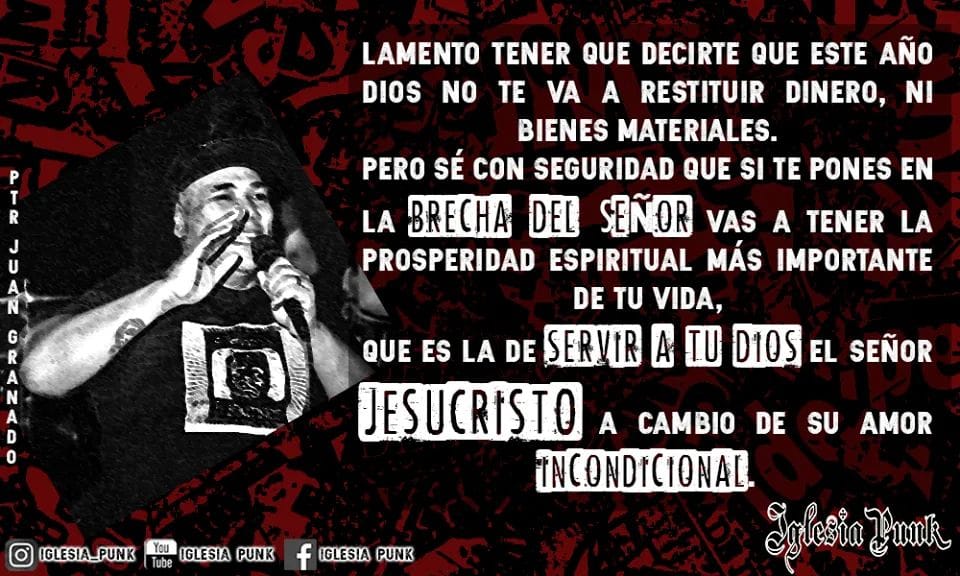
Among your peers, is it hard to gain recognition? Because, as a pastor, you defy any expectations of what a church pastor “normally” should be… don’t you feel like an “weirdo”?
“I’ve never felt like an weirdo because I was trained by traditional pastors and teachers, and when I went to teach at churches, I had an educational background and a way of speaking that worked for both older and younger people alike. But God also gave me the advantage of having grown up where I did. At first, it might have been unusual for a church to be called a ‘punk church,’ but later I’ve been invited everywhere to teach—to the Rio de la Plata Institute, to the Baptist Institute, which are perhaps the largest. My appearance might be striking, but when I start talking to people, they realize I’m quite well-prepared and knowledgeable about the Word of God! These days, it’s normal. Churches like Vaky’s (“Cultura Alternativa”) and others have helped make this the norm today, because 10 years ago or more, it was unusual. Not anymore.”
From what we understand, you have a long history in Argentina’s punk and hardcore scene. Can you tell us which bands you’ve been in and if you’re currently doing anything musically speaking?
“I was born into the punk scene. I’ve had bands—or attempts at bands. In fact, O.D.R. started out as a punk band and became a hardcore band. O.D.R. has always been the band I’ve been in. I’ve been in other hardcore bands, but O.D.R. is the band we’ve grown up with since we were kids, and the one I’m still with today at age 60.”
Speaking of O.D.R. (Odiosa Discriminación Racial), what are you guys currently up to, and what are your future plans as a band? What do you have available for people to listen to?
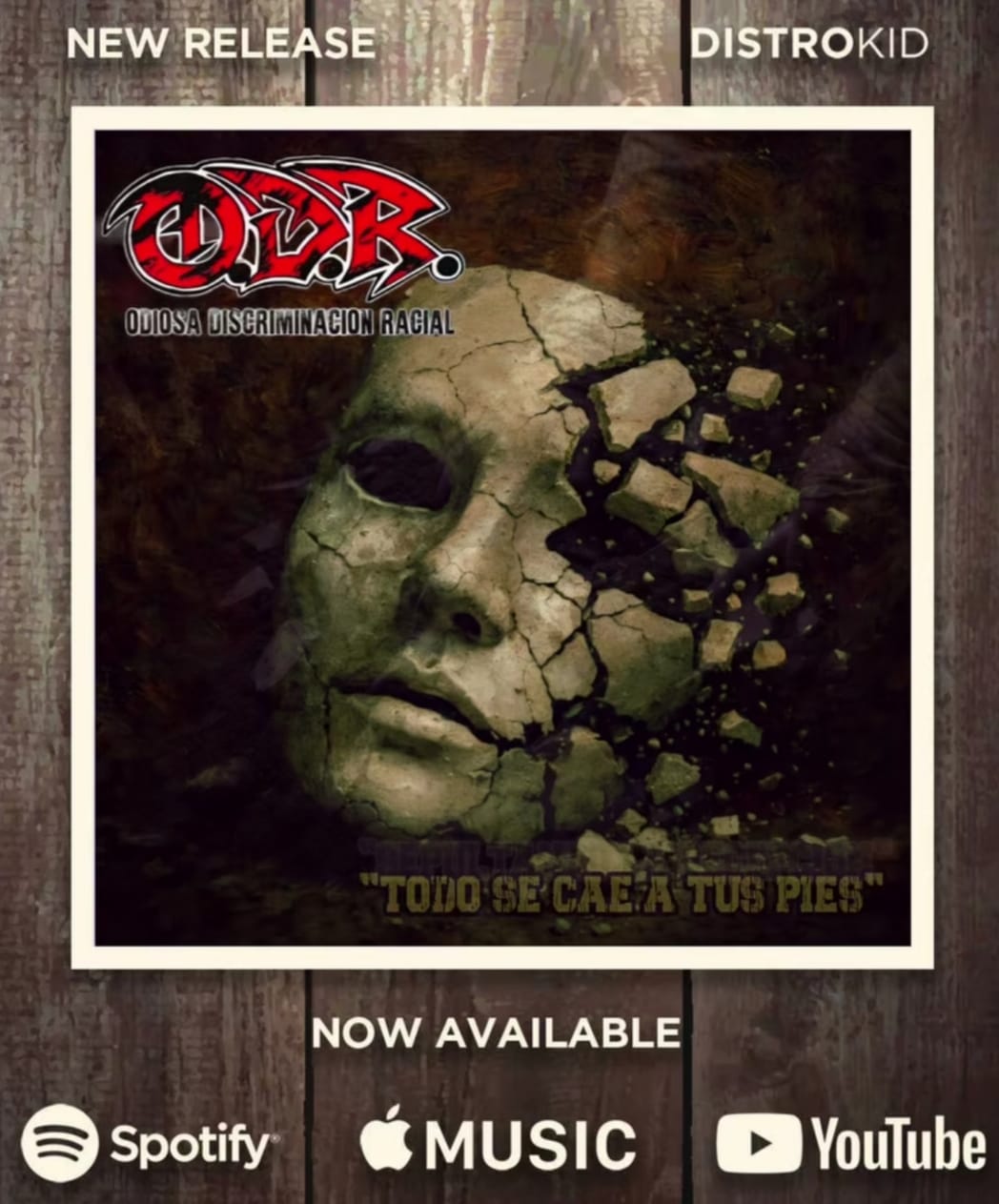
“We’ve already released a third album; we have a few new songs out there, two live tracks, and we play almost every weekend. We’ve got some invitations. At the end of the year, we’re going to Chile to play, maybe Paraguay too. They’re trying to invite us from Mexico and Spain, but I don’t think my wife will let me go!!! (laughs!!!!). In O.D.R., it’s just “Chino”—the guitarist, who’s 57—and me, at 60. We don’t have any future plans. Our relationship is based more on the fact that when we got back together, it had been a long time since I’d seen them because when you convert to Christianity, nobody wants to talk to you—but they saw that I was the same, only better. We got back together to reconnect with people I thought I’d never see again, and the plan was to reunite as a band, play one show, and then keep seeing each other—and get to know each other better now that we’re all parents—but well, it didn’t turn out that way. A book had just been written about the whole hardcore scene, and we were interviewed for it—and what was supposed to be just one show has turned into nine years of nonstop playing. Along the way, two members fell by the wayside: the bassist and the drummer. It’s a shame, but they had a problem—they were living as if they were 20 years old, even though they were almost 60 like us—and I’m not going to leave my wife and daughters to go out and play and live that kind of lifestyle; that’s not what I want. We changed drummers and bassists, and Chino’s son joined us as a guitarist too. We don’t have any big plans. For us, O.D.R. is about being together, seeing each other, sharing time, our lives, and our families. And if one day I or Chino die, I think it’ll all come to an end because it really wouldn’t make sense anymore. But as long as my wife gives me the go-ahead, we’re moving forward!!”
Since we’re in the metal scene, it’s inevitable to ask what kind of metal you listen to or if there are any metal influences in your music….
“As for metal, I was never a big fan of heavy metal—though I did like Motörhead—but I never really thought of them as heavy metal; to me, they were more like punk rock or rock ’n’ roll. But I think that’s what brings us together!!! Generally speaking, I’ve always liked hardcore or punk bands, and maybe some rockabilly here and there, but I never really liked heavy metal that much. There are only a handful of bands I’d mention. Accept’s early period, maybe Metallica—which is more Thrash, but Thrash is the hardcore element of Heavy Metal. Also Exodus, Nuclear Assault, and early Megadeth. I’ve always preferred the punk vibe—like the Ramones—short, very basic songs that grab you right from the first four chords; that’s what I like. Motörhead, yes, and I think that’s what brings the two together.”
To some extent, don’t you think that being punk or hardcore and Christian at the same time is a bit of a contradiction? I mean, because of the philosophy and ideology intrinsic to those genres that set them apart from Christianity…
“I come from the early days of punk—do it however you want to do it. Do it yourself. That’s what punk is all about. It’s always been about that. I mean, there are no rules. You can’t say ‘this is okay’ or ‘this isn’t.’ No one has a ‘punk-o-meter’ because that’s the point—there are no rules! And that’s why when people try to tell me today, ‘you can’t do this because…’ or ‘you can’t do that because I’m anti-Christian’… that’s your dilemma, not mine. I don’t fit into that mold—I mean, I do what I want, and I do it this way. That’s the essence of what it means to be punk; you can’t box me in because punk isn’t boxed in—it has no rules. So to everyone who tells me, “Punk is anti-Christian”—who told you that? Johnny Lydon is Catholic! And that’s fine—it’s his choice! Hardcore is full of religious groups like “Bad Brains,” “Rastafarians,” “Shelters,” “Krishnas,” and even people who follow Islam! But nobody says anything. Now, if you say, “I’m a Christian,” “Ahhh… well, that’s it!” Hardcore has always been rife with religious elements. The snake eating its own tail in Crass—who are the most anarcho-punk band out there!—is a religious symbol, not Christian, but religious in and of itself. So when people tell me that hardcore or punk has nothing to do with Christianity, that’s a big lie. I think rules are what kill punk/hardcore, and besides, hardcore was always something different from punk. It always had more hope. From “straight edge” to other movements. It doesn’t have a limit where you can say, “This is how it is,” or have rules. Just like punk. Don’t put rules on it, because otherwise it wouldn’t be punk! And if I want to be a Christian punk, I’m going to be one because I want to… and that’s what being punk is all about!”
Punks have always fought against structures and the system itself. Do you think there are any differences between Christ and the religious system? Or are the two necessarily linked?
“The first one to oppose the religious system was Christ. He’s the one who truly fought against the religious system. No one did it better than him, so accusing Christianity of being a religious system… well. You always find that we jump from the specific to the general. There’s one person who steals tithes, and suddenly everyone’s like that—and it cracks me up, because imagine if aliens came and met Hitler and Charles Manson, and they asked us, ‘Oh, but are you all like that?’ But we’re not all like that! Well, we Christians aren’t like that. Yes, there are thieves, but there are also people who give their lives for others. There are both kinds. So we shouldn’t generalize based on individual cases, because that’s why they’re individual cases—but the only one who fought against—and defeated—the religious system was Christ. After that, it’s all just blah blah. And no one can stand up to the religious system without knowing Christ. We, too, stand up to the religious system because we don’t conform to anything. We don’t ask for tithes or anything like that. We don’t care about those things. We’re interested in people’s salvation—nothing else—which is why the church was established.”
Thank you for your time, Juan, and I’ll leave you with the final word on whatever you’d like to convey to our readers…
“I wanted to leave a message, especially for musicians who are children of God. Be ordinary, normal people—not self-righteous. Our lives speak volumes about who we are as children of God. Live with dignity. There’s no need to make a big deal out of it in the rock world. Everyone sees how you live your life—that you’re honest, that you don’t lie, that you don’t act like a “show-off,” etc. All these things are very important because we have to be real—true Christians. You can’t mess around with that. Your personal testimony is worth much more than condemning others or preaching. I never do that because I’m a normal person in the rock world. Whenever I finish playing, someone comes up to talk to me or is looking for God. I think that’s the way it should be. There are no ministries. Those aren’t ministries. Your life, and the way you live it, has to be your ministry. Don’t give up; wait. God never fails anyone, ever. Silence and living a righteous life before God are essential. That’s what makes people want to get to know God. I send you a giant hug, and may God bless you always.”
The “punk” church is located in Villa Devoto, at 2638 Bermúdez, right across from the Devoto prison in Buenos Aires. On Sundays starting at 10:30 a.m., there’s a gathering there for anyone who wants to come, but you can also get in touch with the “punk” church community through social media, whose links are listed below.
https://www.facebook.com/iglesiapunk