'%3E%3Cg%20id='d'%3E%3Cg%20id='c'%3E%3Cg%20id='b'%3E%3Cpath%20id='a'%20stroke-width='1.3'%20d='m1%202%2034%2074%202%201v-2L9-2M8%2027c0%2011%207%2018%206%2028s5%2016%206%2020v7c1%201%204-3%203-8-1-6-5-7-4-20%201-12-5-15-4-26'/%3E%3Cuse%20href='%23a'%20transform='rotate(23)'/%3E%3C/g%3E%3Cuse%20href='%23b'%20transform='rotate(45)'/%3E%3C/g%3E%3Cuse%20href='%23c'%20transform='rotate(90)'/%3E%3C/g%3E%3Cuse%20href='%23d'%20transform='rotate(180)'/%3E%3Ccircle%20r='34'%20stroke-width='2'/%3E%3C/g%3E%3C/svg%3E)


Interview With Randy Fischer | “If I Help Even One Human Being In My Lifetime, My Life Will Not Have Been In Vain”
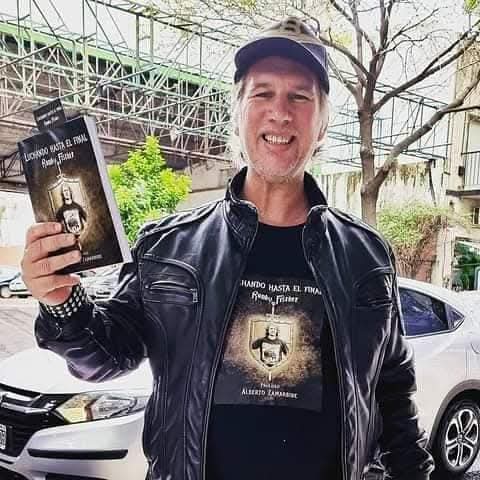
Since we launched this section, “Steel Brothers,” we have set out to expand the universe of Heavy Metal and interview people who have a lot to do with Metal, even if they are not musicians or directly related to a band. That’s why we felt we couldn’t pass up the chance to chat with someone as notable as Randy Fischer. He is a legend of the Heavy Metal scene in Argentina, despite not being a musician. His life story alongside Metal has been documented in his partly autobiographical book entitled “Luchando Hasta El Final” (Fighting Until the End), in which Randy tells his story, focusing on the beginnings of Heavy Metal and its emergence in Argentina, as well as how his life took a turn when he found God. We highly recommend this book because it is written with sincerity, respect, and from the bottom of his heart, and it recounts countless stories from the 1980s related to bands such as V8, Bloke, Riff, etc., as well as contributions from people such as Alberto Zamarbide, Pocho Metalica, Fabián De La Torre, etc.
The truth is that talking to Randy means talking about everything, which is extremely enriching, and sometimes time and space are tyrants, so what follows is part of the conversation we had, where we took the opportunity to ask him some questions, not only about the book “Luchando Hasta El Final” (Fighting Until the End), but also about his life, his opinion on the national Heavy Metal scene, and many other things….
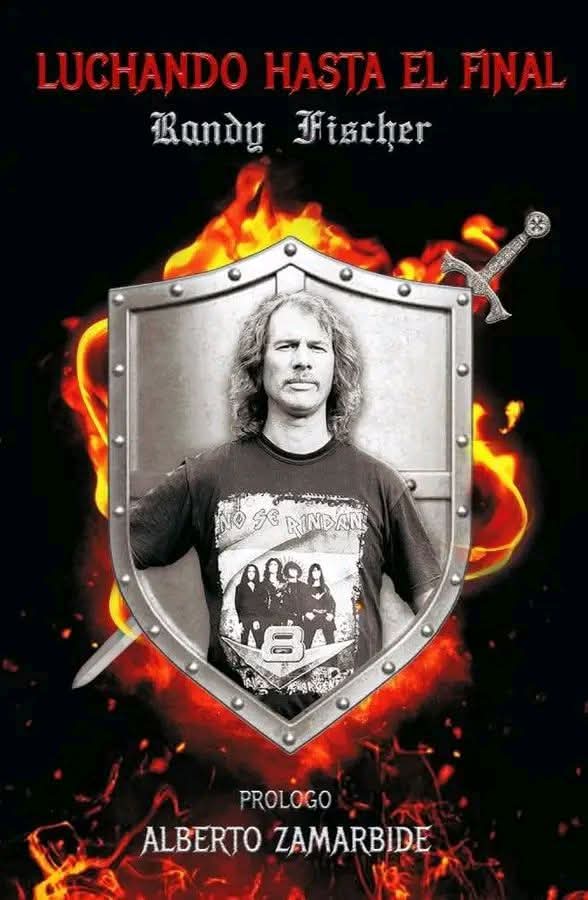
How did the idea to publish this book come about, and what did you hope to achieve with it?
“The idea of writing a book came to me because I was writing on my blog, which reached more than 30,000 people. They also did an article on me in “Sur Metalero”, which includes my testimony. I wrote things, and people liked them, so I thought it would be good to write a book to leave a legacy and tell all my experiences in the early days of Heavy Metal in the ’80s and my life in particular, as a kind of autobiography and do it from the point of view of the underground, from the side of what the “Brigadas Metálicas” (Metal Brigades) were, that is, from the side of someone who lived it. Not from the perspective of a musician or a producer, but from someone who lived it, struggling from the bottom up, as a worker, a young man, with so much policial repression in the ’80s. Many people told me I had to write a book. I think about five people in two days. With that idea in mind, I posted on Facebook, doing a kind of small “market” survey asking, “If I write a book, guys, how many of you would read or buy it?” I got more than 300 likes, tremendous support. And I thought, write a book? I didn’t even finish my third year of high school, but well, it made me think about the fact that five people wrote to me in two days asking me the same thing. So, I asked, and I had everyone’s full support, and I did it in nine months, and it all worked out. Everything flowed, and a lot of people liked it. I think I’ve sold more than 300 copies of the second edition. It reached Spain, Germany, Ecuador, etc. I proposed to tell what we lived through in the 1980s. More than anything, the whole era of dictatorship, repression, and marginalization by society, so that the kids of today who have freedom can appreciate what we really did for them, that we fought for Metal, and so they know, because now everything is very distorted, there are many right-wing fascist heavy metal fans who approve of repression. I also did it in the post-pandemic, a very particular moment. I also did it to tell my life story, in the hope that it might help someone. As Martin Luther King said, “If I help one person in my life, my life will not have been in vain.”
Some idiots, the kind who usually hang around social media, have accused you of “profiting” from the book. Can you clarify what the proceeds from the sale of this book are used for?
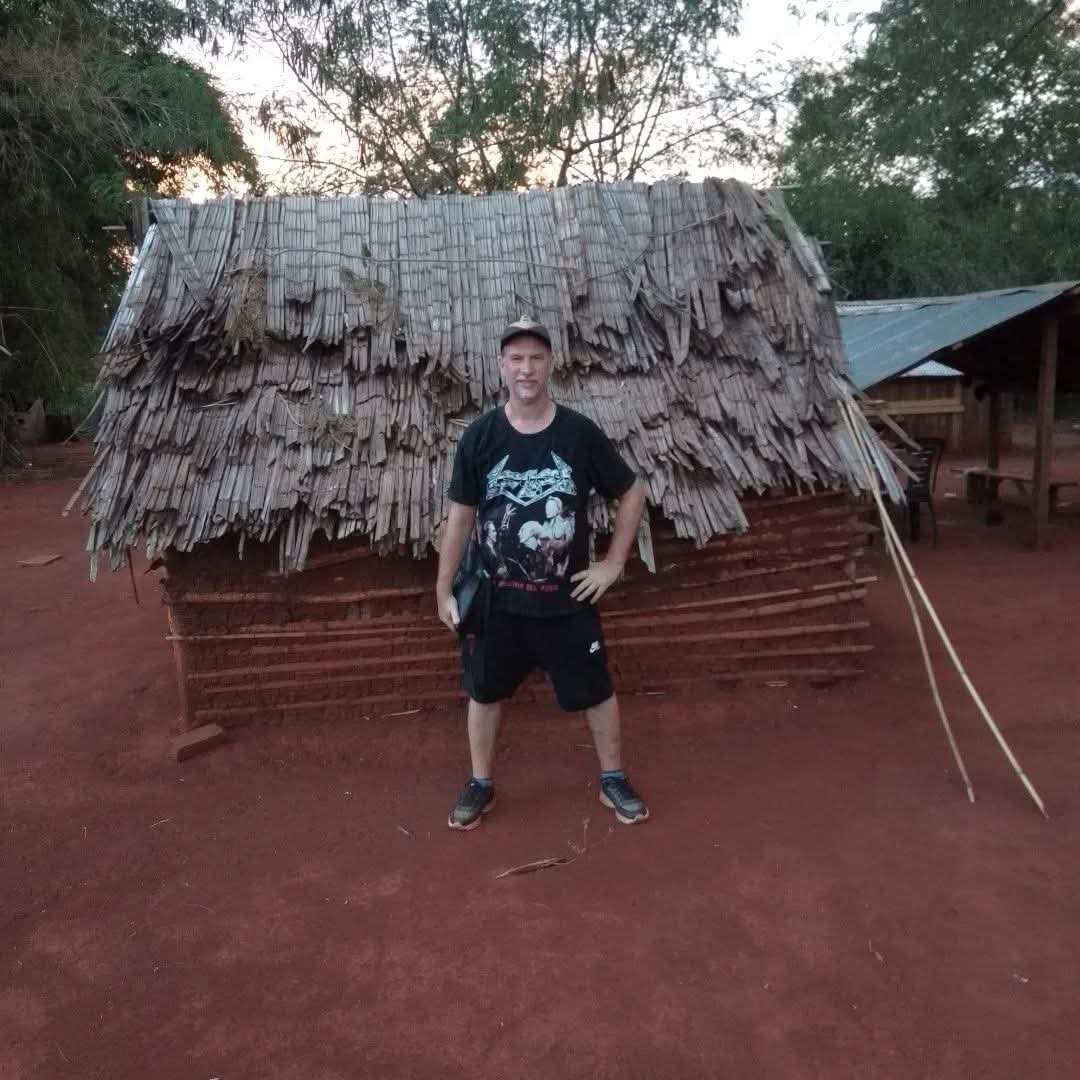
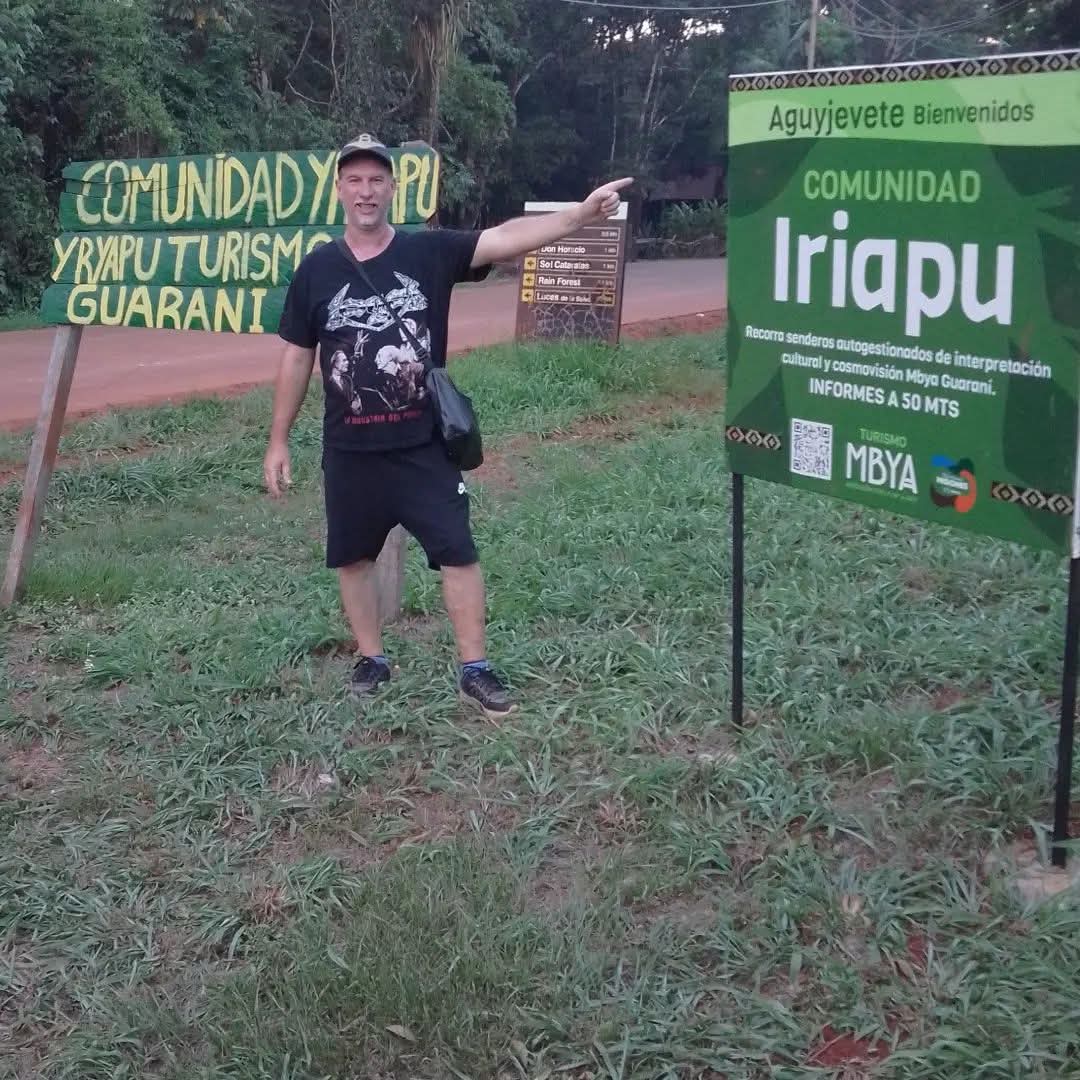
“No, I never saw it. I never saw an accusation of that kind that I’m fighting with my book, never, really, if you saw it, I don’t know, I never saw anything like that. Anyway, I’m not worried because I’m financing my book myself, I’m practically on my own. At one point there were people who supported me, but they’re not consistent, and now I’m supporting a soup kitchen I have in Tapé Porá, San Ignacio, Misiones Province in Argentina with the book and money from my own pocket. I have all the receipts, I have all the information, the photos, so I’m calm because I’m helping people. I’m not profiting from my book. In this environment, there is a lot of envy, a lot of jealousy, a lot of ego, and they say stupid things. More than anything, it’s people who didn’t live it.”
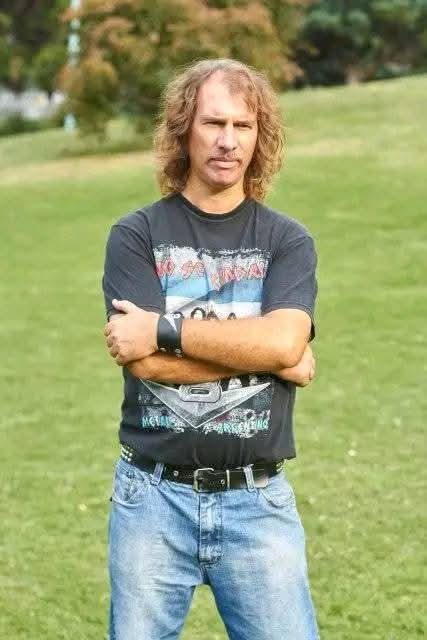
Among the many anecdotes and life stories recounted in “Luchando Hasta El Final,” I suppose many of them have been left out of this edition. Are you thinking about a second part?
“I’m writing a second book. It’s different from “Luchando Hasta El Final”, but I can’t reveal anything yet. I’m only on the second chapter, and obviously it’s about Heavy Metal, but it’s a very different book; it’s not autobiographical. It’s not my story or my experiences. I’ve already told that story. I talk more about other things, but it’s 100% Heavy Metal!”
Beyond the thousands of stories collected in “Luchando Hasta El Final,” there is the personal part, the one that has to do with your life and your struggle with alcoholism. Do you feel that in some way this story can help those who are in the grip of addiction?
“Of course, and in fact, people have written to me saying that they have overcome their addictions after reading my testimony, or that my book has helped them. People have given my book to homeless people, heavy metal fans, etc. Some people have written to me saying that my story has helped them a lot, and that’s very important to me. It encourages me to keep going and continue telling what God did in my life, which I’m not ashamed of. I wouldn’t be talking to you right now or telling you anything if it hadn’t been for a supernatural intervention, an encounter I had with God, not in a church but in a jail cell, as I recount in my book.”
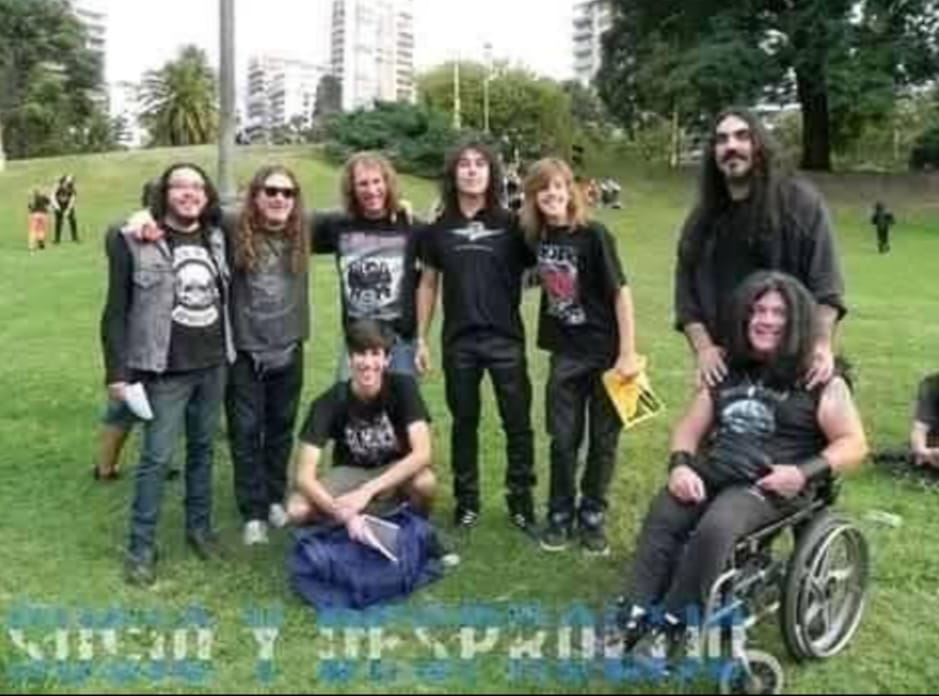
You also participated in the 2015 documentary film “Sucio y Desprolijo: El Heavy Metal en Argentina” (Dirty and Messy: Heavy Metal in Argentina). Tell us how you got involved in the film and what you think of it…
“They called me because I have a certain reputation, in quotation marks, that God granted me by His grace and mercy, of being one of the first crazy guys in the scene and that I write things, that I’m very active on social media. Lucas Lot Calabró and his partner Paula Alvarez called me, they came here to my house, we had a barbecue, they filmed, they were spectacular people. The Loco Lot and his partner were film students and were sponsored by INCAA (National Institute For Cinematography). After that, I never heard from them again. I think the documentary is very good, one of the best that has been made here. It is very well edited and quite comprehensive, with a lot of information. I really like it, I think it’s great, and I always share it. It’s available on YouTube. It was a nice experience to be there with my son, who was a kid at the time. We both appear in the film, and it was a nice experience for me to have been there and contributed my humble grain of sand to the history of Heavy Metal here in Argentina.”
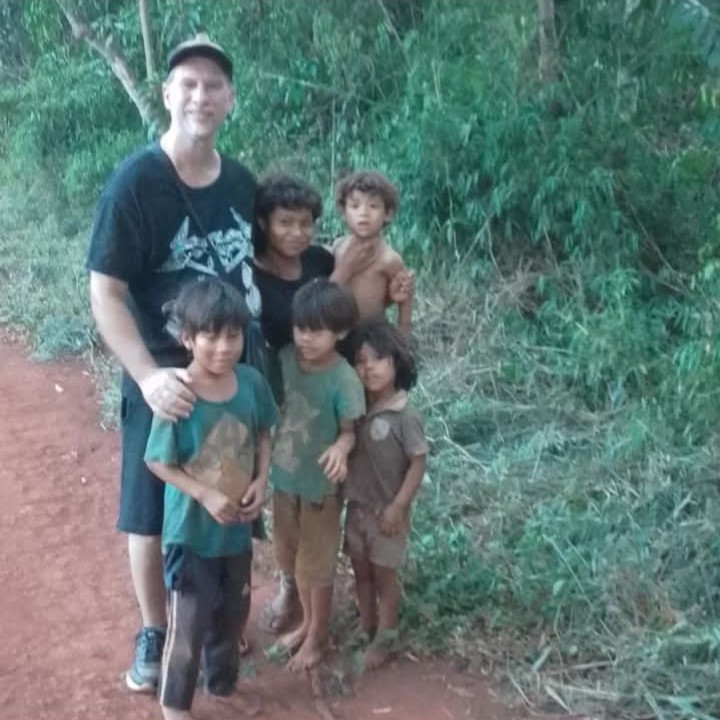
From what we can see, you are someone who is dedicated to helping others and actively participating in social issues. How did you feel about getting involved, and how can we help you with this task?
“I like helping people. I have been helped a lot myself. Zamarbide helped me a lot to get out of the hole, along with his wife Gabriela. They are very good people. It comes from within me, as a way of thanking God, to help others. It’s the second most important commandment, “love your neighbor as yourself,” that’s what it’s all about. Faith without works is dead. We live to help others, and those who do not live to serve are not fit to live. I do it out of love. I have been criticized, of course, for doing these things to feed my ego. Many people have said such stupid things. Besides, I post photos of what I do, but I don’t do it for vainglory, but always for transparency. Many people help me with money or buy my book, or donate a television, school supplies, and I show that the things that are donated get there. That’s why I post photos and videos from time to time. It’s a matter of transparency, not like politicians. That’s one reason, and the other reason is to motivate people to continue helping. Sometimes, the local chief thanks me for buying my book or making such donations. That motivates people to give. Many people trust me, I think most of them love me, maybe 80 or 90 percent. There are many who are prejudiced, mainly because I am evangelical. There is a lot of religious prejudice. I am aware of that and I don’t pretend or want or expect everyone to love me. Imagine that they crucified Christ, who never did anything wrong, who spent his life doing good, healing the sick, feeding people, freeing the oppressed, giving words of hope, and they crucified him! How much more so with me, a person with a million flaws that I struggle with every day! What would worry me is if everyone spoke well of me!
You lived through the beginnings of Heavy Metal in Argentina, so I consider you to be a more than authoritative voice to give us your opinion on the current National Metal scene and the differences with its beginnings…
“And… I’m going to be very honest. That’s why a lot of people don’t like me, because I’m honest. People don’t like it when you’re honest and tell the truth. Kids today, not all of them; there are exceptions, label us old farts because we cling to what we’ve lived through and the struggles we’ve had. The thing is, we’ve been through some very, very intense experiences in our lives. I went to see Zamarbide. It was beautiful. There, I said to a young man, look, if this were 40 years ago, we would be waiting outside, and the police would come and repress us and arrest us for no reason, as happened to us that time (I tell the story in my book) at the “Midnight” club in Rafael Castillo, where V8 was playing back in 1987. We were very calm, not causing any kind of disturbance or trouble, and suddenly the police came to beat us up and chase us away. We fought with them, threw stones at them, and they even threw batons at us, real ones, not blanks! We were paralyzed, the police van came, and they took us away. There were 40 or 50 heavy metal fans in a cell. We drove them crazy all night singing songs by Riff, Barón Rojo, V8, Bloke, etc., but what happened was terrible! I’ve even been told that there was sexual abuse of female heavy metal fans that night at the Cristiania Avenue police station. Kids today have a lot of freedom, but sometimes it turns into debauchery. I see a lot of stupidity on social media, where everyone has an opinion, hiding behind a keyboard, criticizing us a lot. Many don’t appreciate the effort, all the blows we take. I was also in prison for 10 days, and they wanted to kill me. I say this because many people have died because of heavy metal, like “El Colo” from Exterminio, and many others. I see that there is no respect. We are not valued, we are not respected, they call us “Termo”. I see how “the milanesa has softened,” as Carpo (Pappo, legendary Argentine guitarist) used to say. Now that there is no persecution, everything is fine, everything has softened a bit, all the bands come from outside, there is not much support for the underground and solidarity. You have to do everything on your own. Those are the differences. I think Heavy Metal stopped being a rebellious movement against the system, as it was in the ’80s, ’90s, and even beyond. Now it’s limited to going to concerts, getting together, and nothing else. I’m concerned that there are many heavy metal fans who are right-wing, pro-military. I think they never got beaten up by the police, that’s why they’re like that. I think there has been a tremendous and drastic change in the essence of Heavy Metal and rebellion against all kinds of political parties that commit injustices, whether in dictatorship or democracy. Now that everything is calm, no one rebels against anything. They just listen to music. Before, we were like a big brotherhood. If you met a heavy metal fan on the bus, you invited him to your house for dinner. It happened to us many times. That’s how I met the “Apaches.” Now it’s different. Once in a hospital, I saw a kid wearing an Ozzy Osbourne T-shirt. I went up to talk to him because I was bored waiting in the hospital emergency room for my wife to be seen, and the boy and his family left the hospital. I see that there is a big difference, but I also see that many young people have it clear, thank God, like Pocho Metálica’s son, my son Micael, and many other kids who understood the message of heavy metal, who form bands, fight for their ideals, and carry the flame, the torch, to new generations. Still, we should never generalize because there are many kids who do fight for it. There are many who go out and fight. New kids and new bands who really fight for metal, who like it, who feel it, and who fight for their ideals.. I also notice that we’re very divided. The system has managed to divide us politically, with some leaders leaning one way or the other. We’re very divided between those on the left and those on the right. You can’t say anything without being labeled. “Divide and conquer” is coming true.”
Some argue that heavy metal is just a musical genre. After everything you’ve been through, and continue to go through, what does heavy metal mean to you?
“I think Heavy Metal and rock ‘n’ roll are synonymous with rebellion. If there is no rebellion against the establishment, against the system, against injustice, it loses its essence and becomes mere music. I believe that true Heavy Metal reveals itself, tells the truth, and is not committed to any political, economic, or social party.”
It is always a privilege for us to be able to interview someone like Randy Fischer, and it will surely not be the last time we have such an interesting conversation. Randy is one of those people who is very valuable, whom we respect, and for that reason, we recommend following him on social media, also to lend a hand in all the social work he does, which we also support. We also leave here not only the documentary film “Sucio y Desprolijo: El Heavy Metal en Argentina” (Dirty and Messy: Heavy Metal in Argentina), but also some materials that Randy Fischer very kindly provided us for this interview…
https://www.facebook.com/randy.fischer.98622
https://www.instagram.com/danielfischer5
https://www.instagram.com/randyfischerii
https://surmetalero.blogspot.com/2012/01/testimonio-historia-de-vida-randy.html?m=1
https://daniel-metalcruzada.blogspot.com/?m=1
https://www.facebook.com/groups/317948597461749/permalink/798029876120283/?rdid=98R0ORuA6Y2hpNJd#