


Lázaro: No Más Vendas | Removing The Blindfolds
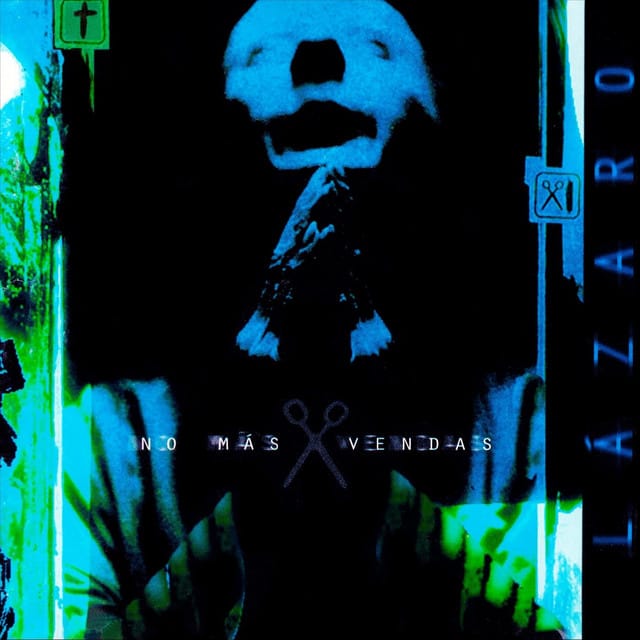
(1997 – Independent)
What’s known as “White Metal” in Argentina was always a very niche genre—too underground and, generally speaking, completely outside the mainstream. That made it very difficult for many bands to promote their music, record, release albums, play live shows, and so on. It’s complicated even today (as it is for all Argentine bands), so imagine what it was like in the ’90s when this movement was practically nonexistent.
Among the many bands and projects that emerged during those years, one stood out above the rest. Perhaps above all because of its unique style and an artistic vision that, while following the trends of that era, differed not only in its message but also in its diverse shifts and influences. They always called it “Hybrid Metal”—a sort of calling card with which Lázaro would define their sound to friends and strangers alike.
In fact, Lázaro’s “No Más Vendas” must have been one of the first albums by a band categorized as “White Metal.” Yes, it’s true—Logos came before, as did V8 with “El Fin De Los Inicuos” and even Alakran—but the fact is that those bands never identified themselves as part of the “White Metal” scene, far from it, despite the Christian content in their lyrics. Lázaro was one of those pioneering bands, along with many others such as Boanerges, Heaven, Nuevo Pacto, Triade, etc., and they were also the first to release a full-length album.
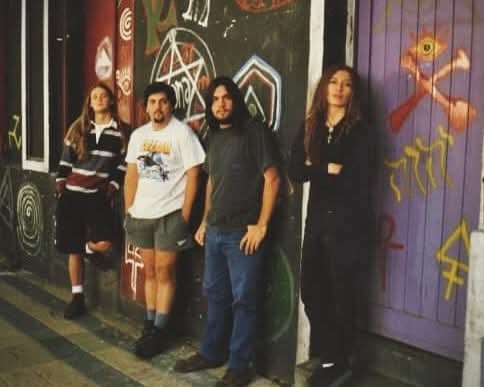
With elements of Thrash, Hardcore, Metalcore, and Alternative, as well as a wide range of diverse influences, Lázaro shaped its hybrid sound on what would be its debut album, titled “No Más Vendas”—a completely independent record sustained solely by the band’s own determination and persistence.
Lázaro’s endeavor was a serious, defiant, and daring one. Stepping into the ring with an album like “No Más Vendas”—featuring a unique message and a musical approach that was all or nothing—was no easy feat, but they pulled it off, with perhaps limited resources but plenty of imagination, creativity, and best of all, songs that would become immortalized as the band’s classics.
“No Más Vendas” has that freshness that every debut album tends to have, with tracks ranging from the most raw Thrash Metal to Hardcore/Punk-style sounds and the earliest glimpses of what would become Metalcore—making it incredibly diverse in both composition and concept, but above all—and beyond musical definitions—returning to this album (at least for me personally) is like going back to those good old days when everything done by hand, with effort, imagination, and creativity, paid off.
Listening to “No Más Vendas” in its entirety again is realizing just what a great band Lázaro is, and what great songs make up the album. Right from the start, with a high-caliber track like “¿Quién?”, it sets the stage for what’s to come. That intriguing riff mixed with that constant strumming takes us through a song that is clearly one of Lázaro’s finest expressions in both lyrics and melody, but watch out—“Dinero” isn’t far behind; its speed and shifts in tempo showcase the band’s versatility, and as a side note, that track was the subject of the band’s first music video—which wasn’t widely circulated, but those of us with gray hair know it exists.
“La Ciudad De Los Muertos”, or sometimes known as “Necrotown”, is a challenging high point for Lázaro. The track in question is quite complex in its conception and one of the album’s finest moments.
Set to the rhythm of Lázaro’s famous tarantella as an introduction comes “¿Es Tu Vida?”, a brief foray into the punk sound and influence that the band has always incorporated as one of the key elements of their style; and shifting gears completely, we encounter “Reconstrucción” with its unmistakable blend of Thrash and Hardcore.
I didn’t remember “Tiempo De Dolor”, but hearing it again reminded me that this is one of the best tracks on the album, with impeccable composition and an incredible rhythm. And in much the same vein, we come to “Otra Armadura”—fast, lethal, and harking back to the rawest aspects of old-school Thrash Metal, interspersed with a melodic passage.
It wouldn’t be the first time someone has set this to music, but Lázaro gave the prayer known as the “Padre Nuestro” (The Lord´s Prayer)—which is precisely the title of the track in question—a different, almost Punk/Hardcore vibe, with a style that lends tremendous power to the well-known prayer.
The album’s final track is one of Lázaro’s greatest achievements, musically speaking. “En El Valle De Los Huesos Secos” is the first part of a trilogy that would span the years and the band’s career. The composition is complex, and in this first section it’s extremely energetic, using the fast and ferocious sound of old-school Thrash Metal as its foundation, before giving way to a melodic and atmospheric ballad—one of Lázaro’s most creative moments. Without a doubt, it’s a true classic for both the band and “No Más Vendas.”
But there’s still time for something more, and so track 10 features an instrumental titled “Final (Instrumental),” which is a soft, inviting keyboard melody, accompanied in the background by a guitar solo—as if to soften things up a bit, you might say. But this isn’t the end either; there’s still more, and the true ending comes with track 11, titled “Final 2”, which features part of a live acoustic performance by Lázaro, including “Padre Nuestro,” “En El Valle De Los Huesos Secos,” and an old church song, masterfully played by Lázaro—all of which could serve as the album’s “bonus track.”
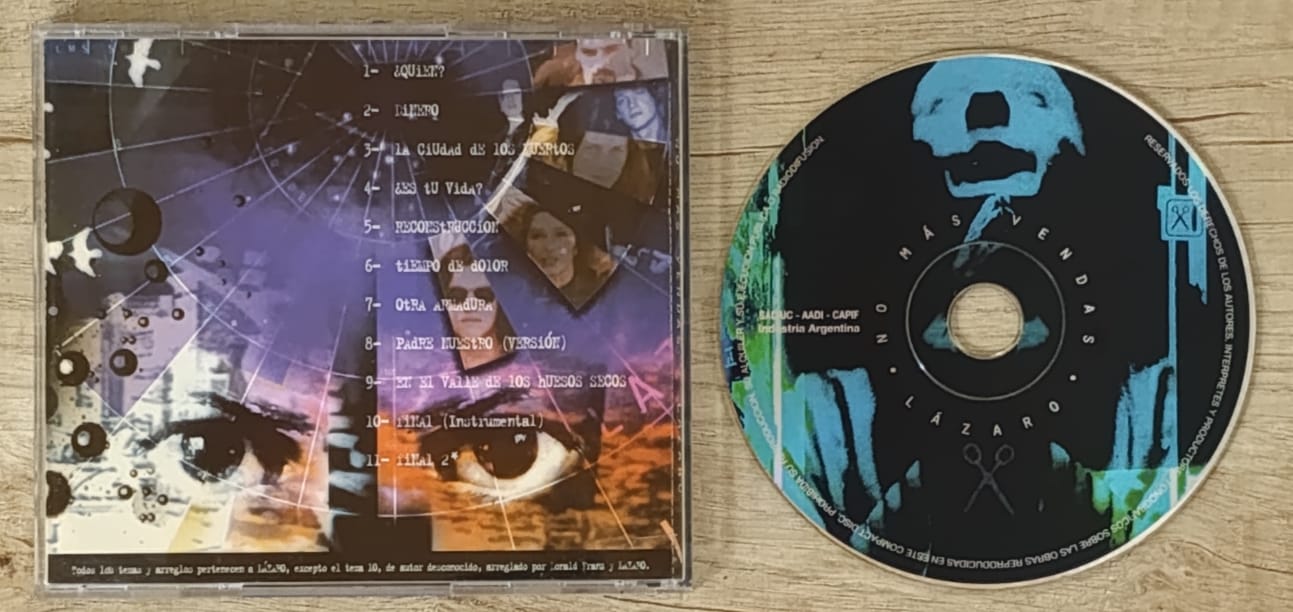
Okay, it’s true. The album has its flaws—its modest production and sound, and a thousand other things we could point out—but the freshness, creativity, and imagination are virtues that Lázaro knew how to harness very well, and to that end, he made the most of what was available to him at the time to create what you might call a near-cult album. The songs on “No Más Vendas” are compositions that feel timeless, with incredible power that hits hard with every riff, every chord, and stylistic twists that set them apart from the rest.
Modesty, limited resources, and other challenges didn’t dampen the band’s spirit. They brought out the best they had to offer—namely, the songs and their own creativity. It took some time to record and produce the album—more precisely, between September 1995 and May 1996 at “Coliseo” Studios.
In that regard, we’d like to quote the words of Hernán Parafioriti himself—Lázaro’s guitarist and vocalist—who, in a recent interview, recalled the recording of this album: ‘No Más Vendas’ was a dream; it was a dream to be able to record an album in 1995 when we started recording, because stepping into a studio—with no experience, as was our case—was a dream come true. It was very difficult to record an album back then as an independent act, without a record deal to subsidize the recording. We took out a bank loan to pay for the recording of ‘No Más Vendas’—which fully illustrates the tremendous effort put into this production.
In addition, Hernán recalled how “No Más Vendas” was recorded: “That album was recorded on 2-inch open-reel tape, across 16 channels. The guitars used were the Washburn N2 and the Jackson JDR94, plugged into a Digitech RP1 effects pedalboard and from there into a Fender Bassman, so all the effects and distortion came from that pedalboard, which was amazing for its time. There were some complications with the drum channels—they’d been used so much that there weren’t any channels left to record other instruments, so we had to group the drum channels together. It was an experience full of trial and error; it was our first serious studio session, and the result was “No Más Vendas”, a fresh and innovative album where we included everything we wanted to include because we didn’t know if another recording would be possible.”
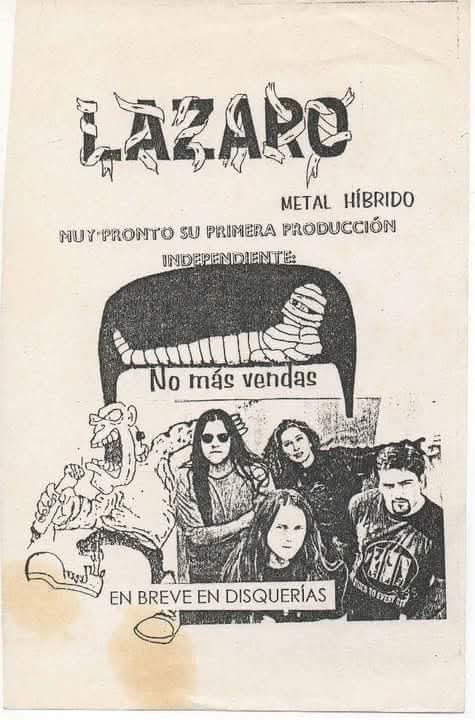
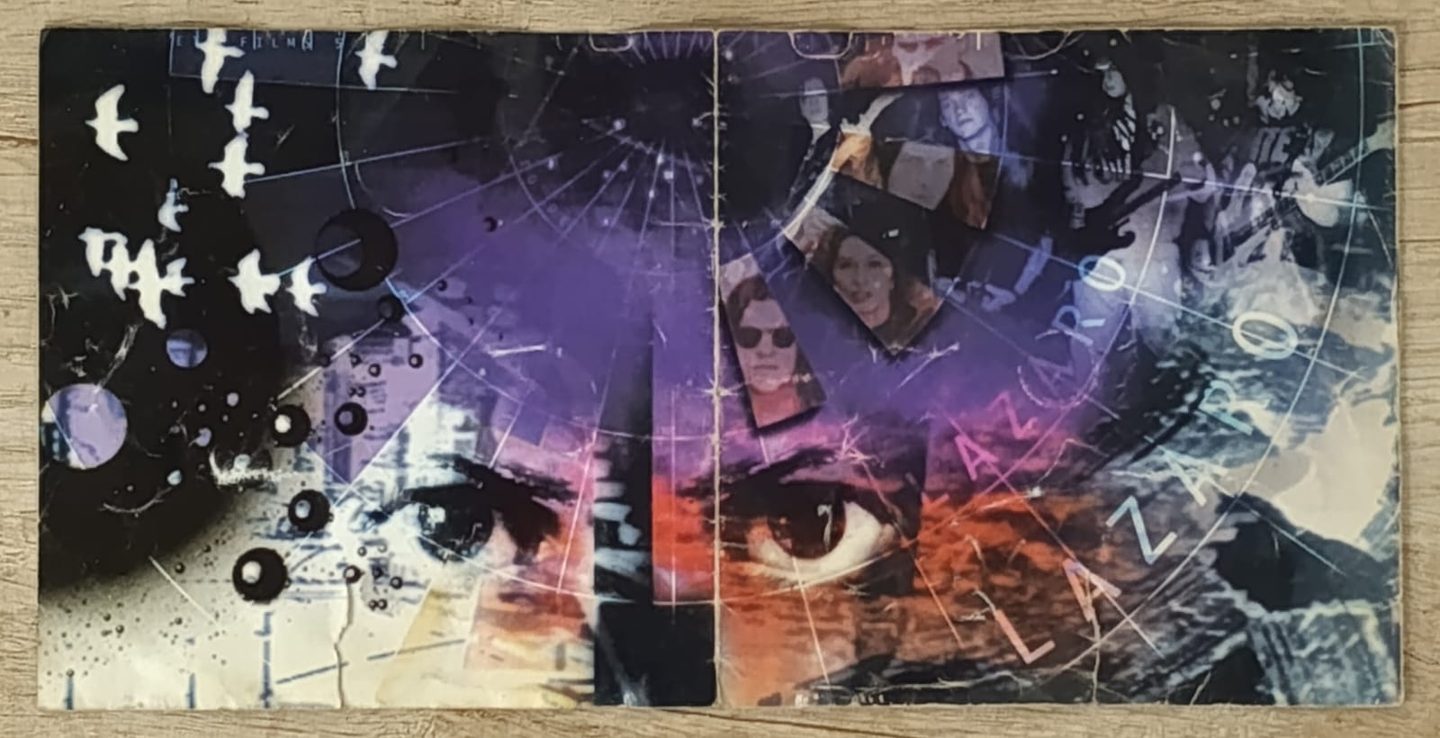
The cover of “No Más Vendas” is, all things considered, original, intriguing, and even a bit eerie, if you will. Even the booklet is quite simple, yet it still includes the song lyrics, technical details, and even a photograph of the band—all presented in a straightforward, uncluttered format.
The album was released exclusively on CD. At this point, it’s completely out of print and can only be found when some kind soul decides to part with their copy. It was never released on vinyl, let alone on cassette. It’s only available in digital format, but the question is whether we’ll ever see a reissue of this album on physical media.
We’ve checked in with the band at some point regarding the possibility of a reissue. There are no plans for one. However, we still believe and hope that someone will decide to invest in remastering this material and releasing a reissue, even if it’s just a limited edition. “No Más Vendas” deserves it.
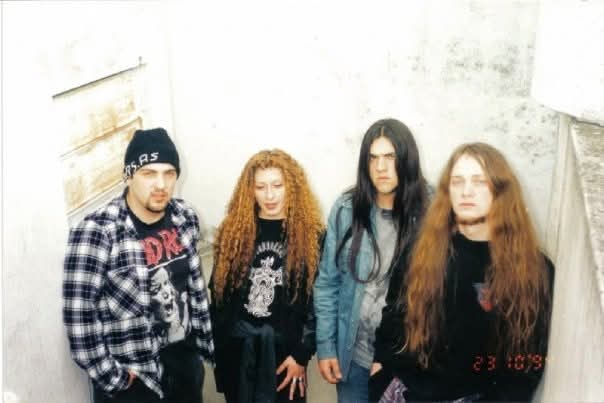
Lázaro is still active today. Not with the intensity of those years, but every now and then they play live, release the occasional new track on social media, etc. Yet it’s the classic songs from “No Más Vendas” that, even today, when performed live, evoke not only nostalgia but also confirm the enduring relevance of an album that made a huge splash in its day—and continues to do so…
In addition to the album itself, the original music video for the song “Dinero”—which the band chose to promote the album and which was eventually aired on some music channels of the time—has also been making the rounds. We’ve included it below so that those who’ve never seen it can watch it. We’ve also included the band’s social media links so you can follow them and stay up to date on their latest news…
https://www.facebook.com/profile.php?id=100063657214082
https://www.instagram.com/lazaro.argentina