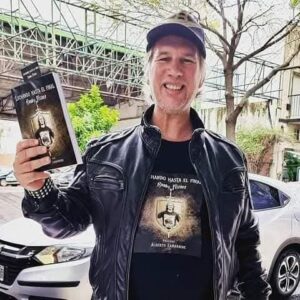
Interview with Naldo Brizuela | “If Metal Doesn’t Transform You Into Someone More Conscious, More Coherent, and More Human, It Just Remains a Pose”
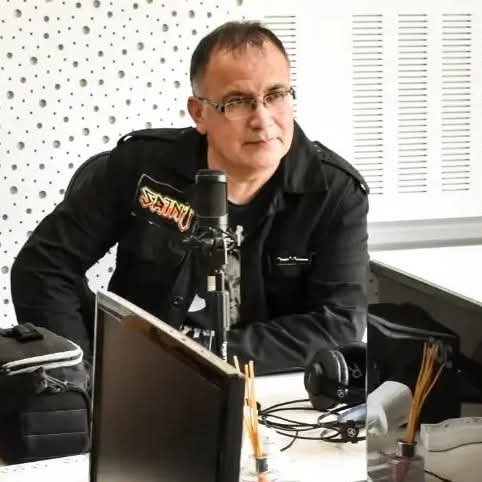
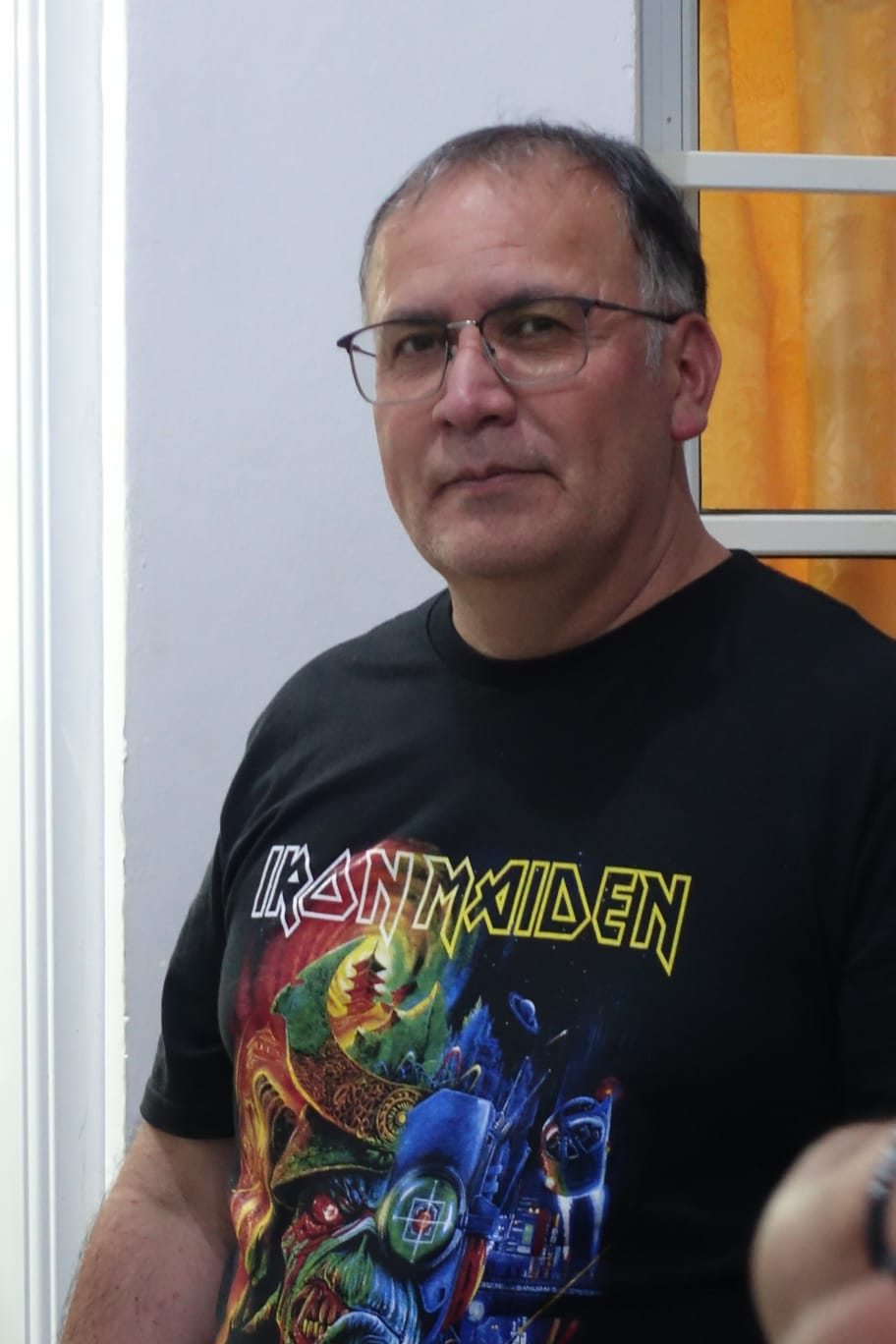
Not long ago, we decided to open this space to keep notes and interviews with people who, without being musicians, contribute in their own way to the metal scene, which for us is not just music, as we always like to emphasize. That’s why we felt it was very important to listen to and get to know people like Naldo Brizuela, whose contribution to the movement has been, and continues to be, very important.
They say you have to indulge your tastes in life, and to tell the truth, this isn’t just a taste. It’s an honor. Having a chat with our friend Naldo Brizuela is always constructive, positive, and leaves you with the feeling of talking to someone who has his feet on the ground, with clear thinking, and who has done so much for Metal. He’s a modest guy, of course, but the reality is that for us, Naldo is a true warrior who is not afraid to always go forward, head on.
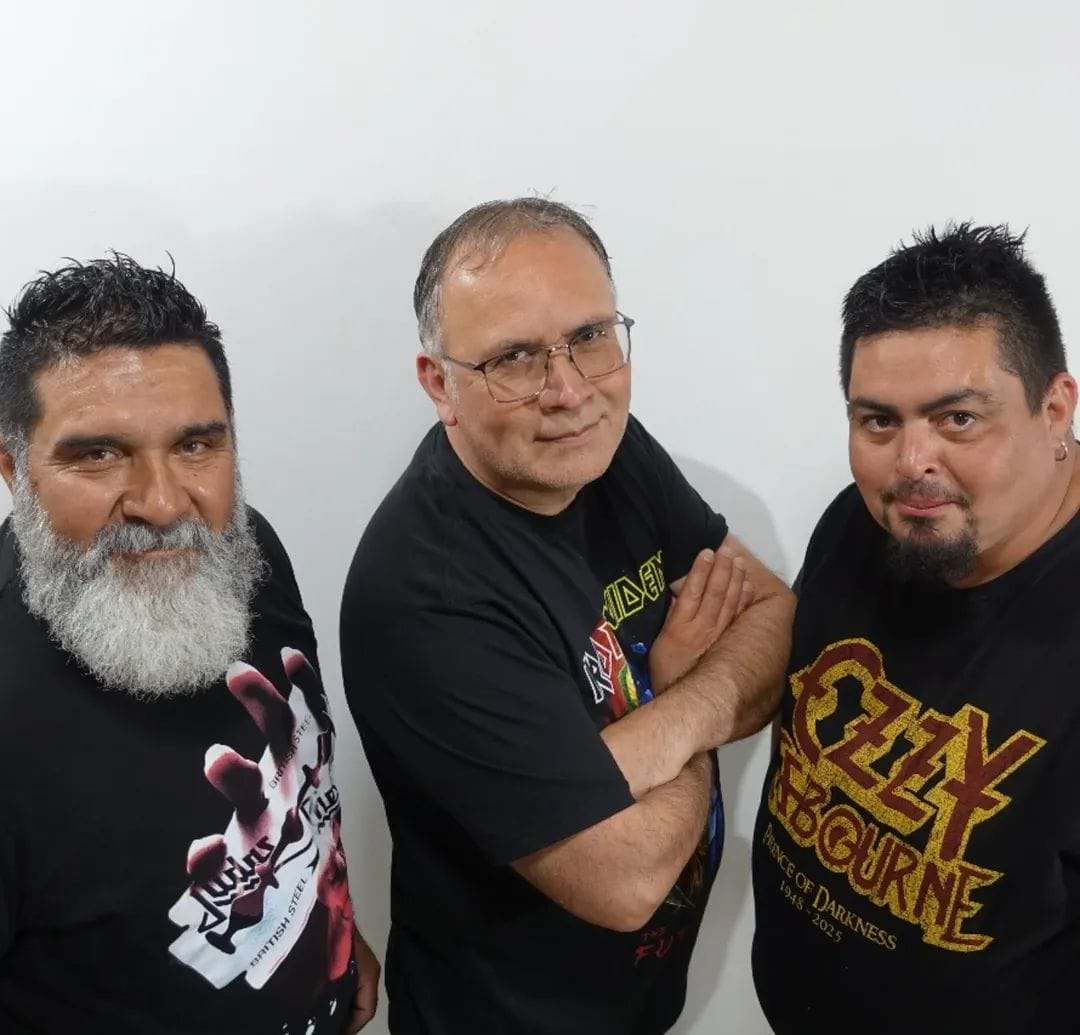
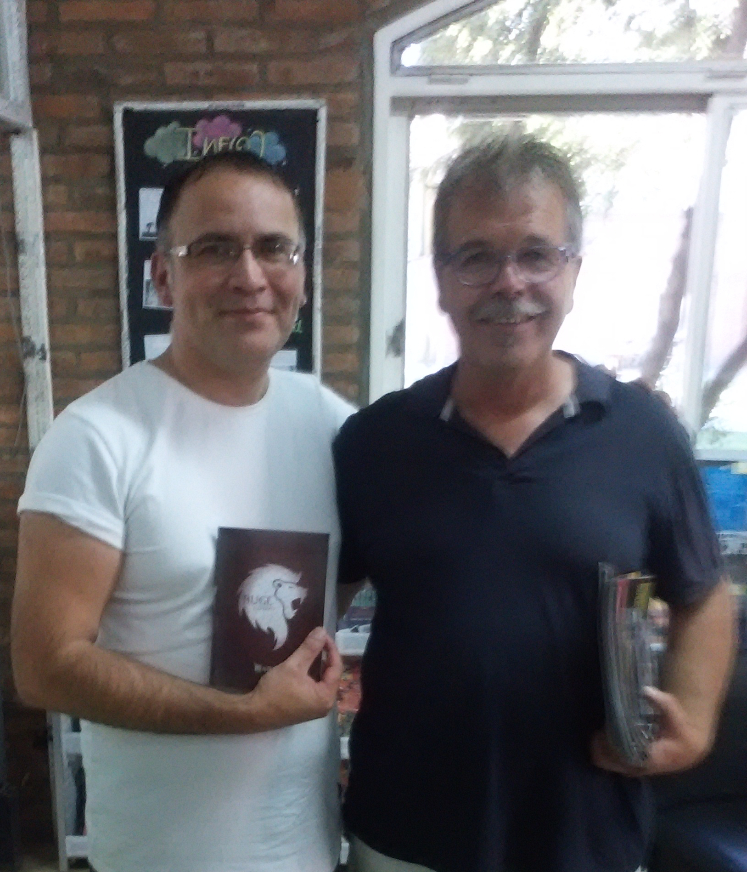
A cultivator of the underground scene in the province of Santa Fe, Argentina, from his old radio program and editor of the well-known fanzine “Santa Fe White Metal,” Naldo Brizuela now continues this story with his project “Metal y Legado” (Metal and Legacy) alongside two other warriors, Marcelo and Joel.
Of course, space is not always the best ally for this type of conversation, but in summary, this is all we were able to talk about with Naldo, a fighter like few others, and above all, a true Heavy Metal warrior!
How did heavy Metal come into your life and what does being a Heavy Metal fan mean to you today?
“Hi Gustavo, blessings, first of all I want to thank you for this space on your important platform. Heavy Metal came into my life early, and almost by chance. I was about 12 years old when some friends from the neighborhood (older than me) proposed a strange trade: they took my comic books, from Editorial Columba, and I kept some Iron Maiden, Judas Priest, and AC/DC cassettes as a guarantee of return, so I took advantage of the opportunity to listen to them. Before that, I had seen KISS on black-and-white TV when I was very young, and that aesthetic had made a big impression on me. But those cassettes were the point of no return.
It could also be said that Heavy Metal came into my life as it did for many: first as music, then as identity, and eventually as language. It wasn’t a passing fad. It came to me at a time when you’re looking for belonging, meaning, and expression.
Today, being a metalhead isn’t so much about aesthetics or proving anything, but about a way of facing life: brutal honesty, rejection of hypocrisy, and respect for the path you’ve traveled. If Metal doesn’t transform you into someone more conscious, more coherent, and more human, it’s just a pose.”
How do you reconcile your role as a minister with being a heavy metal fan? For many, it may seem contradictory…
“I’ve been a minister since I was 26 (I’m 52 now) and a lifelong metalhead. I don’t consider myself a “metalhead minister,” as I’ve been called sometimes. That label never sat right with me. If I had to define myself, I’d say I’m more of a metalhead with a pastoral calling.
From metal, I learned to think for myself, not to swallow other people’s stories, to have convictions, to look at what is broken without disguising it. And faith in Christ, far from erasing that, ordered and channeled it.
The supposed contradiction is usually seen by those who don’t understand either of the two things: neither what metal means in its depth, nor what Christ means beyond the religious stereotype.
For me, there is no clash. There is tension, yes, but no contradiction. And that tension is fruitful: it forces you to be authentic, not to play the perfect Christian or the tough metalhead just for appearances’ sake.
I learned all this over the years. I am a work in progress, I continue to grow, and I still need God to work on my blind spots. But I do not deny my path or my cultural identity. They are part of my history and also part of the message I can give today.
I am a minister, yes, but first I am a person, and Metal is part of my history, my way of seeing the world, and my way of dialoguing with others. I don’t need to “disguise” my faith to be accepted in the scene, nor do I need to soften Metal to make it digestible in the church. If I’ve learned anything over the years, it’s that Jesus never asked anyone to stop being who they are in order to follow him, but rather to be transformed from within. Anything else is religious marketing or cultural prejudice.”
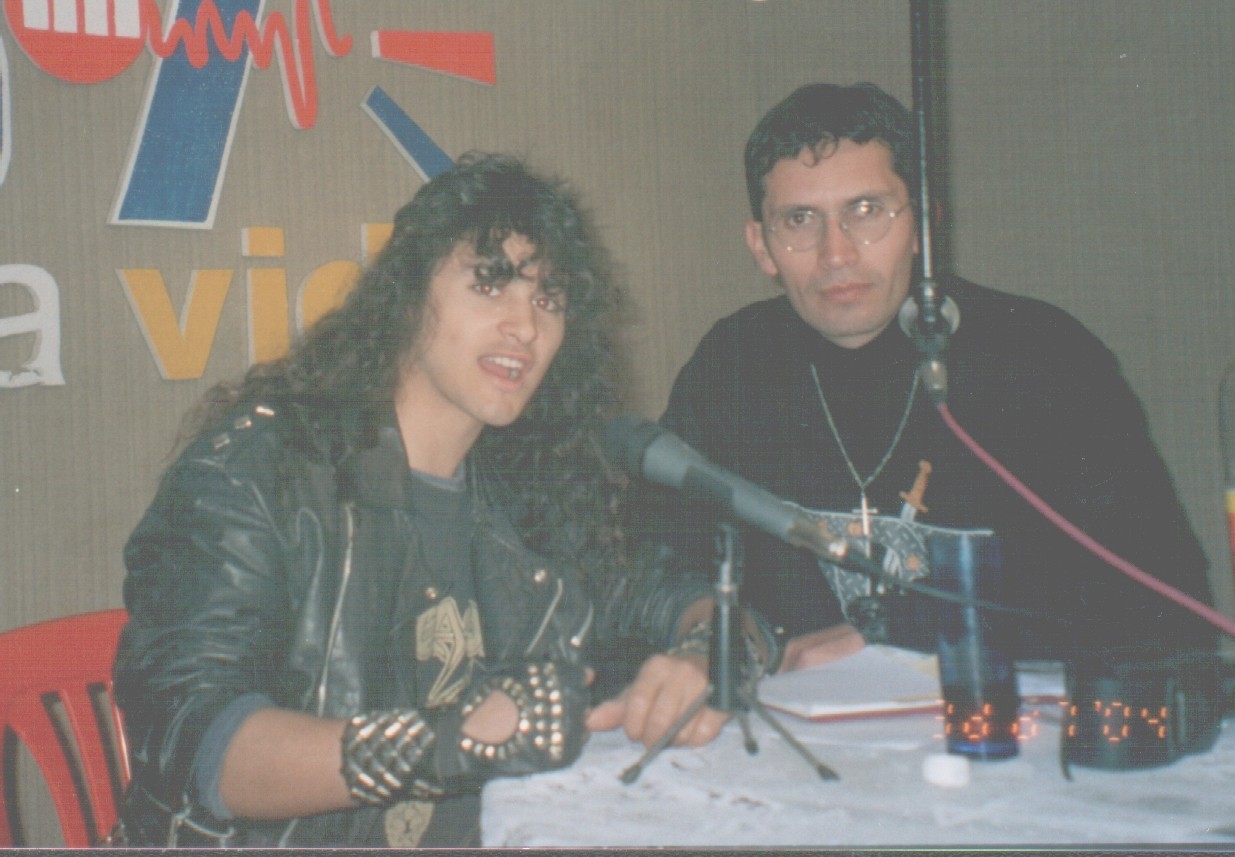
You did radio and edited the fanzine “Santa Fe White Metal.” How did the idea come about, what was the response, and what happened in the end?
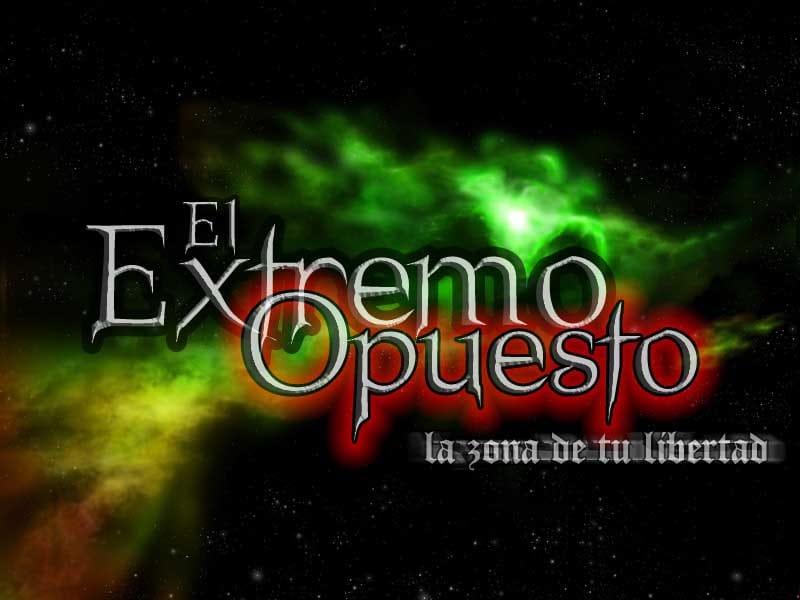
“El Extremo Opuesto” and the “Santa Fe White Metal” Fanzine were born for a very simple reason: there weren’t many specialized spaces, and I think the time was right for this kind of project. There were few people who seriously promoted White Metal, and even fewer in the interior of the country.
The radio came first, with the program “El Extremo Opuesto” in 2003. It was a formative experience: opening the microphone, giving space to Christian Metal bands, playing their unknown music, trying to build a community.
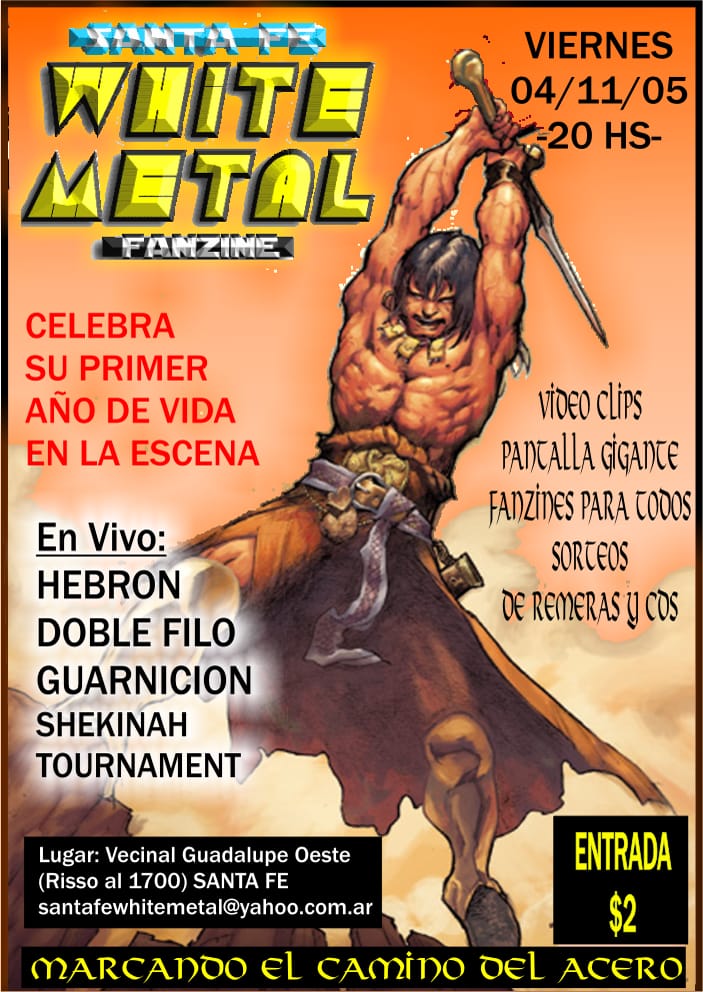
Then came the fanzine “Santa Fe White Metal” in 2004. This emerged almost as a natural extension of the radio: moving from the airwaves to paper, leaving a record, building memory. The idea was simple and ambitious at the same time: to document, disseminate, and give identity to Heavy Metal with spiritual values, as well as to the underground scene in Santa Fe, which, although always relevant, could use a little more coverage.
The impact was greater than expected. It grew more than I imagined. We published 15 issues until 2019. There were very good responses, collaborations, international interviews, historical stuff; it served to connect bands, labels, listeners, and scenes from different places. At first, we started off with a bang, and the fanzine came out every two months, but when we reached issue 10, I think in 2008, some things happened that forced me to take a break for a few years and rethink my involvement in all this. However, in 2015, we came back with a new format, and we kept going until 2019.
I learned that, in my case, over time, cycles come to an end, and the fanzine ended when it had to end: because life changes, times adjust, formats change, dynamics change, and you also change; and also because what fuels a project is not always eternal. But its legacy remains, I think it’s a stage that fulfilled its function and left its mark.”
You also organized dates in Santa Fe, Argentina. For those who don’t know, what is the Metal scene like there?
“The Metal scene in Santa Fe has always had a particularity: it’s not massive, but it is intense, loyal, and very hard-working. Nothing comes easy here. Every date is an act of cultural resistance, a fight against the world.
For my part, I had the honor of being part of a very strong movement, where many Christian Heavy Metal bands came that practically no one in Santa Fe knew. And the response was great: people welcomed them with openness, curiosity, and respect. Those visits were important because they broadened the local scene and showed that Metal could have other approaches (spiritual ones, mostly) without losing power, punch, or identity. In addition, by the grace of God, I was able to be part of the organization of many other events that featured major bands in the Metal scene, along with organizers who are historical figures in the city. It was a wonderful time to forge bonds, open doors, and support the great local Christian Metal artists who were making their way onto the scene at that time: DOBLE FILO, HEBRON, GUARNICION, LA FORTALEZA, to name a few of the pioneers; later, more warriors would join the ranks.
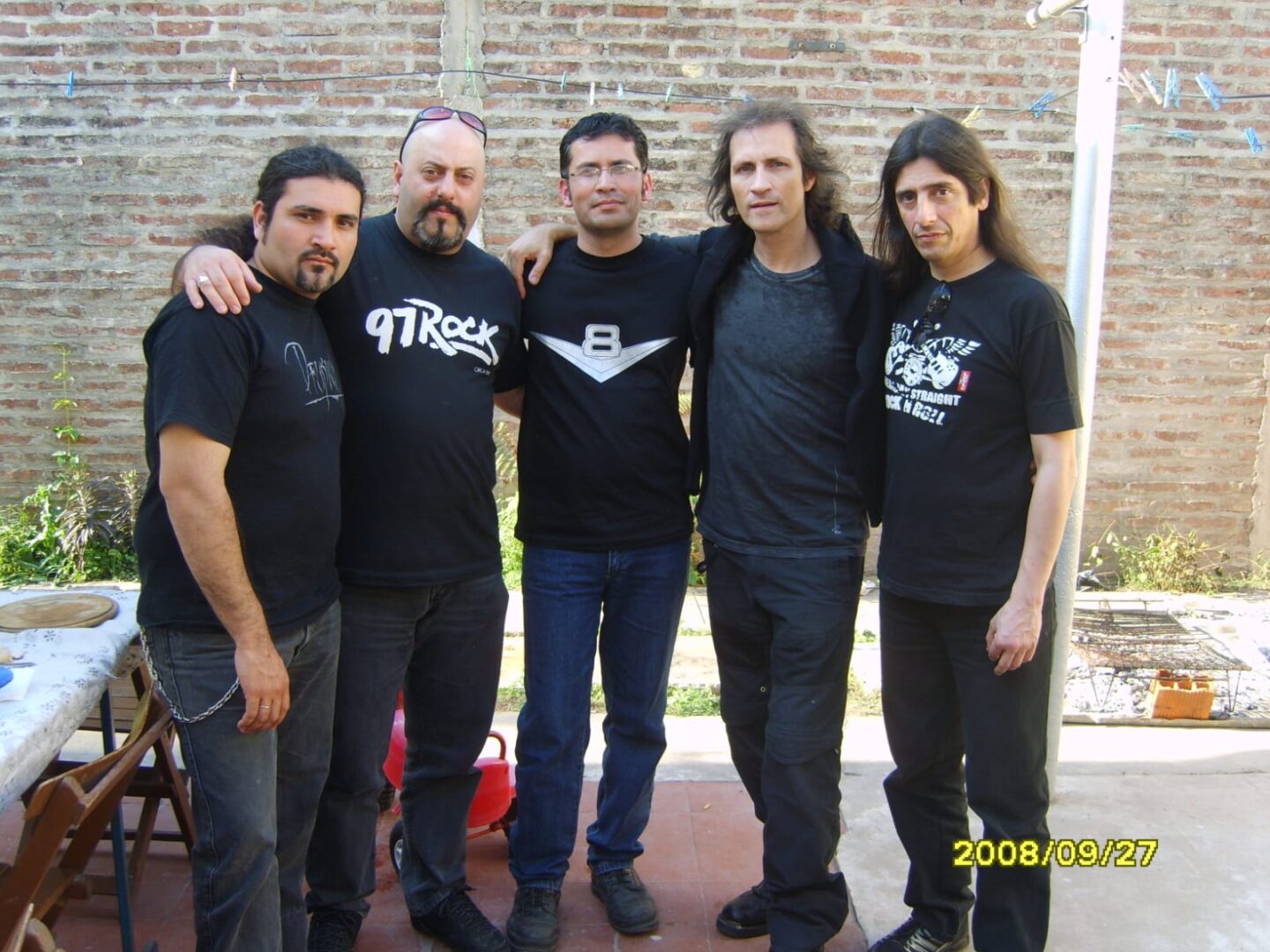
I also knew how to organize somewhat experimental gatherings, which we called “Tribus Urbanas” (Urban Tribes) in 2008 and 2009, with cool guests such as: Adrián Cenci (ex-Logos/V8), Mario Ian (ex-Alacrán, Rata Blanca), Vaky Ramírez (now a leading figure in the Buenos Aires Hardcore scene), and Fernando Gallegos from “Despreciados y Desechados” in Chile. All of this strengthened bonds and opened the minds of a lot of young people.
As for the Metal scene in Santa Fe, as I was saying, it is tenacious and resilient like few others. It has always had talented, committed, and determined people when it comes to fighting against the lack of venues, sound, resources, and publicity. A special mention goes to my friend “PANKY,” a tireless warrior from these long-suffering and humid lands of Santa Fe.
It’s a scene with a strong sense of camaraderie among those who really support the movement, beyond styles or labels. In Santa Fe, Metal is experienced more as a sense of belonging than as a fashion, and whether you like it or not, Santa Fe is a scene that demands work and faith (in Metal, in people, and in the project) because otherwise, it can’t be sustained.
Today, the scene remains challenging—as it is in most of the country—but the essence remains: committed musicians, a loyal audience, and an underground scene that, although battered, remains alive thanks to the perseverance of many people who refuse to give up. Special mention goes to the radio stations that always keep the Metal spirit of this scene alive, especially the aforementioned Panky and my great friend Jose Zeballos, creator of the radio program “EL TEMPLO DEL METAL” (The Temple of Metal).
Now you’re back with “Metal y Legado” (Metal and Legacy). How did the idea come about and what is the goal?
“Metal y Legado” came about as an idea that resonated with my two friends and comrades-in-arms: Marcelo and Joel, with whom we are carrying out the project. The three of us agreed that “Metal y Legado” arose from a need: to slow down the maelstrom a little and look back with respect. Not to live in nostalgia, but to understand where we come from; to connect the past, present, and future.
It is not a program designed to “make noise”: it is a space to think about Metal as culture, history, identity, and message. The goal is simple yet ambitious: to rescue stories, albums, fanzines, contexts, and people who built what many today take for granted.
I do not consider myself the owner of any truth; I am in a process of lifelong learning, and this podcast is also part of that.
Something I must make clear about “METAL Y LEGADO” is that it is a project that requires a lot of time, preparation, analysis, research… and today I don’t have as much time as I would like.
That’s why, at least for now, it’s a temporary project, a planned season in which we will give it our best shot. Then we’ll see how we continue based on people’s response and, above all, God’s guidance. I don’t want to do things just for the sake of doing them. I want to do what is right.”
You’re old school and you defend the physical. What is your opinion of these digital times?
“I’m not at war with digital, but I don’t idealize it either. Technology is a tool, not a replacement for experience. The problem isn’t streaming or Spotify, it’s the logic of constant discarding. Before, an album was listened to a hundred times; today, it’s consumed and forgotten. Valuing the physical isn’t being backward; it’s defending depth in the face of click anxiety. Metal has always needed time, patience, and commitment. Without that, it becomes background noise.
I repeat, I am not anti-digital. I use it and I value it. But the physical has weight: it stores memory, builds identity, and leaves a material, tangible legacy that spans generations. That’s why I insist on remembering it.”
What is your opinion on the current Argentine Metal scene and White Metal in particular?
“My personal opinion (and only that) is that the Argentine scene continues to be very creative, diverse, and strong, even though at times it seems a little fragmented. Its global historical legacy is indisputable, with musicians who continue to set the bar high. We are privileged to have been born in the country that has produced the most legends (in terms of Metal, of course) in Latin America and which, despite constant setbacks (economic, cultural, structural), continues to produce impressive musicians, solid projects, and bands that are the envy of no other country. The problem is almost never artistic: it is structural. There is a lack of venues, a lack of investment, a lack of continuity, and also a lack of understanding on the part of the public that without real support, no scene can survive.
As for White Metal, I see good things and others that concern me; my opinion is a bit critical, but that’s because I see it from the inside and it comes from a place of love: I think the Christian Metal scene in Argentina is still in a very basic state. And not because there is a lack of bands or talent. Quite the contrary: there are very capable people, there are very committed bands, some of them historic, and with conviction. But, despite the time that has passed, I see that the problem, for me, is the lack of real integration into the Metal scene in general.
As long as White Metal continues to wait for support from the Christian mainstream, or from the Christian music industry, or from churches and ministries… it will continue to hit the same wall.
Because, although over the years some prejudices have been overcome and certain structures have been broken down, there is still no solid, sustained, and genuine space of support for Christian Metal bands.
I don’t know if it’s bad will, probably not, maybe it’s ignorance, different priorities, and, often, discomfort with a genre that doesn’t fit with what those institutions understand as “musical ministry.”
That’s why, in my opinion, White Metal has to stop seeking validation in places where it will never find it completely and earn its place in the real Metal scene, playing where it belongs, sharing the stage with those it belongs with, and competing musically, not religiously.
Those who believe should live their faith. Those who don’t should play. But let the quality, attitude, and consistency speak for themselves. That (I believe) is the only way for White Metal to advance, mature, and finally cease to be a “religious subcategory” and become a legitimate voice within Argentine Metal. The challenge is not to lose identity or message by trying to fit in. Let’s not forget that Metal, even White Metal, was not born to be comfortable.”
Many think that Heavy Metal and faith in Christ are opposed. What would you say?
“They are opposed when understood superficially. If one believes that Christ is only moralism and that Metal is only darkness, of course, there is a clash. But if you go deeper, you find that Christ is not afraid of truth, pain, injustice, protest, or broken identity. Neither is Metal. Both expose what many prefer to keep quiet. Both work on real wounds. And both, in their own way, question oppressive systems.
For me, faith orders what Metal awakened. It doesn’t kill it: it empowers it. But that takes time, humility, and an honest process. I don’t have all the answers; I’m learning. And I never stop appreciating those who came before me, or those who continue to contribute to the genre today.
I would say that those who think Heavy Metal and faith in Christ are opposed to each other confuse faith with religious culture. The problem is not Metal, it is the fear of what cannot be controlled.
Christian faith is not weakened by a more or less distorted guitar; it is weakened by inconsistency, authoritarianism, and lack of truth. Metal can be as legitimate a space as any other to talk about meaning, pain, redemption, and hope, if approached with honesty.”
Final reflection…
“I don’t consider myself a finished reference point. I am on a journey, learning, correcting, and listening. I deeply value the legacy of those who came before us and the work of those who continue to sustain the scene today, often in silence. But I believe that what we need most, both in music and in life, is authenticity. Not pretending, not trying to sell an image, not living to please others. We must be aware of who we are, where we come from, what wounds we carry, and what legacy we have received.
Let’s try, every day, to be true to what we believe in, without denying our processes or trying to sell absolute truths. Let’s value those who paved the way before us, and also those who continue to do so today.
I have learned, over time, that no one builds alone. And if I have something to say today, it is because others sowed the seeds before me.
Metal taught me not to lie to myself, and faith taught me not to give up. That balance (perhaps imperfect but honest) is the place from which I continue to walk. I am still in the process. I am still learning. I am still listening. And as long as I can contribute something good to Metal, to faith, and to people, I will do so.”
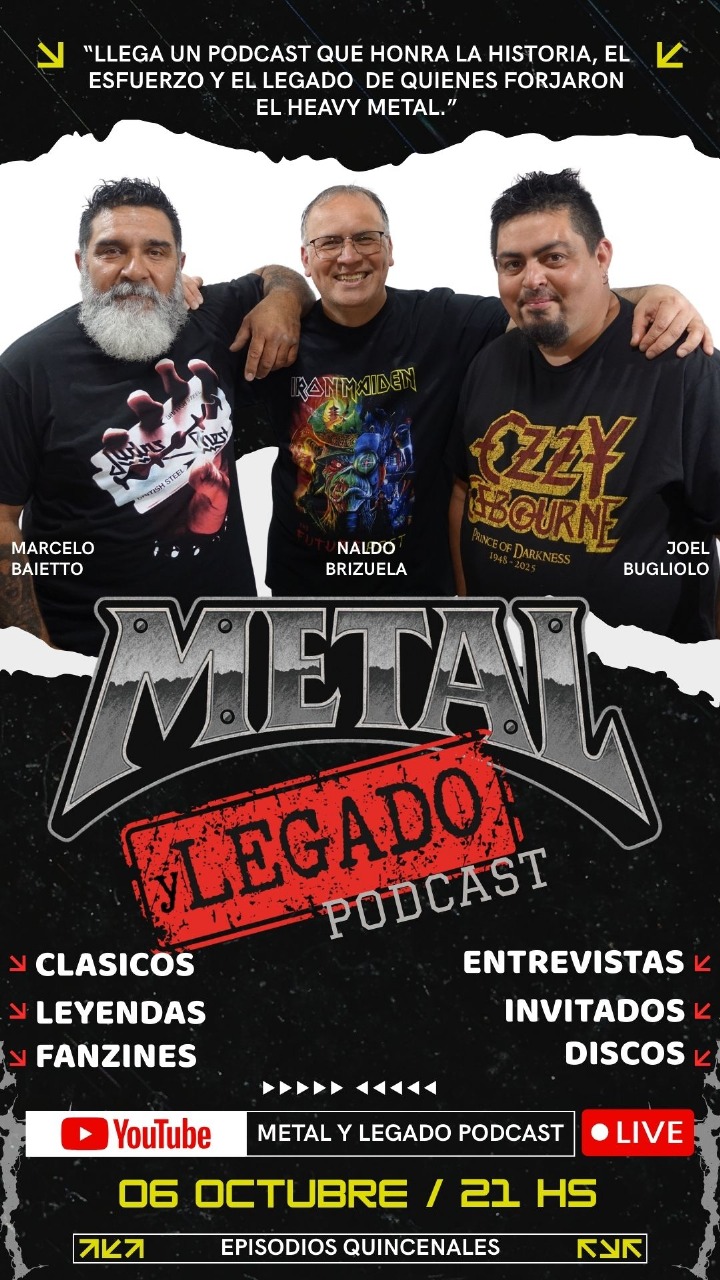
It’s true, both the radio program “El Extremo Opuesto” and the fanzine “Santa Fe White Metal” are now history and belong to the memories of those of us who were able to enjoy them. However, Naldo Brizuela continues to fight the good fight. Now, together with Marcelo and Joel, through the podcast “Metal y Legado,” which airs live every other Monday at 9 p.m. Argentina time. It’s definitely something not to be missed. We’ll leave the details below so you can tune in to this program that takes us deep into the world of metal and teaches us that heavy metal is not just music (as some would have us believe), but a movement of resistance and struggle!!!!
Metal y Legado Podcast – Thursday (every two weeks) 00:00 hs UTC (Monday 21:00 hs Argentina) – https://www.youtube.com/@MetalyLegadoPodcast o https://caballosdemetal.com.ar/ (Spanish)