Hesychast: For Whom We Sing New Troparia | The Eccentricities Of The Extreme

(2025 – Hesychast)
Among many other things, if there is one thing that stands out in the most extreme part of Metal, it is eccentricity and the desire to show the “B” sides of music; to go where no one has gone before. In this vein, we could mention this particular project called Hesychast, a band formed in the United States and enrolled in what could be described as atmospheric or environmental Black Metal.
“For Whom We Sing New Troparia” is their new album. This is their second album, as Hesychast had already released “Ageless” in 2016. So, the band has a new production that follows that very particular line of extreme music, closer to the epic influences of Northern Europe than to an American band. In any case, one of the most striking features is that Hesychast is a band that focuses its concept and message on Christianity, but Orthodox Christianity, which is not very common.
We’re not going to give a lesson in church history here, but in short, for those who don’t know, Orthodox Christianity is the “Eastern” branch of European Catholic Christianity, which separated from Rome in the Middle Ages, following its own line and spreading widely in Eastern Europe. Hesychast proposes to follow this conceptual line of Christianity in this work, and best of all, their music is imbued with various sonic and stylistic influences that also represent the cultural significance of Eastern Orthodox Christianity.
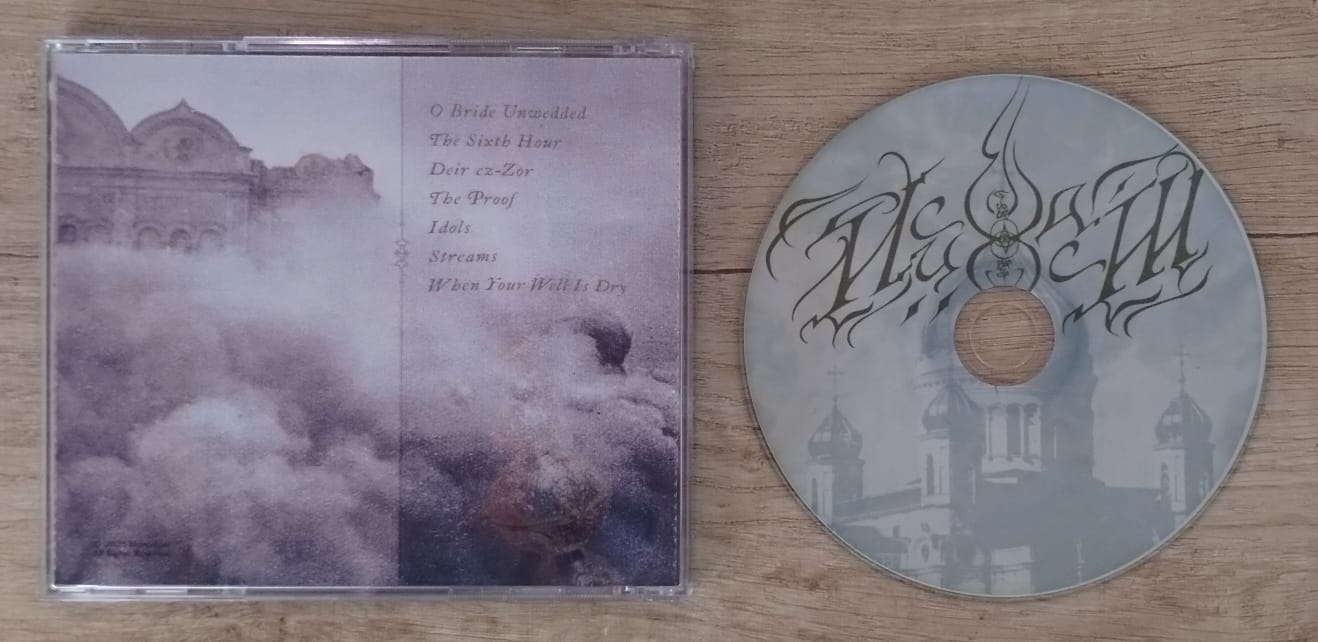
That said, let’s move on to what Hesychast offers us in this “For Whom We Sing New Troparia” (what a long title), an independently released album containing just seven tracks, which leaves us wanting a little more, but which are enough to enjoy an interesting work, both musically and conceptually.
Between a kind of Gregorian chant and an undeniable sacred air, “O Bride Unwedded” reveals itself as the intro to this album, and also gives way to “The Sixth Hour,” which continues in the same vein, with a slow, deliberate base that suddenly has those blast beat bursts so typical of the genre. Although the song is sung in English, it has passages spoken in Greek (presumably, as we do not know the language). Hesychast’s intensity is nuanced with orchestration that accompanies and deepens the band’s extreme sound.
In an even more ambient vein, with a certain ecclesiastical, oriental, and gothic evocation in its musical argument, is “Deir Ez-Zor,” which has different musical and bass twists, which we found more than interesting. “The Proof” deepens this “progressive” trend in Hesychast’s music, showing how a genre as extreme, musically speaking, as Black Metal can go through several moods in the same song. This is perhaps where Hesychast brings out everything it has to offer, with a complex compositional structure that includes different musical passages.
In “Idols,” Hesychast seems to lean more towards the classic side of Black Metal, accelerating from the beginning and without much experimentation, while maintaining the background orchestration that accompanies the sound of the album at all times.
“Streams” begins abruptly, with that kind of ecclesiastical chant so typical of Hesychast over a strident background of guitars and drumming, which in a way gives stylistic continuity to the album and contrasts with the torn vocals.
“When Your Well Is Dry” sounds like a hymn with a tremendous imperial and majestic air. With a rhythmic march and different moods within the same song, it stands out as the best of the album, and ultimately turns out to be not only the last track, but perhaps the climax of the album.
Hesychast concludes a record that is quite difficult to achieve. In itself, combining Christian themes with the brutal sound of Black Metal was never easy, and for many, difficult to digest, but if that weren’t enough, Hesychast adds ingredients to their music that have to do with Eastern music, sacred music, and Gregorian-style choirs, framed in a melancholic, gothic, or even spiritual atmosphere, depending on how you want to look at it. The experiment passes the test, but it is clear that some adjustments need to be made to the sound, especially in terms of the mixing of such a display of sound, which sometimes detracts from the good compositions that make up this fine album.
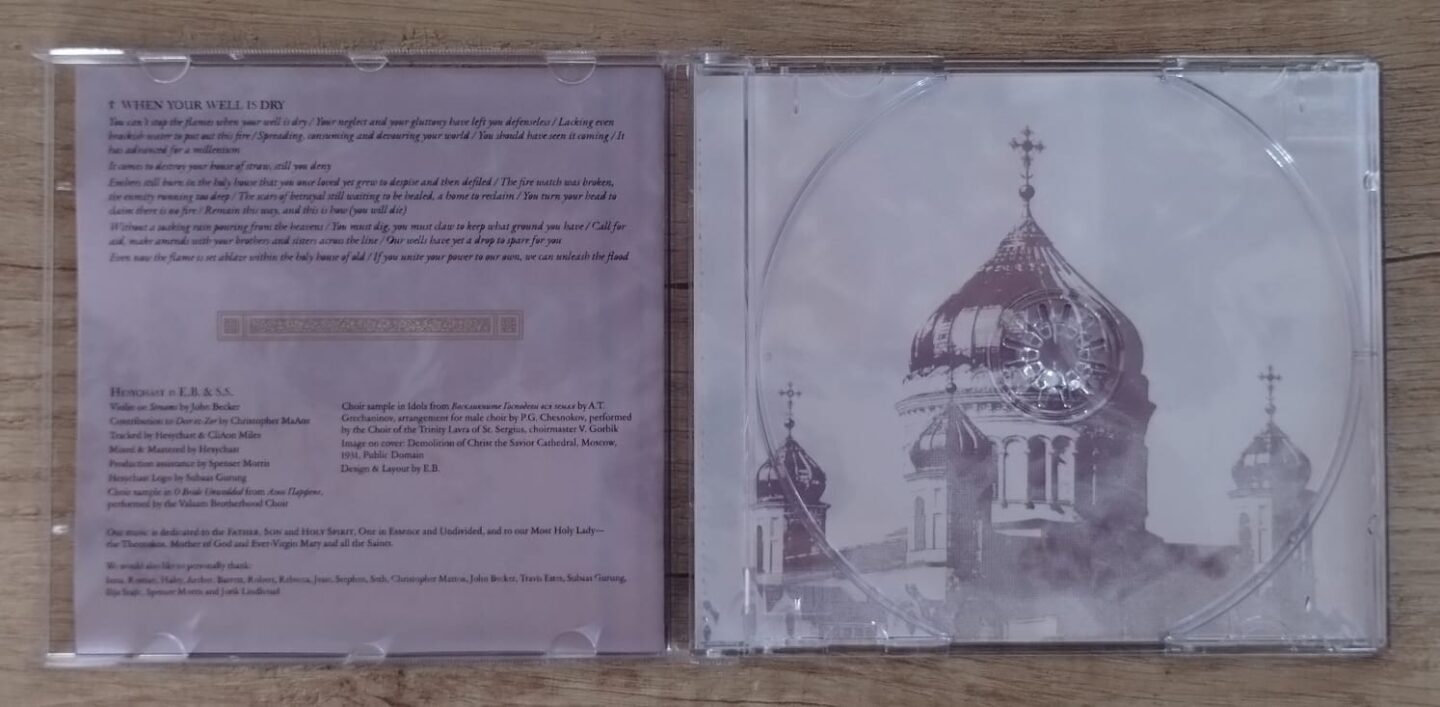
Graphically, the album follows the musical theme somewhat, with a cover featuring an old photograph of the demolition of the former Christ the Savior Cathedral in Moscow, Russia, carried out by the Bolsheviks in 1931, which was later rebuilt. It is a symbol of Orthodox Christianity, although some may find parallels between this image and that of Nidaros Cathedral on the famous album by the Norwegian band Mayhem, although the context and message are different. Apart from that, the design and graphic art
are quite modest, bearing in mind that this is a totally independent production, so demanding more would be counterproductive.
Hesychast is something different, at least conceptually, and everything he has, he pours into this new work, which in itself has its strengths, but also some drawbacks. “For Whom We Sing New Troparia” is somewhat sumptuous and pretentious, and indeed it is. It has an interesting musical richness, but perhaps the downside is, as we said, in the sound and the final mix, which could give it that little push to be more than just a flashy album.
The band is present on social media, which is the best way to get in touch with them, and even to listen to this album in digital format and find out about their latest news, so here are their details, and as is our custom, a lyric video of one of the songs on this album…
https://www.facebook.com/hesychastmetal
https://www.instagram.com/hesychast_us
https://hesychast.bandcamp.com/album/for-whom-we-sing-new-troparia