Cemento, Buenos Aires, August 2, 2001 | Mortification And The 25th Anniversary Of A Historic Show
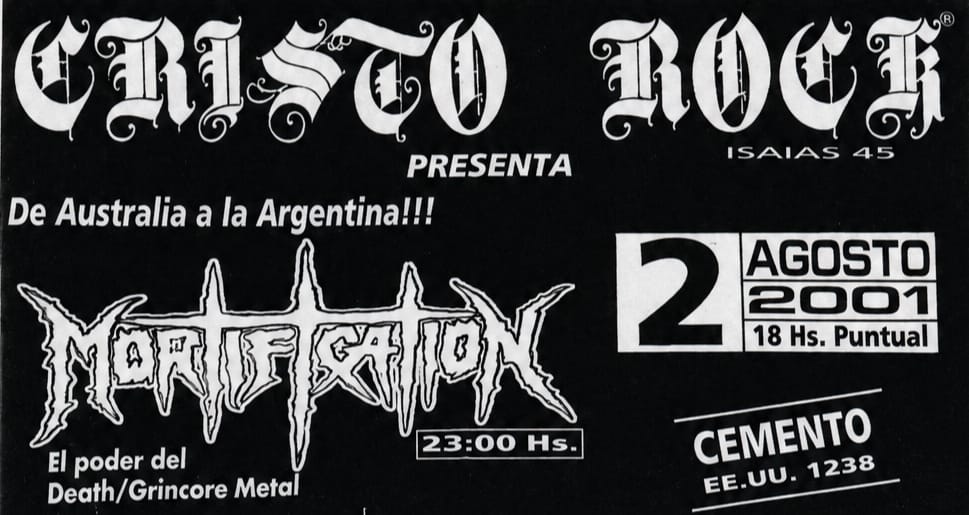
Those of you who know us and follow us know that we’re not big on constantly commemorating the anniversaries of albums, songs, and shows. We leave that to others, who do it very well and all the time, but after giving it some thought, we decided to make a small exception. It’s been 25 years since a historic show in Buenos Aires—one that many, for various reasons, were unable to attend. So, with Mortification’s return scheduled for 2027, we thought we’d try to refresh everyone’s memory and recount what the Mortification show in Argentina in 2001 was like and what it meant.
Cemento was the iconic venue for rock and metal in Buenos Aires, both in the ’80s and ’90s, and even a little beyond the year 2000. A venue where practically the entire underground scene and everything you can imagine played. There’s a lot of history within its walls (which, by the way, never stopped sweating). It’s a shame that today it’s been turned into a garage and/or parking lot, but that’s another story. The story we want to recall is a different one, and it has to do with one of the most influential bands in the so-called “White Metal” or “Christian Metal” scene. We’re referring, of course, to Mortification and their historic 2001 show, held right there at Cemento.
Twenty-five years have passed since that show. It was August 2, 2001, and that’s why we decided to refresh our memories a bit, try to put our thoughts in order, and recall what that bitterly cold night in Buenos Aires was like—the night when, for the first time, and so far the only time, Mortification set foot in Argentina and put on a memorable show for all of us who witnessed that one-of-a-kind performance.
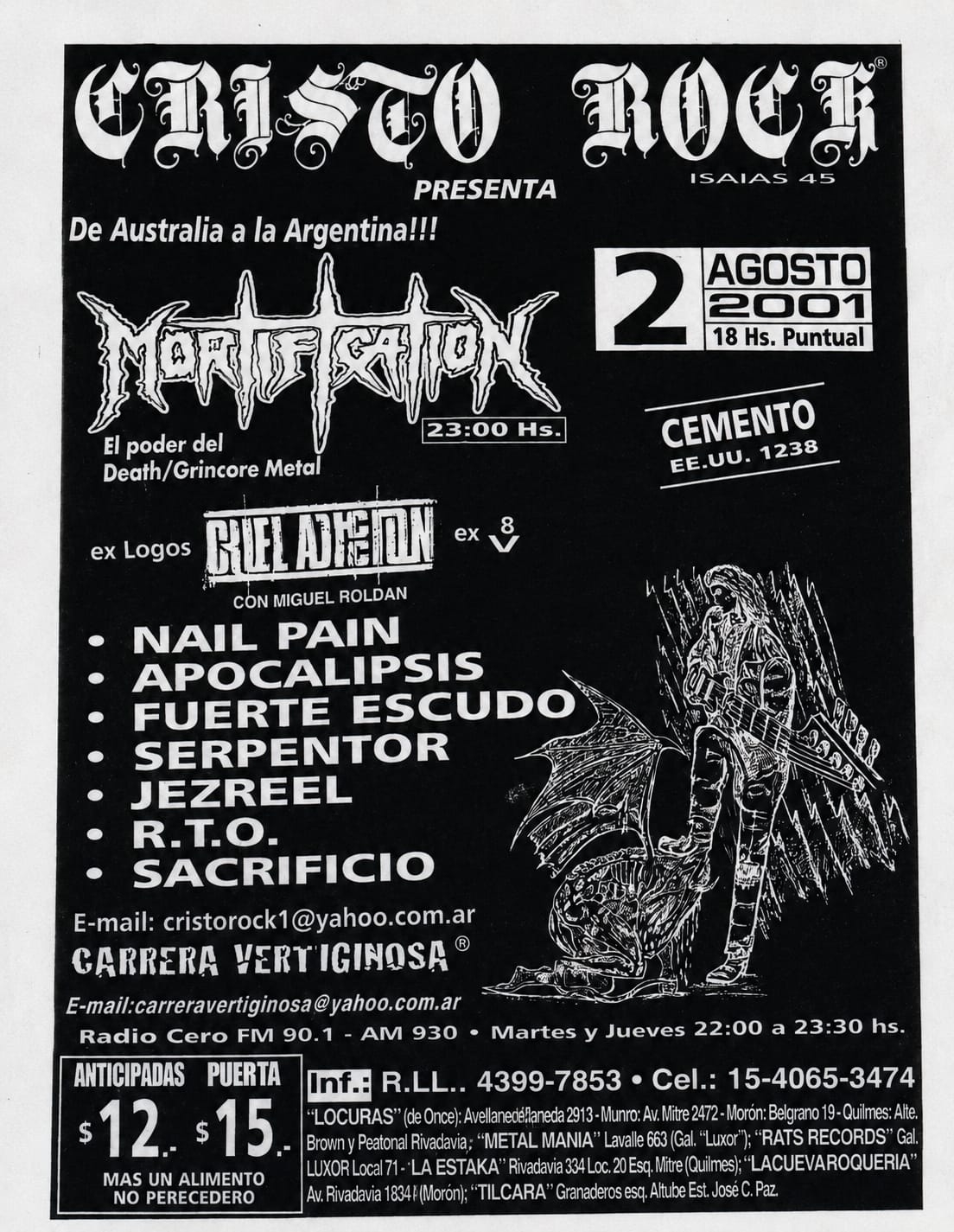
Back then I thought—and I still think—that it was very unlikely for a band like Mortification to play in Argentina. It’s true, years earlier Petra, Guardian, and even Whitecross (led by Scott Wenzel) had come, but let’s agree that those were bands that drew a different kind of audience—one with a profile totally distinct from that of a band like Mortification. In fact, in those cases, the movement promoted by some Christian churches played a major role, but nothing foreshadowed what would happen in 2001—a difficult year remembered by all Argentines for events that had little to do with music.
Mortification wasn’t coming from an easy situation either. A few years earlier, Steve Rowe, the band’s leader, bassist, and vocalist, had been on the brink of death after being diagnosed with leukemia. What followed were grueling medical treatments, grim prognoses regarding his health, and finally, God’s miracle that allowed Steve to keep fighting and never give up. Even with the little strength he had left and the difficulties compounded by his fragile health, Mortification was able to continue recording and releasing new material and even perform live from time to time, but a world tour was another matter entirely—especially if Latin America was one of the destinations.
In 2001, Mortification had released The Silver Cord Is Severed, an unusual and unconventional album for the band. There were even lineup changes; Keith Bannister left, and a young Adam Zaffarese took over on drums. That album would serve as the catalyst for a tour that would include Latin America—including Argentina—much to everyone’s surprise. At least in my case, I never thought that would be possible, and yet the announcement had been made, along with the date and venue: Cemento, August 2, 2001. It was absolutely crazy.
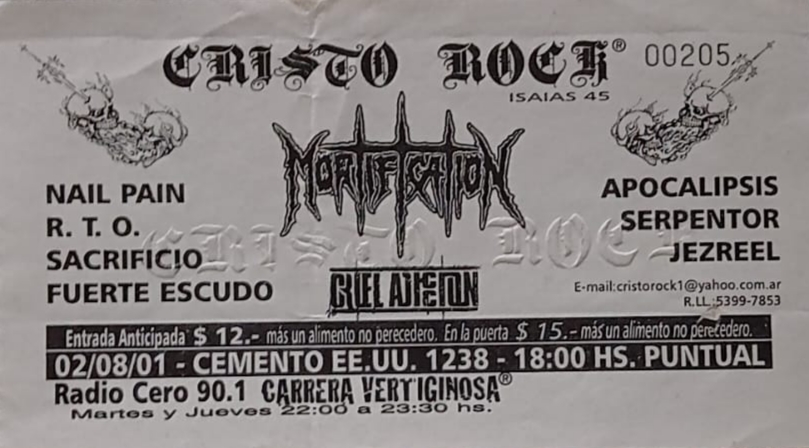
Mortification’s show in Argentina was part of the “Cristo Rock” festival, which had already held several editions—many of them at Cemento itself—and was organized by “Carrera Vertiginosa,” a production company that’s still active to this day. “Cristo Rock” brought thousands of bands to the temple of rock who might otherwise never have had the chance to perform there.
Once the announcement was made, this special edition of “Cristo Rock” would feature Mortification as the headliner, but several other bands would also join the lineup, including Cruel Adicción (the project by Miguel Roldán, formerly of Logos), Serpentor, Apocalipsis, Jezreel, Nailpain, the Brazilian band Chipset Zero, and others. Tickets cost about 12 pesos in advance and 15 pesos at the door. At the exchange rate at the time, that would have been about 12 and 15 dollars, respectively. It was a reasonable, fair price—not set just to make a quick buck. That much was clear.
Personally, looking back, I can say that at that time I wasn’t doing any of the things I later set out to do. “Del Otro Lado” was just an idea, a project in my mind, but nothing concrete. I barely had a small slot on another radio show where I was already playing metal, in addition to contributing to other radio programs, so I decided to go to the show as just another fan, without thinking about doing anything related to promotion. In fact, I don’t have any photos because I didn’t have a camera—back then, there were no smartphones with cameras, and digital cameras were way out of reach for the average metalhead.
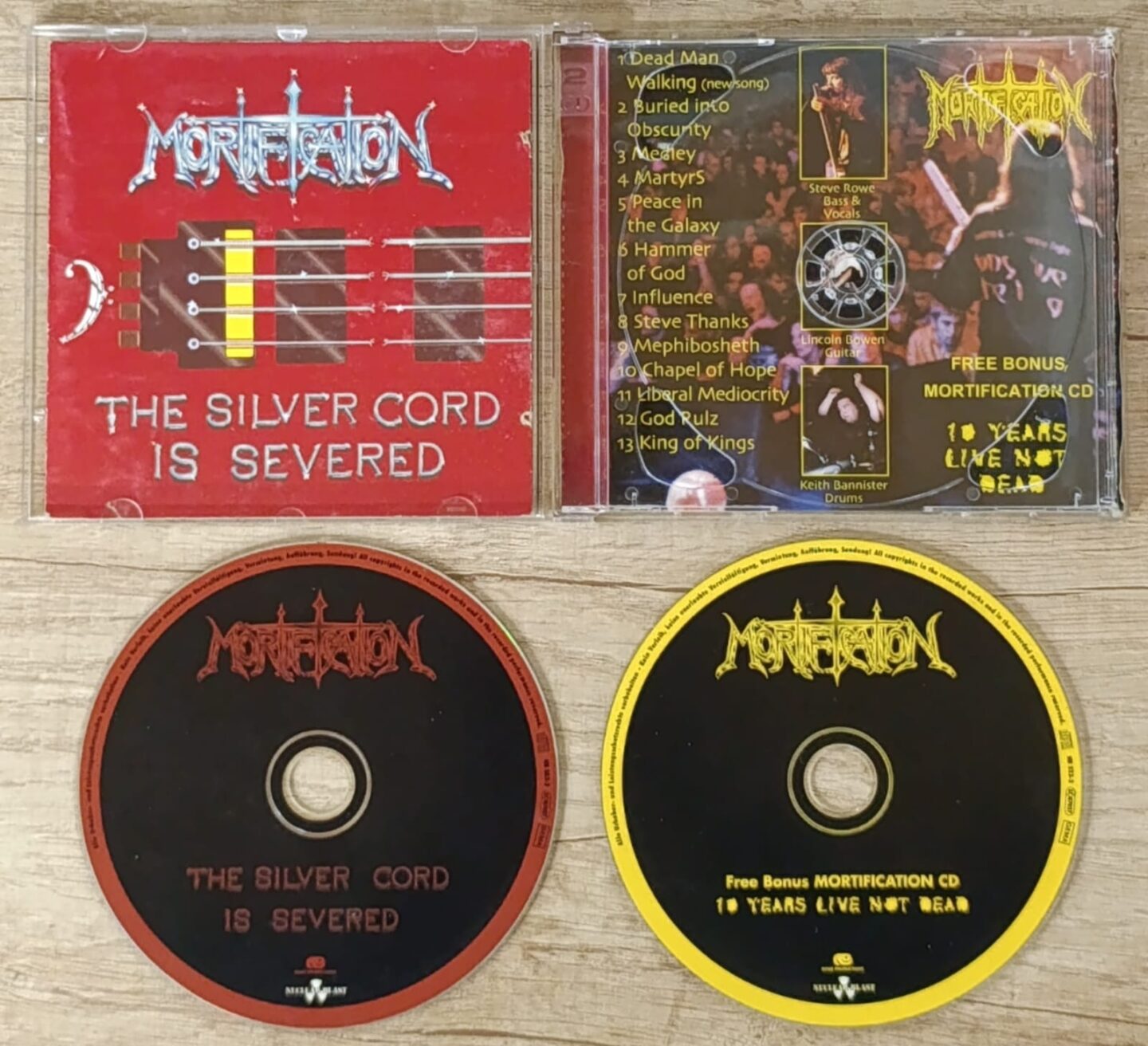
I’d managed to get my hands on “The Silver Cord Is Severed” at an old hideout in a gallery on Lavalle Street in Buenos Aires—a special Nuclear Blast edition that I still have today. It had the unique feature of including the previous album, “Live Without Fear,” as a “bonus track” and second CD; undoubtedly a very rare edition and one of exceptional quality. That album didn’t win me over at all, and in fact, I don’t exactly consider it one of Mortification’s best albums, so my anticipation for the band’s show here in Buenos Aires was somewhat tempered by an album that I didn’t think was their best.
Even so, there was no way in hell I was going to miss the concert, even though it was on a weekday (a Thursday, to be exact), and I planned to skip work the next day to make it happen. So, together with my cousin (who always tags along on these crazy adventures), we hopped on the train to get to Cemento from the Buenos Aires suburbs at a rather late hour—because even though it was a great chance to see several bands, our attention was naturally focused on Mortification. It was cold out in Buenos Aires, but inside Cemento, the venue’s typical heat enveloped us.
At the venue, we ran into many acquaintances and people in the scene, and even some jerk who thought he was a “Satanist” and had no better idea than to hand out flyers against Mortification outside the venue. Yes, it was the same guy who used to make threatening calls to the radio shows where we played Christian metal. A bizarre character among the many you’d run into back in those days!
But the people who had to be there were also present. Many familiar warriors who couldn’t miss it, like Javier and Karina from Santuario, Vaky Ramirez from NTR, the folks from Lázaro, the unforgettable Rubén Dominguez from “Jesus Junto Al Metal,” and so on. It was that moment, at that exact place and time. A historic and unforgettable moment.
Of the bands I managed to see, I was particularly interested in Serpentor, who would eventually become a Thrash Metal legend here in Argentina. Nailpain put on a tremendous show—a band with a unique style and an interesting sound—as did the Brazilian band Chipset Zero, who, with great intensity and power, set the stage for what was to come. I can’t say much about the rest; I arrived late and, to be honest, didn’t get to see their shows.
I figured Mortification might have some merchandise to sell, so I went over to see what was available. I left a little disappointed in that regard. They only had “The Silver Cord Is Severed” and “Break The Curse,” both obviously released by Rowe Productions, so I picked up the latter (which I didn’t have). I don’t remember if there were other items like T-shirts, patches, and that sort of thing. In any case, I had more than enough money for that single CD (I think it was 10 Argentine pesos, about 10 dollars), and of course to get back home afterward.
Finally, the moment arrived. Steve was walking with a cane due to his health issues and seemed frail, but within a few minutes he would prove to me that it was just my perception. Once the band took the stage and Steve picked up his familiar bass, Mortification’s raw power and intensity in a live setting blew us all away.
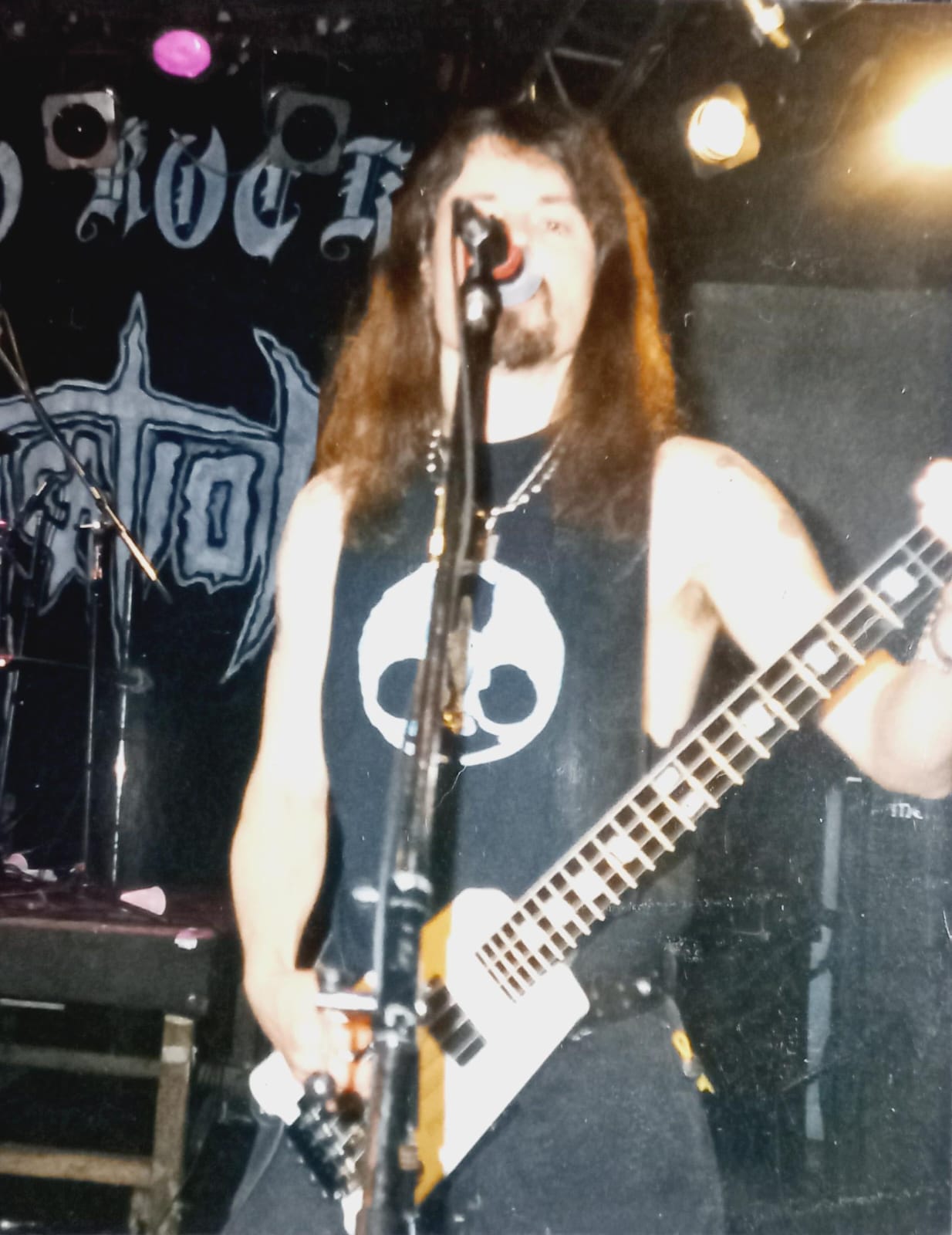
“Metal Blessing” was the opening track, followed by “Access Denied”—both from their latest album—and that seemed to confirm my biggest fear: that Mortification would only play material from their most recent albums, particularly “The Silver Cord Is Severed.” But the moment Steve shouted “Brutal Warfare,” I was completely taken by surprise—and I can’t even begin to describe the mosh pit. Being right up front was a surefire way to end up battered—but happy!
What followed was a barrage of classics like “Nocturnal,” “Grind Planetarium,” “Scrolls Of The Megilloth,” “Chapel Of Hope,” “Hammer Of God,” “Martyrs,” and more. The truth is that after 25 years, the memories have started to fade, and we don’t remember the exact setlist in its entirety, but it’s safe to say that the show was a comprehensive journey through Mortification’s discography, featuring all the classics, with a fairly long set that more than justified the wait to see them perform up there.
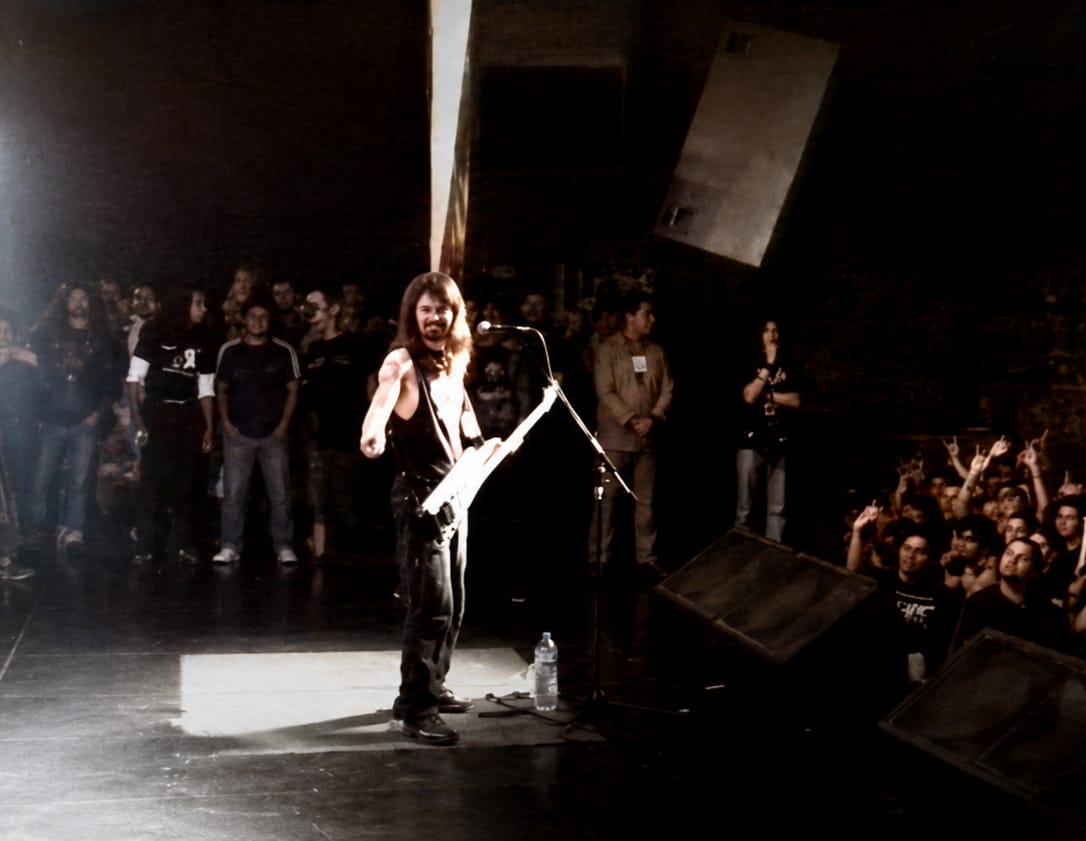
Meanwhile, Lincoln Bowen on guitar never stopped moving, darting back and forth and jumping constantly. Adam Zaffarese played with aggression and intensity—after all, he’d been chosen to pound the drums—and he’d even chosen to wear an Argentine national team jersey featuring the logo for “No Te Rindas,” an old and beloved radio show from those years. And Steve was just Steve; always with his off-key guttural screams, inviting the audience to join in, with his voice and impeccable bass skills, but at the same time asserting his authority by silencing several out-of-line fans in the crowd who wouldn’t stop insulting him. A tremendous moment that remains etched in my memory. There was also time for a brief message to the Argentine audience, translated by Martin Hohl—who was accompanying them on the tour—in which he shared some of his experiences and his testimony about his health struggles and the miracle of being alive.
The Cemento venue was nearly full, and the crowd didn’t stop rocking all night long. It was incredible and, at the same time, an unforgettable experience. Perhaps I didn’t realize it at the time, but I was witnessing something truly historic that I never imagined I’d get to experience: seeing Mortification with Steve Rowe on lead vocals—something that would never happen again, at least not in this way and not in Argentina.
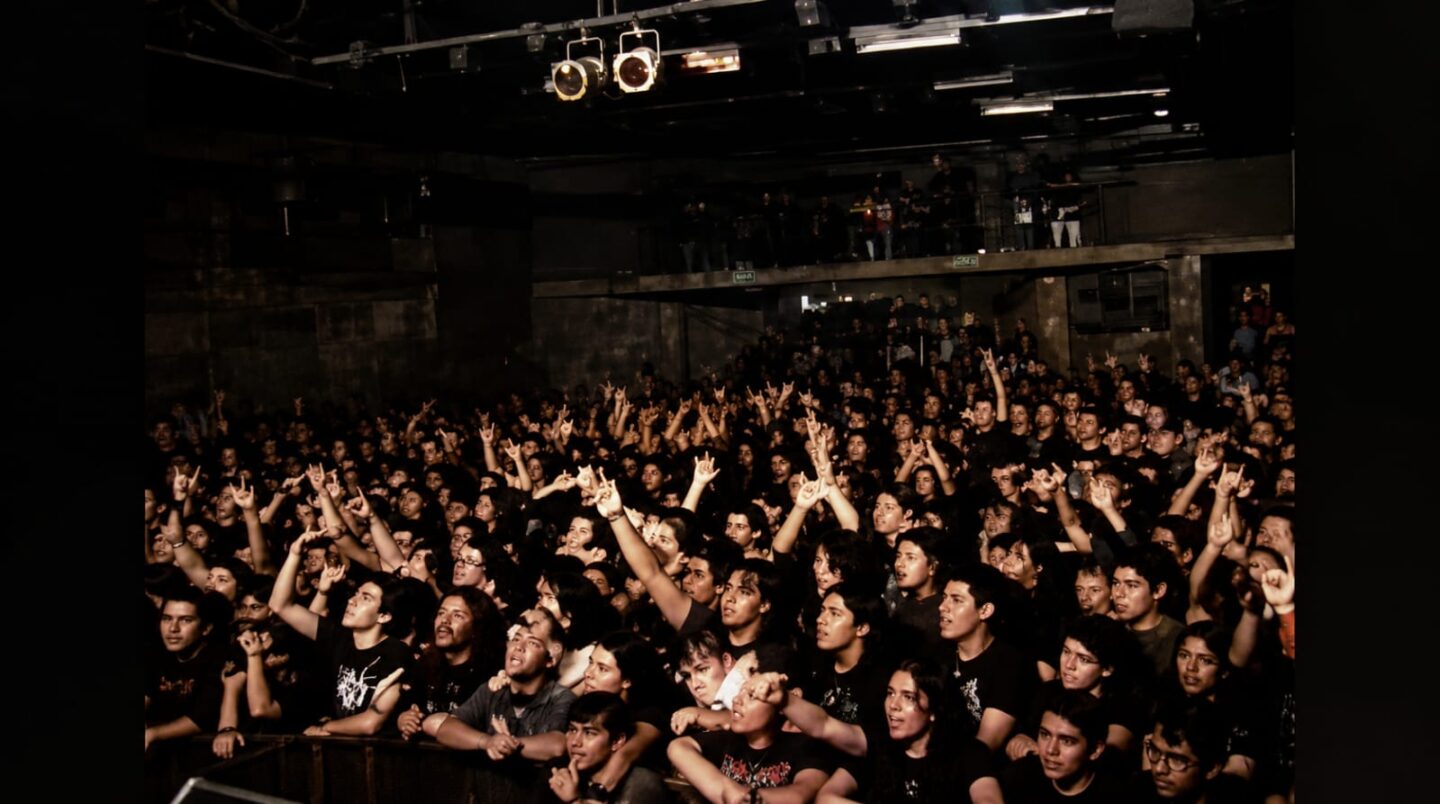
Finally, “God Rulz” reminded us that everything comes to an end in this life, and as was obvious, it marked the end of the show. Outside, the cold and the winter dew awaited us, reminding us that we were in the middle of winter, as we waited at Constitución Station for a train to take us home alongside all our fellow fans, who looked just as tired, worn out, but happy as we did.
The next day, a Mortification press conference had been announced. I’d planned to attend since I’d been invited, but I decided against it because I was so tired. I thought I’d already had my fill, and I still feel that way 25 years later. Besides, since I wasn’t working specifically for any particular media outlet at the time, it wasn’t something I needed to do. Maybe I should have gone, but in any case, I think what I experienced during the August 2 show was enough. It was truly beautiful madness, worth remembering despite the passage of time.
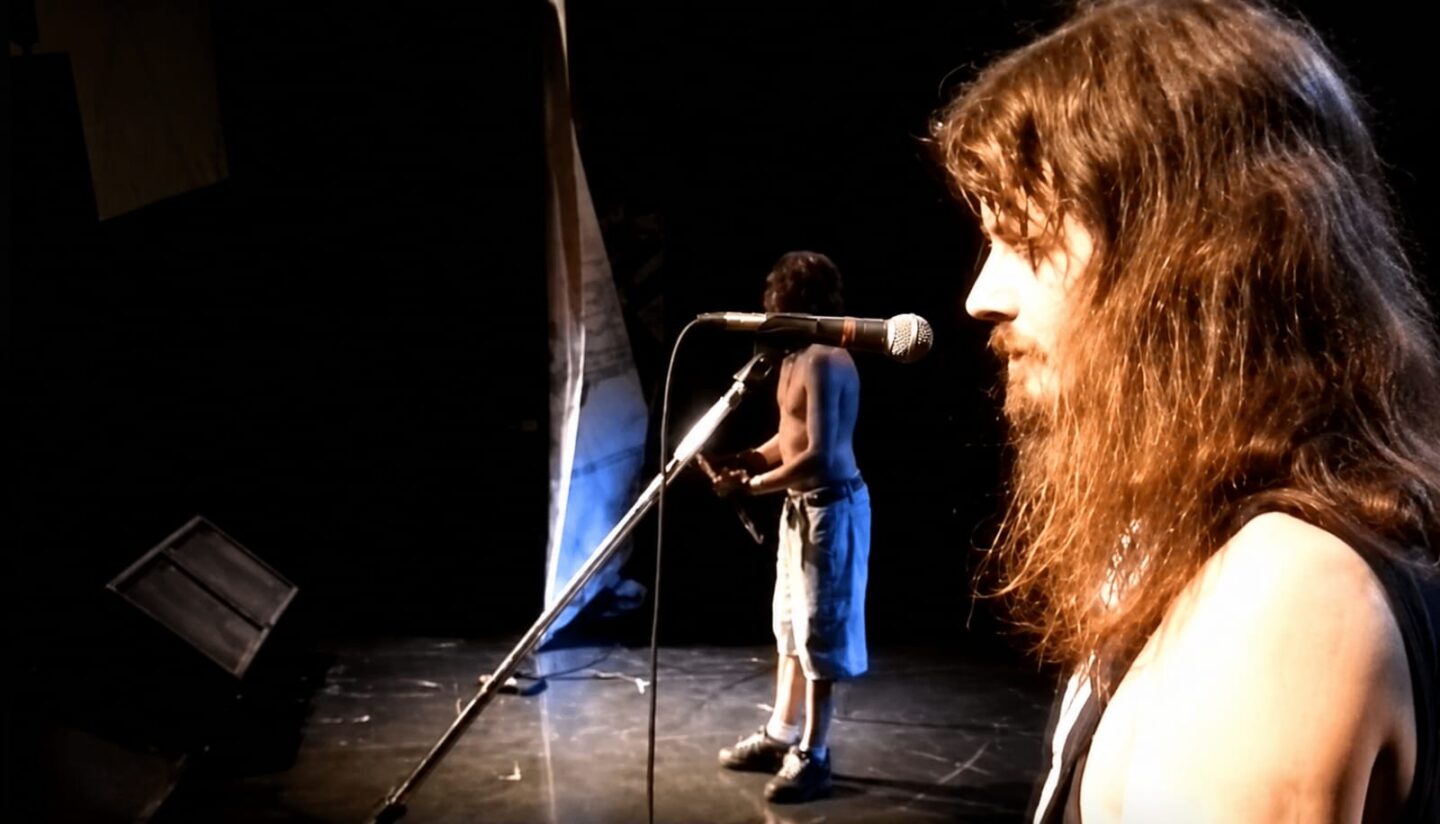
Unfortunately, there aren’t many records of that show. If anyone has any footage, they’ve likely never published it anywhere. The only thing we have available are the few images that can be seen on the DVD “Conquer The World,” which the band released some time later and which includes footage from the entire tour, including Argentina (and from which we were able to extract some screenshots to illustrate this article), as well as the review published by the folks at Santuario in issue #8 of their fanzine, whom we thank for their kindness in collaborating on this sort of tribute to what was a historic show.
It’s practically the only visual record that exists of that Mortification show, and it’s truly worth remembering. Thanks to them, we’re able to include a copy of that review here, as it’s one of the few (if not the only) visual records published at the time about this show. It’s also interesting to note the Q&A that took place during the press conference held the following day, a copy of which we’ve also attached to this article. We can’t thank them enough.
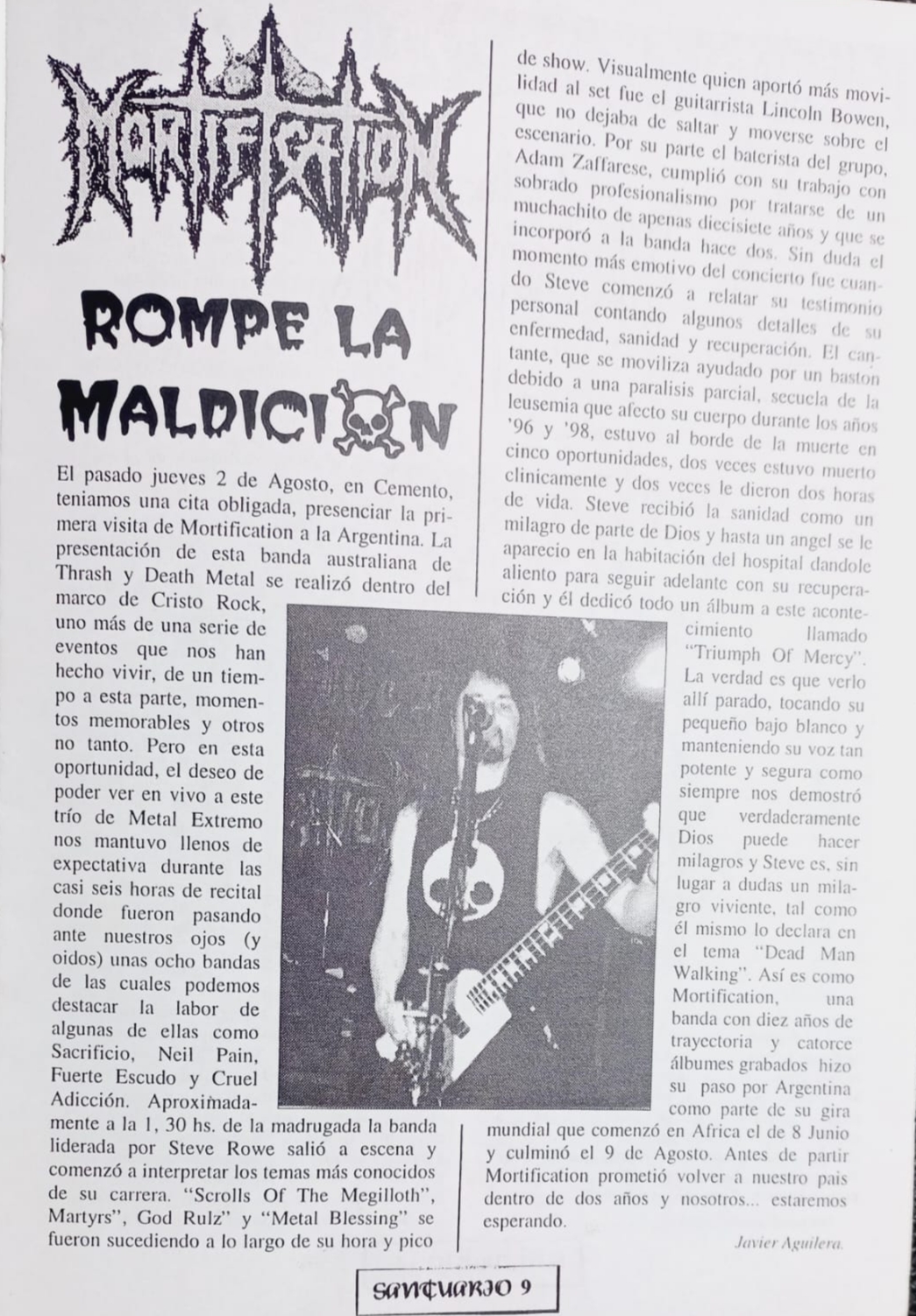
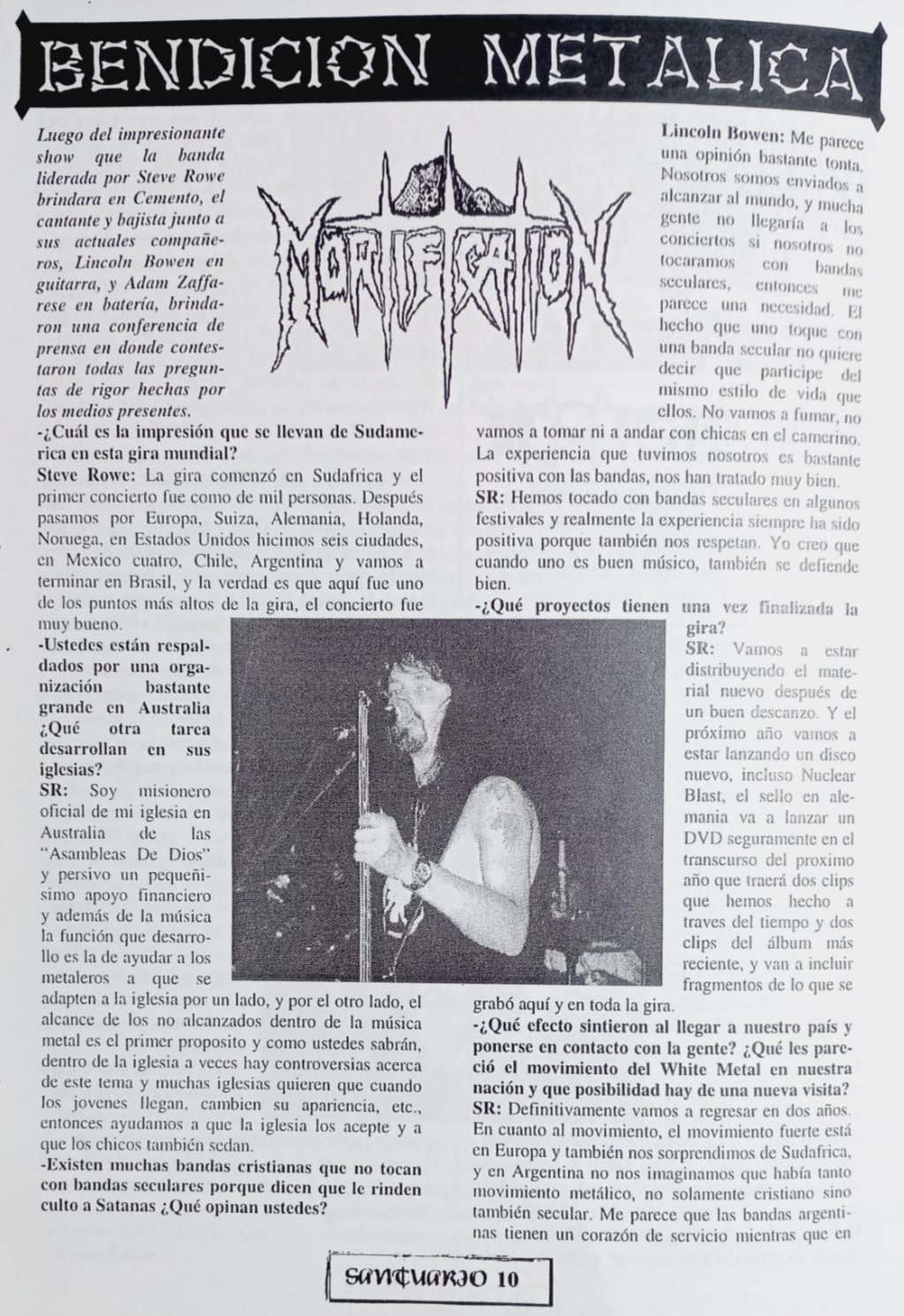
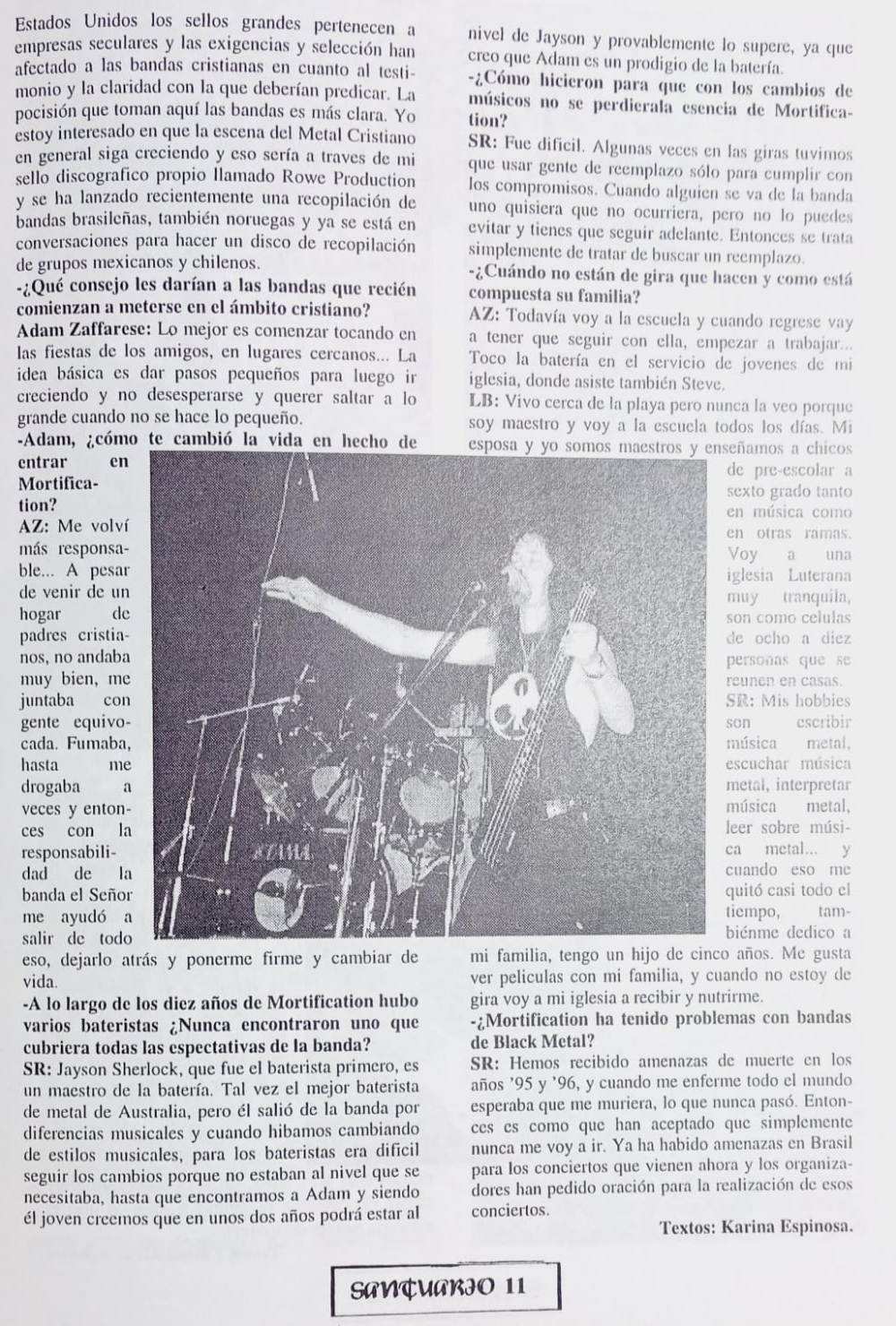
Mortification achieved what not many have managed to do: tour Latin America, leaving an indelible mark on all of us who were able to experience it—whether in Buenos Aires, Santiago de Chile, Brazil, Mexico, or elsewhere. Twenty-five years have passed, but that impact remains unforgettable. It’s true that, over time, bands like Stryper, Narnia, Demon Hunter, and others began to visit frequently, but that Mortification tour marked a turning point.
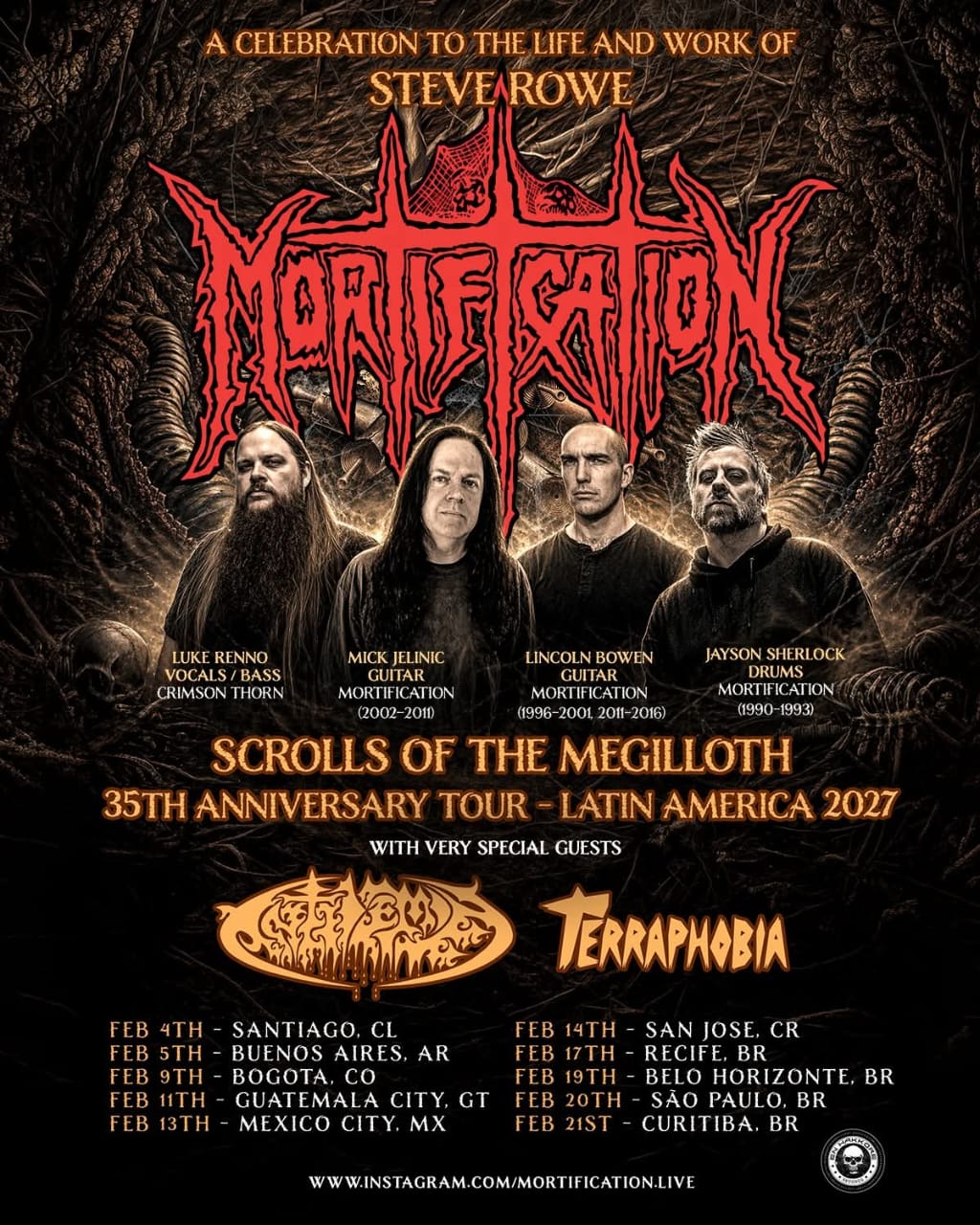
For those who, due to age, distance, or other reasons, were unable to attend that August 2, 2001, show at Cemento, there’s a new chance. Mortification is back, this time without Steve Rowe due to his health, but featuring Luke Renno (Crimson Thorn) on bass and vocals, along with a stellar lineup that also includes Lincoln Bowen back on guitar (who will ultimately be the only band member to perform in Argentina twice), Mick Jelinik also on guitar, and the legendary Jayson Sherlock on drums, a member of Mortification’s original lineup. This new opportunity will take place on February 5, 2027, at “Uniclub” in Buenos Aires; details and tickets can be found below. The occasion is to celebrate the 35th anniversary of the release of “Scrolls Of The Megilloth” on a tour that, in addition to Argentina, includes Colombia, Chile, Brazil, Mexico, Guatemala, and Costa Rica, with none other than Terraphobia and Antidemon as supporting acts. None other than them.